
Still Water - Misha
The puck came off Lindgren’s stick like a curse—Loss of angle, low blocker, the kind of shot that looked lazy until it wasn’t.
Misha dropped. A controlled descent, his left pad sealing the ice, glove swallowing the rebound before it had the decency to exist. The horn didn’t sound. The light didn’t go red. Because he didn’t let it.
Good.
He reset. Breathed. Let the exhale fog inside his mask and disappear before anyone could see the way his lungs shuddered on the release.
Twenty-six saves. Second period. And the only thing louder than the crowd was the hum between his own ribs—that low, treacherous frequency his body had been producing since warmups, the one that meant wrong day, wrong week, you miscounted, you absolute fool.
He hadn’t miscounted.
He’d under-dosed.
The realization had arrived somewhere between the anthem and the first face-off, settling into his awareness the way a crack spreads through river ice—silently, completely, with the quiet promise of catastrophe. His last suppressant dose was sixteen hours old. It should have been twelve. The danger window was already open and he was standing in it, under stadium lights, in front of nineteen thousand people and four HD broadcast cameras.
Fine.
He could manage fine. He’d been managing fine since he was seventeen, since Dr. Pavlova had looked at his bloodwork and then looked at him—an undersized kid from Chelyabinsk with fast hands and no father and a future that smelled, already, like wet steel and surrender—and said, You understand what this means for your career.
He understood.
Omegas didn’t play in the SHL. They didn’t play in the AHL. They didn’t tend goal in any league that mattered because the position required territorial stability, whatever the fuck that was supposed to mean when it came from the mouths of men who’d never had to white-knuckle their way through a biological imperative while facing ninety-mile-per-hour rubber.
Territorial stability. Like he wasn’t the most territorial creature on this ice. Like his crease wasn’t the one sovereign nation he’d ever defended with his whole body, every night, without flinching.
But that was the wrong kind of territorial, apparently. The omega kind. The kind that read as nesting instead of competing. The kind that made team doctors raise their eyebrows and sports psychologists use words like hormonal volatility and bonding liability.
So. Beta. On paper, in bloodwork, in every scent-profile test the league mandated twice a season. Misha Vasiliev: beta goaltender. Controlled. Contained. Unreadable behind the mask, which was where he liked to be, which was the whole point—
“Mish! Mish. You good?”
The voice cracked through his internal sermon like a stick through drywall. Close. Too close. Someone had skated into his crease during the stoppage and Misha hadn’t even registered the whistle.
Riggs Castillo. Number 24. Six-foot-three of Puerto Rican-Canadian alpha defenseman who played like every forward on the opposing team had personally insulted his mother. He was crouching slightly, one glove resting on the top of the net, head tilted at that angle—that angle—the one Misha had privately categorized as Threat Level: Embarrassing.
Because Riggs was looking at him the way alphas looked at things they wanted to protect.
He didn’t know he was doing it. That was the worst part. Riggs had the self-awareness of a golden retriever and the protective instincts of a junkyard dog and he absolutely, categorically did not know why he checked on Misha after every stoppage, or why he put his body between Misha and opposing forwards with a viciousness that bordered on unhinged, or why he once cross-checked a man into next week’s schedule for bumping Misha during a post-whistle scrum.
Because you can smell it, Misha thought, not for the first time. Somewhere underneath everything I’ve buried, you can smell what I am, and it’s making you stupid.
“I’m good,” Misha said. Flat. Bored. The voice he’d perfected—the beta voice, the nothing-to-see-here voice that was as much a piece of equipment as his pads. “Get out of my crease.”
Riggs grinned. Tapped Misha’s helmet with his glove—a gesture so casual, so careless, that it shouldn’t have sent a volt of heat straight down Misha’s spine.
But the suppressants were thin right now. And Riggs’s scent was right there, cutting through the arena stink of cold air and rubber and popcorn grease, something underneath all of it that was dark and warm and woodsmoke-sweet, and Misha’s hindbrain identified it with the subtlety of an air-raid siren: alpha, yours, safe, alpha, YOURS—
“Out,” Misha said again, quieter now, because if he pushed any volume into it, something else would come through. Something with teeth.
Riggs raised both gloves in mock surrender, still grinning, still right there, and then he skated backward out of the crease like it was a joke. Like everything was a joke. Like Misha wasn’t four hours from a hormonal cliff and standing on the edge of it in sixty pounds of goalie equipment.
The ref dropped the puck.
Misha set his stance. Breathed. Swallowed the hum back down to wherever it lived inside him—that dark, warm, inconvenient country he’d spent a decade pretending didn’t exist.
Third period. Forty minutes. Then the car. Then the apartment. Then the backup dose in the bathroom cabinet, the one he kept for emergencies, the one he’d promised himself he’d never need.
He just had to be still. He just had to be water. That was what his first goalie coach had told him, back in Russia, back when Misha was twelve and already too quiet and already too something: Be water, Mishenka. Water has no scent. Water has no need. Water only moves when something moves it.
The puck dropped.
And Misha became water.







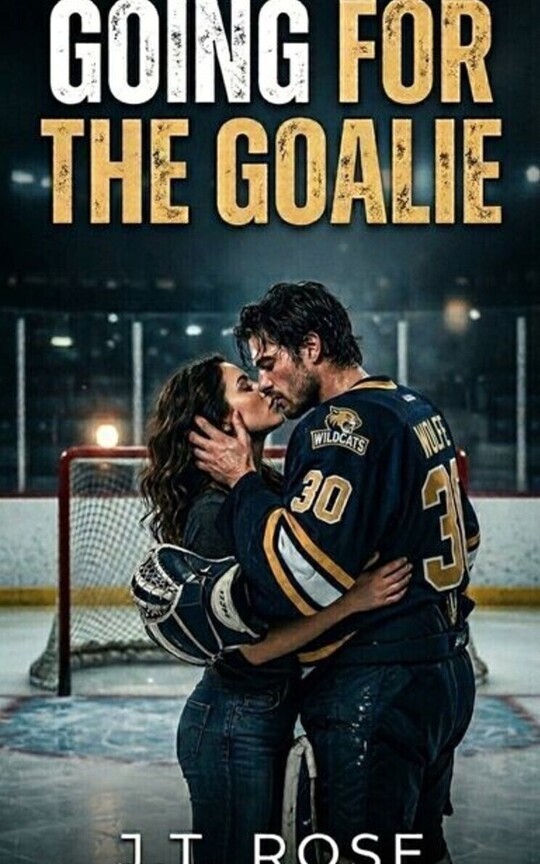

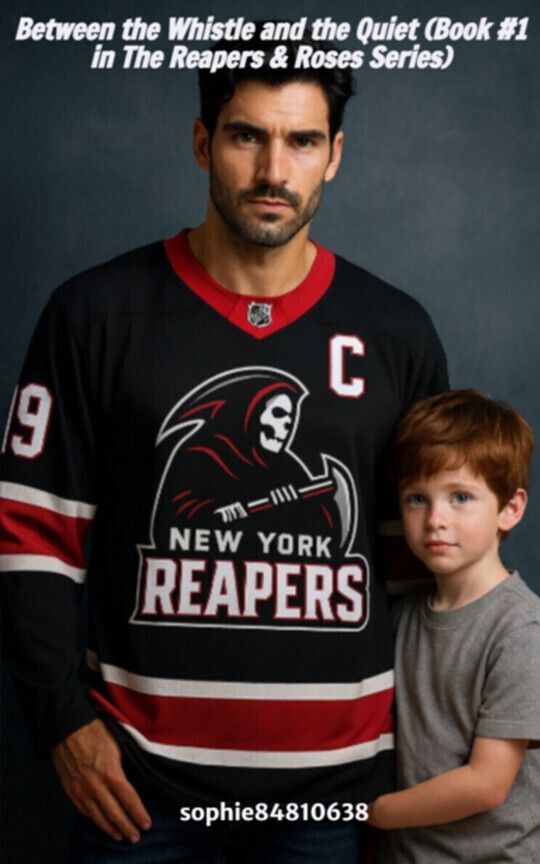









Iniciando la lectura, vaya que si ha de ser difícil esconder lo que de verdad es..
Si, que es difícil para él cumplir su sueño escondiendo que es en realidad..
Well, that didn't take long. I'm hooked.