
Chapter 1: Coming Home
The rain had just stopped when Sara drove over the last hill into Cedar Bay.
The town looked exactly as she remembered it, and somehow smaller. The Pacific stretched out endlessly to her left, steel-gray under a sky that was finally clearing. Wind-twisted cypress trees still clung to the cliffs like old friends refusing to let go. And there, perched on the bluff like it had been waiting for her for ten years, stood her grandmother’s Victorian house.
Sara’s hands tightened on the steering wheel.
The house looked tired. The once-vibrant sage-green paint had faded to a weary gray. Several shutters hung at crooked angles. One of the turret windows was boarded up. Even from the road she could see the sagging porch and the moss claiming the roof.
She killed the engine of her rental car and sat there for a long moment. Her heart was hammering against her ribs. Ten years. She had promised herself she would never come back.
And yet here she was. Because Rosa had left her everything.
Sara stepped out into the cool, salt-heavy air. The wind immediately tugged at her long dark hair, whipping it across her face like an impatient greeting. She pulled her cream-colored cardigan tighter around herself and walked up the familiar gravel path.
The foreclosure notice on the front door felt like a slap.
She stared at it for several seconds before ripping it down. Beneath it was another envelope, thick and cream-colored, with her grandmother’s elegant handwriting on the front.
“For Sara, to be opened at the house.”
Her throat tightened. She slipped the envelope into her bag, unwilling to read it yet. Not standing there like this.
The key still worked. The heavy oak door creaked open, and the scent of lavender, old wood, and sea air rushed out to meet her. Sara stepped inside and let the door close behind her.
Silence ruled.
Then the memories came flooding in loud, vivid, and merciless: Laughing in this hallway with Caleb at sixteen. Rosa pretending not to notice when they stayed out too late on the bluff. The way Caleb used to carry her up the stairs on his back when she pretended her legs were too tired after long beach walks.
Sara pressed a hand to her chest as if she could physically push the memories back.
She wandered through the rooms slowly. The furniture was covered in sheets. Dust floated in the slanted afternoon light coming through the tall windows. But it wasn’t just a house anymore.
In the large ballroom on the west side, the room Rosa had always called “the heart of the house”, Sara stopped.
The walls were covered in scaffolding. Half-finished murals stretched across the plaster. Paint supplies, carefully organized, still sat on a table near the window. A hand-written note in Rosa’s handwriting was taped to one of the ladders:
“For the children of Cedar Bay. Their stories deserve beautiful walls.”
Sara’s eyes stung.
She had known Rosa was working on something. Her grandmother had mentioned “a small community project” in their phone calls. But this… this was so much more.
An arts center.
Rosa had been turning the entire ground floor of the Victorian into a community arts space gallery, workshop, and studio for local kids. The kind of place Sara had once dreamed of creating herself before fear had driven her across an ocean.
She walked closer to one of the murals. It depicted the coastal bluff at sunrise, children playing near tide pools, hands reaching toward the sky. Rosa had only completed the bottom third.
Sara touched the dried paint gently with her fingertips.
“I’m sorry,” she whispered. “I should have come sooner.”
The envelope in her bag suddenly felt heavier.
She finally pulled it out, broke the wax seal, and unfolded the thick paper.
My dearest Sara,
If you’re reading this, then I’m gone and you’ve come home.
This house was never meant to be just a house. For years I’ve been building something for our town. A place where children can create, heal, and dream. The Cedar Bay Arts Center. It was supposed to open this summer during the Solstice Festival.
The bank has been patient, but they will not wait forever. The project is only half complete. If it is not finished in six weeks, they will foreclose on everything.
There is only one man in this town skilled enough to finish what I started. I have already spoken to him. He has agreed to help on one condition…that you work alongside him.
Yes, Sara. Caleb.
You two were always better together. Don’t let pride or old pain rob this town, or yourselves of a second chance.
Finish what I began. Not just the walls. Finish the healing too.
All my love, always,
Rosa
Sara closed the letter. Her hands were shaking.
Caleb.
It was Caleb.
She closed her eyes and leaned against the wall, the scent of turpentine and old wood wrapped around her like a memory she couldn’t escape.
A low rumble outside made her open her eyes. A truck was pulling up the drive. Sara walked to the front window with a racing heart.
The truck door opened. He stepped out.
Ten years had changed Caleb. He was broader now, taller, with the kind of quiet strength that came from years of real, physical work. His dark hair was a little longer, tousled by the wind. He wore a simple gray henley and worn jeans, sleeves pushed up over powerful forearms.
He looked up at the house and then straight at the window where she stood.
Their eyes met across the distance. Even from here, Sara felt the impact like a wave crashing over her.
Caleb froze for half a second. Then his jaw tightened. He reached back into the truck, pulled out a worn leather tool belt, and started walking toward the porch with slow, deliberate steps.
Sara’s pulse thundered in her ears.
She moved to the front door but didn’t open it immediately. Through the frosted glass, she watched his silhouette grow larger.
He stopped on the other side of the door.
For a long moment, neither of them moved.
Then Sara finally turned the knob and pulled the door open.
Caleb stood there, eyes stormy as the ocean behind him. Up close he looked even more devastating: older, harder, and impossibly familiar all at once.
“Sara,” he said. His voice was deeper than she remembered.
“Caleb.”
The name felt strange and intimate on her tongue after so many years.
He glanced past her into the house, taking in the scaffolding visible in the hallway, then looked back at her. His expression was carefully guarded, but she could see the storm beneath it.
“So,” he said quietly. “You finally came back.”
Sara lifted her chin, trying to steady her breathing. “Looks like your stubbornness and my grandmother’s scheming finally got their way.”
A humorless smile tugged at the corner of his mouth.
“Six weeks, Sara. That’s what Rosa asked of me. Six weeks to finish the arts center before the festival.” His gray-blue eyes locked onto hers. “After that, you can run back to Europe or wherever you’ve been hiding. But this project… we'll finish it together. Or we lose everything she built.”
Sara felt the weight of the last ten years settle between them like salt in an open wound.
She thought of the half-finished murals. Of Rosa’s letter. Of the children who would lose this place if she walked away again.
And she thought of the boy who had once carried her on his back along this very bluff, promising her the world.
Sara swallowed hard and met his gaze.
“I’m not here to run, Caleb.”
He studied her face for a long moment, searching for something. Doubt maybe, or fear.
Whatever he found made his shoulders tighten.
“Then I guess we have work to do,” he said.
He stepped past her into the house without waiting for an invitation. The scent of cedar and salt and something uniquely him brushed against her as he passed.
Sara closed her eyes for a brief second. The tide had turned.
And it was pulling her straight back into the one person she had spent ten years trying to forget.



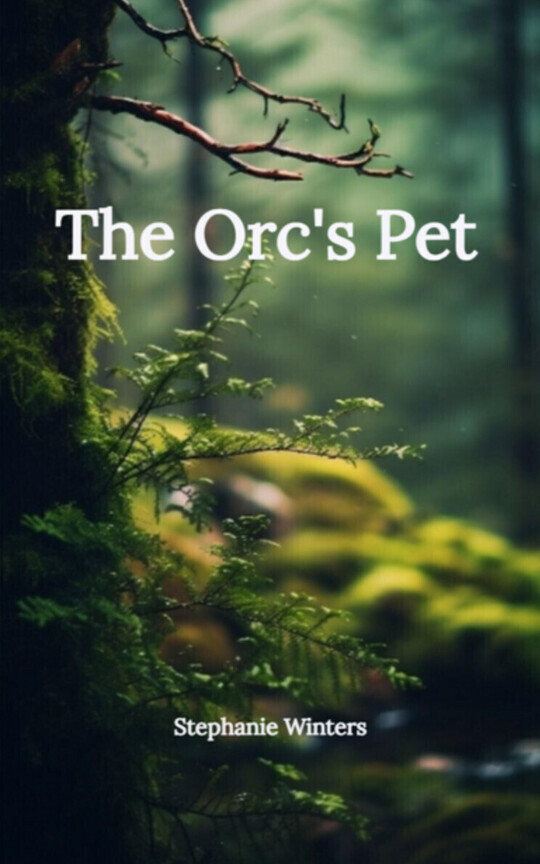















Since I have participated in Sweet & Swoony Contest, I'm giving reads to clean contemporary stories, and this one caught my attention due to its cover, and now, the plot is catching my suspense, appreciated, good writing 👏
This looks interesting 🤔 🥰