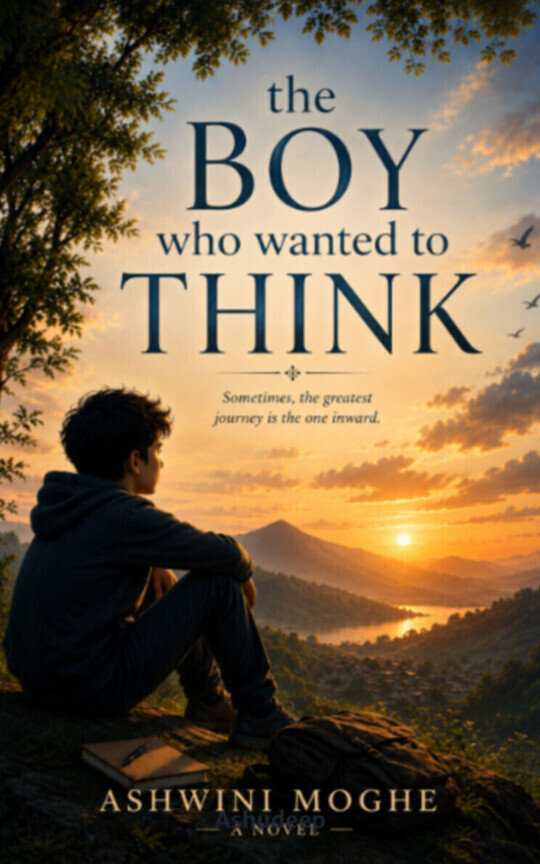

Chapter One The Boy Who Asked Impossible Questions
London, 1988.
The rain had finally stopped.
Water clung stubbornly to the cobblestones outside the community chess hall, turning the streetlights into shimmering ribbons of gold. Parents gathered near the entrance, wrapping scarves tighter around their necks as they congratulated children carrying polished wooden trophies almost too large for their small hands.
Inside, the room was slowly emptying.
The applause had faded.
The tournament was over.
Eight-year-old Adrian Vale remained seated at the last table.
The chessboard in front of him was untouched.
The pieces stood exactly where the final game had ended—a white queen deep in enemy territory, two black rooks trapped, a lone knight guarding a king that had nowhere left to run.
Checkmate.
The adults called it brilliant.
Adrian wasn’t looking at the winning move.
He was staring at the moves that had never happened.
His fingers hovered above the board without touching a single piece. His brow furrowed as though he were listening to a conversation no one else could hear.
“What if the knight hadn’t moved there?” he whispered.
No one answered.
His mother, Elena, watched from across the room, smiling with the quiet patience that came from years of watching her son disappear into his own thoughts.
Most children celebrated victories.
Adrian investigated them.
She walked over and placed a gentle hand on his shoulder.
“They’re waiting to give you your medal.”
He looked up, almost surprised to find anyone else in the room.
“I know.”
“Then why are you still here?”
He looked back at the board.
“I’m trying to understand.”
“Understand what?”
“Everyone says I won because I made the right move.”
She nodded.
“But...” He hesitated, searching for words that could hold the size of the question inside his mind.
“How did I know it was the right move before I knew?”
Elena blinked.
It wasn’t a question about chess.
It was a question about thinking itself.
On the drive home, rain tapped softly against the car windows.
Adrian sat in the back seat, medal tucked carelessly into his coat pocket.
His father glanced into the rear-view mirror.
“You beat three national champions today.”
Silence.
“Are you happy?”
Another pause.
“I think so.”
“You don’t sound sure.”
Adrian leaned his forehead against the cool glass.
“If someone taught me chess...”
“...could someone teach a machine?”
The car fell quiet.
His father laughed softly.
“A machine?”
“Yes.”
“They don’t think.”
“But why?”
His father smiled, assuming it was another one of Adrian’s endless childhood questions.
“Because they’re machines.”
Adrian frowned.
“That’s not an answer.”
Questions followed Adrian everywhere.
At breakfast, he wondered why birds never collided when they flew together.
Walking to school, he wondered how people recognized familiar faces after years apart.
During science class, he wondered why memory faded.
His teachers admired his curiosity.
His classmates found it exhausting.
There was always another question.
Always another mystery.
Always another puzzle.
The world, to Adrian, wasn’t a place full of answers.
It was a place overflowing with questions no one had thought to ask.
The school library became his favorite hiding place.
While other children borrowed adventure stories, Adrian wandered the shelves searching for books about mathematics, astronomy, psychology, and machines.
He didn’t care that many were written for adults.
He liked not understanding everything.
It meant there was still something to discover.
One rainy afternoon, the librarian found him sitting cross-legged on the floor surrounded by open books.
“You know,” she said gently, “most children your age don’t read books about the human brain.”
Adrian looked up.
“I’m not reading about the brain.”
“No?”
“I’m reading about how thoughts become ideas.”
She smiled.
“And have you found the answer?”
He shook his head.
“No.”
A small smile appeared on his face.
“But I found a better question.”
That evening, while the city settled into sleep, Adrian stood at his bedroom window.
Across the street, apartment windows glowed one by one before fading into darkness.
Somewhere beyond the rooftops, airplanes traced silent paths across the night sky.
His chessboard rested on the desk behind him.
Beside it sat a notebook.
Its pages weren’t filled with drawings or stories.
They held lists of questions.
Why do people dream?
Can intelligence be measured?
Do animals imagine the future?
Could a machine ever become curious?
He closed the notebook and looked at the stars.
The universe seemed impossibly large.
Yet somehow, he felt certain that the greatest mystery wasn’t out there among the galaxies.
It was inside the human mind.
He didn’t dream of becoming famous.
He didn’t dream of becoming rich.
He dreamed of understanding how thought itself was born.
Years later, people would call him a visionary.
Some would call him reckless.
Others would call him brilliant.
But on that quiet London night, he was simply a boy standing by a window, holding a notebook filled with impossible questions.
And without realizing it, he had already begun the journey that would one day change the world.