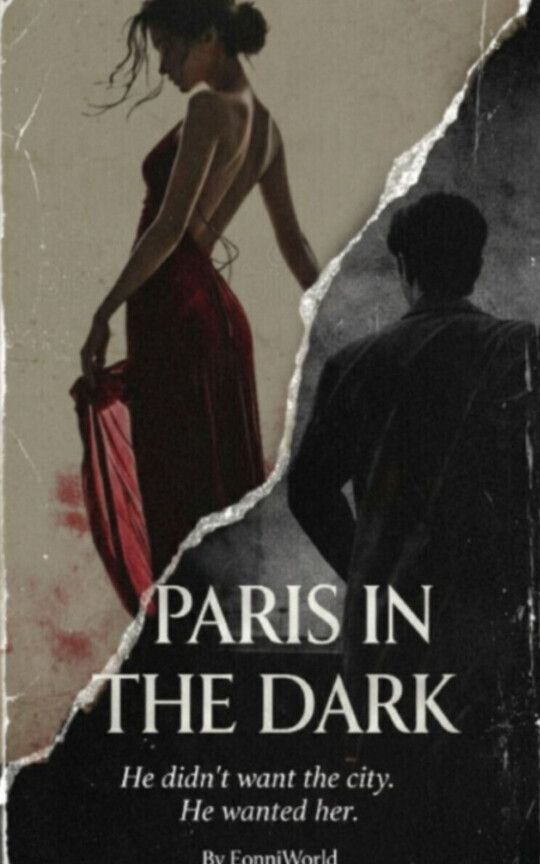
The Last Prerogative
The letter arrived on a Tuesday morning, and by noon, Niamh Prendergast knew she had exactly three days left to save her home.
She read it twice. The cold ink didn’t shift or soften. The words remained exactly where they had been the first time, stark and unyielding against the cheap parchment: FINAL NOTICE OF PAYMENT.
She folded the letter neatly along its creases. Then unfolded it.
The number at the bottom refused to change. Twenty-eight thousand, four hundred and nineteen guineas. Niamh stared at the digits until they stopped looking like currency and became what they truly were. A death sentence.
Pushing the notice aside, she pulled the heavy household ledger toward her. She dipped her quill, her eyes tracking the pathetic tallies of their remaining assets. There was the silver. She had already counted the pieces twice, her fingers stained with polish. The good tea service might fetch forty guineas if she found a buyer desperate enough. The candlesticks, perhaps another twenty.
Her mother’s emerald necklace was worth more.
Niamh’s hand hovered over the page, the feather of the quill trembling slightly. She could liquidate everything. The portraits of ancestors who had failed her. The remaining horses. The antique mahogany furniture in the unused salons. The tarnished mirrors in the east wing. The silver. Her mother’s necklace.
Even with the house stripped bare to the floorboards, the math didn’t work. She wouldn’t have enough.
Defeated, she drew a black line through the necklace. Then, after a bitter pause, she scratched it back into the margins. Apparently, sheer desperation had made her sentimental.
A soft, rhythmic knock rattled the heavy oak door.
“Come in.”
Mrs. Doyle stepped into the study, balancing a modest silver tray. Two thick slices of day-old bread. A small pot of black tea. A tiny, measured pat of butter.
Niamh frowned at the meager offering. “That’s all?”
“You haven’t eaten since yesterday,” the housekeeper replied flatly, setting the tray down on the corner of the desk.
“I had an apple.”
“Half an apple.”
Niamh looked up, matching the older woman’s stubborn gaze. Mrs. Doyle had served the Prendergast estate long enough to know when to hold her tongue. Unfortunately, she had also served it long enough to know exactly when to ignore decorum entirely.
“Eat,” Mrs. Doyle commanded.
Niamh picked up a slice of the dry bread, tearing off a corner. “There. Satisfied?”
Mrs. Doyle gave a single, firm nod. “Good.” She turned back toward the door, her apron rustling, but paused with her hand on the brass knob. “Niamh.”
Something stiff and uncharacteristic in the housekeeper’s voice made Niamh freeze. “What is it?”
“There is a gentleman waiting in the drawing room.”
Niamh slowly lowered the bread back to the plate. “Who? Did the mail coach bring a card?”
“He didn’t give his name.”
“Then why on earth did you let a stranger into the estate?”
Mrs. Doyle’s face remained an unreadable mask, though her posture went rigid. “I didn’t let him in.”
A heavy silence filled the room.
“He simply walked past me,” Mrs. Doyle clarified.
Niamh stared at her, the gravity of the situation sinking into her chest. “That sounds infinitely worse.”
“I thought so too.”
A ghost of a laugh caught in Niamh’s throat, dying before it could reach her lips. “Where is he now?”
“The drawing room.”
“How long has he been sitting there?”
“Twenty minutes.”
Niamh looked down at the untouched half of her bread, the appetite she never had vanishing completely. “Of course he has.”
She took the final notice, folded it into a tight square, and slipped it deep into the pages of the ledger. She stood, smoothing down the skirts of her worn morning dress.
Mrs. Doyle didn’t move away from the door. “You should take the letter with you, child.”
“Why?” Niamh asked, her hand resting on the back of her chair. “To mock myself?”
“So you don’t forget exactly how charming your morning has been when you look at him.”
Niamh looked at her old nurse, seeing the unspoken warning hidden in her eyes. Mrs. Doyle knew exactly what kind of man was waiting down the hall.
“Go on,” the older woman whispered.
Niamh adjusted her spine, took a breath of the cold, damp air of the manor, and left the study.
The stranger stood near the hearth, his back turned completely to her.
He hadn’t bothered to remove his heavy winter coat, nor his leather gloves. Yet, despite the intrusion, he stood with a terrifying ease—as if he already owned the floorboards beneath his boots. The sheer arrogance of his posture irritated Niamh far more than it should have.
She clicked the heavy oak door shut behind her, the sound echoing through the cavernous room. “You’ve been waiting quite long enough.”
The man turned.
He was younger than the monsters in the rumors. Perhaps thirty. His dark hair was meticulously combed, framing a face defined by sharp, severe angles. Everything about him was cast in shadow: a black wool coat, a matching waistcoat, and a heavy silver watch chain that glinted coldly before disappearing into the fabric.
On paper, there was nothing remarkable about him. Except for his eyes.
When his gaze landed on her, there was no flicker of curiosity. No spark of male appreciation. He looked at her with a chilling familiarity, as though she were an equation he had already solved years ago.
Niamh’s gaze dropped down to his gloved hand, tracing the metal contours of a heavy signet ring worn over the leather. A polished black stone. A silver crest.
Her stomach violently dropped. She recognized that crest. Every soul in Éiremont did.
“The FitzGeralds,” she breathed, the name tasting like ash.
His eyes locked onto hers, unblinking. “Neilan FitzGerald.”
Of course it was. She had expected a bloated, elderly tyrant. Someone whose cruelty showed on his skin. Instead, Neilan FitzGerald looked entirely civilized, polished to a mirror shine. That made him infinitely worse.
Niamh anchored herself near the door, refusing to step further into his orbit. “What are you doing uninvited in my house?”
“I came to speak with you.”
“You’ve managed that part. You can leave.”
“I intend to accomplish a great deal more than a greeting, Miss Prendergast.”
“How terribly ambitious of you.”
A dark ripple of amusement crossed his face, gone as quickly as it came. “You are exactly as you were described.”
Her posture stiffened. “By whom?”
Neilan didn’t answer. Instead, his gaze drifted lazily toward the side table where she had left the household ledger, before tracking back to her face. “Your creditors have given you until Friday.”
Niamh kept her lips pressed into a tight line, refusing to give him the satisfaction of a reaction.
“You already knew,” he noted flatly.
“I am capable of reading the post.”
“I didn’t come here to insult your intelligence.”
“No,” Niamh countered, her voice sharp enough to cut. “You merely trespassed into my home to announce the exact date of my financial execution.”
“Your execution?” Neilan echoed, tilting his head slightly.
“Would you prefer I call it a funeral?”
A faint, ghost of a smile touched the corner of his mouth. “I can see it now.”
“See what?”
“Why your family described you as difficult.”
“My family was being exceptionally kind.”
The faint smile flatlined into stone. “Perhaps.”
Steeling her resolve, Niamh crossed the room, stopping just short of the hearth’s warmth. “Let us save ourselves the performance, Mr. FitzGerald. You are here because of the debt.”
“Yes.”
“Then say whatever it is you came to say, and be on your way.”
Neilan slid his gloved hand into the inner pocket of his coat. Niamh’s fingers tightened instinctively into fists at her sides, bracing for a weapon. He caught the subtle panic in her shoulders but didn’t comment on it.
Instead, he withdrew a folded, heavy document. Nothing more.
He placed it flat on the mahogany table between them. “The amount listed by your principal creditor is dangerously incomplete.”
Niamh frowned. She stepped forward, snapping the wax seal and unfolding the paper. Her eyes scanned the dense columns of figures, then froze, the breath catching in her throat.
“This says twenty-eight thousand.”
“Four hundred and nineteen,” Neilan finished for her, his voice smooth and entirely devoid of pity.
“I can read the total,” she snapped, her heart hammering against her ribs. “The notice I received this morning was for twelve thousand.”
“Yes.” Neilan took a single step closer, his shadow stretching across the ledger. “Twelve thousand was merely the principal loan. The tip of the blade.”
Niamh’s head snapped up, her eyes wide with a sudden, sickening realization. “My father only borrowed twelve thousand...”
“Initially.”
The word hung suspended in the freezing air between them. Niamh looked back down at the document, the ink blurting before her eyes. “Where did the remaining sixteen thousand come from?”
“Interest.”
“Interest doesn’t more than double a principal in a matter of months, Mr. FitzGerald.”
“Not under ordinary circumstances, no,” Neilan replied smoothly.
Her eyes lifted, glaring into his. “What exactly does that mean?”
Neilan’s expression remained a maddeningly unreadable mask. “Your father leveraged this estate more than once. He signed away portions of your inheritance in secret rooms to men who don’t keep public books.”
“That’s impossible.”
“It is entirely factual.”
“My father would have told me,” Niamh insisted, her voice rising as desperation clawed at her throat. “He wouldn’t have left me in the dark.”
“Would he?”
The question was devastatingly quiet. Niamh’s jaw clenched so hard her teeth ached. The memory of her father’s final, erratic months flashed through her mind—the locked doors, the late-night carriages, the sudden lack of funds.
“He’s dead,” she whispered flatly.
“I am well aware.” The answer came without a shred of hesitation.
Niamh studied him closely. For the first time, she noticed something profoundly unsettling about his composure. He wasn’t smirking. He wasn’t taking a sick, sadistic pleasure in watching her world collapse. He was simply waiting. Stationary. Certain. As though he had already lived through this exact conversation and was merely watching the script play out.
“What is it you actually want here?” she demanded.
Neilan looked down at the parchment on the table. “To settle the account.”
A harsh, hollow laugh tore from her throat. “With what? Look around you. I am matching pennies to buy stale bread.”
“With my money.”
The drawing room went utterly, suffocatingly silent. Niamh stared at him, convinced she had misheard. “You want to buy my family’s debt?”
“I already have.”
The last remnants of her defensive amusement vanished. “What?”
Neilan reached into his coat once more, withdrawing a second document bearing an official crimson wax seal. “At dawn this morning, I purchased the outstanding Prendergast debt from your principal creditors. Every penny of your liability now belongs exclusively to me.”
Niamh kept her hands glued to her sides, refusing to touch the paper. “Why?”
“Because they were eager to sell, and I was positioned to buy.”
“That is a corporate evasion, not an answer.”
“No,” he agreed, his dark eyes locking onto hers with terrifying focus. “It isn’t.”
A profound, icy dread settled beneath Niamh’s ribs, slowing her heartbeat. “You bought my life. You own my family.”
“Yes.”
“Why?”
Neilan said absolutely nothing. His silence was louder than a threat, and it sparked a sudden, violent flash of anger in her chest.
She stepped closer, closing the distance between them until she could smell the winter rain on his wool coat. “Do you intend to evict me? To take the estate?”
“No.”
“The tenant land?”
“No.”
“The livestock? The house itself?”
“No.”
Niamh stared up at him, entirely bewildered by the wall he had built around himself. “Then what do you want from me?”
Neilan FitzGerald looked down at her for a long, agonizing moment. When he spoke, his voice was a low, velvet command. “I want you to marry me.”
For several seconds, the world seemed to stop spinning. Niamh didn’t breathe. Then, a sharp, disbelieving laugh slipped past her lips. Not because she found the proposition humorous, but because the sheer absurdity of it left her with no other human response.
Neilan simply waited, his face carved from stone.
“You are entirely serious,” she realized, the laughter dying instantly.
“I do not joke about investments, Miss Prendergast.”
“You came here under the guise of collecting a debt.”
“Yes.”
“And your grand solution to a financial ledger is holy matrimony.”
“Yes.”
“To me.”
“Yes.”
Niamh glared at him, her hands trembling with a mixture of rage and panic. “Do you make a habit of proposing to desperate women you’ve only just met?”
“I haven’t just met you.”
The cold anger in her chest turned into something far more dangerous. “What does that mean?”
“It means I have known exactly who you are for a very long time.”
She loathed that answer. It made her skin crawl with the realization that she had been watched. “How long?”
“Long enough.”
“That is not an answer, Neilan.”
“No,” he murmured, his tone remaining maddeningly, seamlessly calm as he stepped into her space. “But it is the only one you are getting today.”
“But it is the only one I am giving you.”
Niamh turned away from him, unable to bear the heavy weight of his gaze any longer. She walked toward the tall window, her boots clicking softly against the floorboards. Outside, a sudden autumn rain had begun tapping against the glass, blurring the world beyond into a bleak, gray afternoon.
Prendergast House. The estate had belonged to her bloodline for generations. Looking out over the overgrown lawns, she remembered running through those grounds as a child, hiding beneath the hollow oak tree, falling into the stream, and her mother laughing from the terrace while her father watched with pride.
That was before the creditors. Before the letters. Before every single room in this manor became something that could be tagged, priced, and sold.
She caught her own reflection in the pane. She was still wearing the same dark green dress she’d worn yesterday. The hem was noticeably frayed. Her family had once employed twelve women just to maintain the household; now, Mrs. Doyle managed with three. The west wing hadn’t been heated since the first frost of winter. Two weeks ago, Niamh had secretly sold her family’s silver carriage, lying to the village that it was out for repairs, just so she could pay the kitchen staff their back wages.
And now, this stranger was standing behind her, offering to erase the entire nightmare with a stroke of a pen. It should have felt like salvation. Instead, it felt like an anchor dragging her into a deeper kind of debt.
She turned back around, her chin held high. “What are your terms?”
Neilan’s gaze sharpened, the dark pupils dilating slightly. “One year of marriage.”
“One year?” she echoed.
“After twelve months, you may quietly seek an annulment. I will not contest it.”
“And the estate remains mine?”
“In perpetuity.”
“My family’s debts?”
“Erased from the ledgers entirely.”
“My servants?”
“Unaffected. Their wages will be subsidized by my accounts.”
“My own decisions?”
“Entirely yours.”
Niamh studied the rigid lines of his face. “That last one sounds remarkably suspicious.”
“It isn’t.”
“You expect me to believe that a FitzGerald does anything without expecting a pound of flesh in return?”
A microscopic twitch at the corner of his jaw was his only reaction. “You’re already learning how our world operates, Miss Prendergast.”
She ignored the patronizing comment. “What happens if I refuse your offer?”
Neilan didn’t hesitate. “On Friday at noon, the creditors take legal possession of this estate.”
“And you?”
“I collect nothing.”
“You’d simply walk away and let the house go to the auction block?”
“Yes.”
“After spending your own capital to buy up the debt this morning?”
“Yes.”
“Why?”
His dark eyes held hers, absolute and unyielding. “Because the choice must be yours.”
There was something profoundly unsettling about his lack of force. No threats. No grand persuasion. No cheap attempts to charm or manipulate her into his bed. Just an absolute, terrifying certainty.
Niamh looked down at the contract resting on the mahogany table. She reached out, her fingers brushing the heavy, expensive parchment. Her gaze drifted to the top of the page, and her breath hitched in her throat.
Printed in clean, elegant ink was her full legal name: NIAMH PRÉNDERGAST.
She had never given him her full name. Of course he already knew it.
She looked at the blank signature line, then back up at him. “You prepared this document before you ever set foot in this house.”
“I did.”
“So you already knew exactly what I would say.”
“No,” Neilan countered smoothly. “I didn’t.”
“Then why draft it?”
“Because you needed to see your options in black and white.”
Niamh let out a bitter, quiet scoff. “You make coercion sound remarkably polite, Mr. FitzGerald.”
“I make offers,” he corrected. “And when the alternative is losing everything, you must decide what matters more to you.”
She hated him. Or rather, she desperately wanted to. It would have been infinitely easier if he were cruel—if he had threatened her, or smirked while discussing her impending ruin. But Neilan FitzGerald didn’t need to play the villain. The debt did all his dirty work for him.
Niamh looked at the contract one last time. Three days. Three days before the Prendergast name was erased from the county. Three days before strangers walked through these sacred rooms, touching her mother’s things and deciding what her childhood memories were worth.
She stepped back, leaving the contract on the table. “I need time.”
“You have until Friday morning.” Neilan picked up his leather gloves from the mantel, smoothing the leather over his long fingers. He turned and began walking toward the drawing-room door.
Niamh watched his retreating back, a sudden surge of desperation overtaking her. “Neilan.”
He stopped, his hand resting on the brass knob.
“Why me?” she asked, her voice cracking slightly in the quiet room. “Out of all the families in Éiremont, why me?”
He turned his head slightly, looking at her over his shoulder. For the first time, a shadow crossed his dark eyes—a rare crack in his pristine armor.
“Because you are the last Prendergast.”
Niamh waited, her chest rising and falling in the heavy quiet. But he offered nothing else.
Her brow furrowed. “That’s all?”
“No.” Neilan’s gloved hand remained resting on the brass door knob, his silhouette dark against the frame. “But that is all you need to know today.”
With that, he turned and stepped out, the heavy drawing-room door clicking shut behind him.
Niamh remained exactly where she stood, frozen to the floorboards. She waited, listening to the echoing footsteps fade down the grand hallway, followed by the distant, heavy thud of the manor’s front door closing. A moment later, the low rumble of carriage wheels ground across the wet gravel outside. Only when the sound completely dissolved beyond the iron gates did the tension leave her shoulders.
She slowly crossed back to the mahogany table.
The contract was still there, a white scar against the dark wood. She opened the thick parchment again, her fingers tracing the dense script. Page one: the strict marriage terms. Page two: the preservation of her property arrangements. Page three: his assumption of her financial obligations.
Page four—
Niamh’s hand stilled.
There was an extra leaf of paper tucked loosely between the final sheets. She hadn’t noticed it during her initial panic. Unlike the crisp, expensive vellum of Neilan’s contract, this paper was old, yellowed at the margins, and deeply creased.
She unfolded it with trembling care. The slanting, elegant ink was faded, but she recognized the frantic strokes immediately.
It was her father’s handwriting.
Niamh read the first line. Then the second. A sickening wave of vertigo washed over her, making her stomach violently drop. The note wasn’t a hidden journal entry meant for her eyes; it was a letter addressed directly to a FitzGerald.
And at the very bottom, scrawled in an aggressive, desperate hand, was a single sentence that turned the blood in her veins to ice:
The FitzGeralds remember what the Prendergasts chose to forget.
Niamh read it again, her eyes burning against the ink. Then a third time, searching for a hidden meaning that wasn’t there. Her father’s hand. Her father’s words. Yet, she had been kept entirely in the dark.
Outside, a low, heavy vibration of thunder rumbled across the Éiremont hills, rattling the glass panes of the drawing room.
Niamh slowly lifted her head, staring toward the empty doorway where Neilan FitzGerald had vanished. For the first time all morning, the suffocating weight of her family’s debt disappeared from her mind.
She was thinking only of Arthur Prendergast. And wondering, with a growing sense of dread, exactly what her father had done to buy their safety.