
Chapter One: Until the Last Green Thing Forgets


The tidings came at the edge of evening, when the last colour was draining from the sky, and salt sharpened the wind like grief brought to a blade. The western horizon burned low and bruised beneath a skein of cloud, and every gull cry seemed sharpened by distance, as if even the birds knew a parting was underway before any Elf dared admit it.
The last ship was leaving.
Behind the messenger, the settlement seemed to hold its breath. Half-open doors remained half-open. A cup stood abandoned on a sill, steam lifting from it in a pale thread that the evening wind immediately took apart. Somewhere a horse stamped once and went still, as though every living thing nearby had understood that this was not news one merely received, but a blade laid gently into the hand.
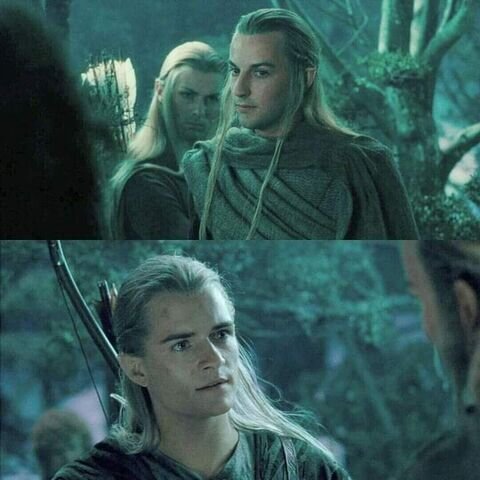
For one terrible heartbeat Legolas could do nothing but stare at the Elf who had brought the warning, as though the words had been spoken in some tongue older than starlight and grief. Then Haldir was moving beside him, pale hair catching the waning sun, cloak snapping behind him like a torn banner. Neither of them spoke at first. There was no breath for it.
’Manen haer?’ Legolas asked at last, already fearing the answer. (A/N translation: ‘How far?’)
The messenger’s mouth tightened. His eyes flicked once toward the unseen harbour, and the pause was answer enough before the words arrived. ’Haer ringorn aen, i law gened vellon lim.’ (A/N translation: ’Far enough that only folly has swift enough feet.’)
Haldir was already turning. ’Si law gened vellon lerenno na chae.’ (A/N translation: ‘Then folly had better learn to run.’)
’Ú-chebin mellon vi dann, aníron vel enni drego aníron acharn na sael.’ Legolas answered, already matching him stride for stride. (A/N translation: ‘If we are fools, then let us be quick enough to shame wisdom.’)
The messenger took one step after them, helpless in the road. ’Híryn nín—’ he began, but Haldir did not look back. (A/N translation: ‘My Lords—’) The plea broke against the thunder of their retreating steps. Dust lifted around the messenger’s boots and settled again untouched, while his hand remained half-raised in the road, fingers curled around an answer already too late to change. He seemed, for one breath, less like one who had brought tidings than one abandoned with them. ’Maen cenir dartho?’ the messenger called after them, voice breaking around the last word. (A/N translation: ‘They asked whether to wait.’) The wind came hard from the west then, salt-cold and pitiless, dragging the words thin across the stones as though even the air wished to spare him the rest. His gaze fixed past them, beyond the road, beyond all hope of command or courtesy, toward a harbour neither of them could yet see. ’Aer ú-badhant.’ (A/N translation: ‘The tide would not.’)
’Si hebid i dangad en-eneth lín an fuin lín.’ Haldir called back, without slowing, his voice carrying like a blade over stone. (A/N translation: ’Then keep that answer for your own sleep.’) The road bent sharply beneath them, and he did not spare the messenger another glance; if grief had made an accusation of his stride, he refused to soften it for anyone left behind. ’Mín linnathon i chad.’ (A/N translation: ’We will spend ours on the road.’)
The last of the messenger’s cry frayed into wind behind them. Legolas felt it vanish and hated the road for continuing beneath his feet, as though warning might be outrun, as though it had not already arrived with its throat cut.
Legolas had expected some warning if the world meant to take away its last mercy: a bright tearing of longing, perhaps, or an answering cry in his blood. Instead his boots struck stone, the wind dragged at his cloak, and the harbour remained hidden beyond the next rise. At every bend he looked for a mast. At every lift of ground, for the pale edge of a sail. His heart did not slow when nothing appeared; it only drove him harder, as if speed might still make a bargain where no voice could.
A quieter part of him knew how frail that belief was and clung to it anyway. After all the wars, after every farewell endured because some future harbour shimmered beyond grief, he had thought himself too old for the simple bargain of please, not yet. Yet there it was, beating in him with every stride: not yet, not yet, not yet.
His breath came fast from fear rather than weariness. The road’s pale stones flashed beneath him, then vanished under the next stride; wind dragged tears from the corners of his eyes before they could fall. Somewhere to his left, Haldir’s cloak snapped and snapped again, the sound as sharp as torn silk, and Legolas fixed on it because looking only westward made the distance feel endless enough to swallow thought.
’Áva gened i gond.’ Haldir said beside him, gaze fixed on the failing horizon. (A/N translation: ‘Do not count the stones.’) His stride did not falter, but the warning carried the strain of one clinging to discipline by the edge of his teeth. ’Tiro annûn.’ (A/N translation: ‘Look west.’)
’Ai i râs en-gail sí thinna, darthar nad i maetho.’ Legolas said, each word clipped by urgency. (A/N translation: ‘If the sail still shows, there remains something to contest.’)
Haldir did not look away from the west. ’Si aphado i lûf, ú i estel.’ (A/N translation: ‘Then spend breath, not hope.’) The answer was practical enough to be cruel, and the cruelty cost him even as he gave it. ’Lûf lasta.’ (A/N translation: ‘Breath obeys.’) A muscle worked in his jaw before he let the final warning fall between them. ’Estel breitha ai nodach han na chel.’ (A/N translation: ‘Hope shatters if you drive it too hard.’)
They ran, and the road seemed to lengthen beneath them as if Middle-earth itself had decided even haste must be made meaningless. Evening smeared the stones with copper light, and the wind came off the water in hard, salt-stung breaths, flattening grass and tugging at their cloaks as though trying to drag them back from a mercy already departing.
The stones beneath them still held the day’s last warmth. It rose through Legolas’s boots as he ran, real and ordinary and unnoticed beneath the sick certainty of distance. Beside him, Haldir’s breathing stayed even by discipline and endurance; whatever broke in him now would not be breath or muscle, but the knowledge that the arrow of their haste had already fallen short.
Above the road the first stars had not yet appeared, and their absence pressed on Legolas like a withheld witness. The world offered small signs of delay: a distant mast creaking, a gull crying beyond the dunes, sand skittering over stone. Ordinary things, all of them unbearable because none could be hurried.
The path dipped and rose with cruel smallness, every familiar curve made strange by urgency. A branch scraped across Legolas’s shoulder and snapped back behind him. He did not slow. At any other time he might have felt the sting of bark through cloth; now even that ordinary touch vanished beneath dread.
Past the white road and bent grasses, past foam and the stunned faces of those who turned too late to call them back, the path fell toward the sea. Pebbles shifted beneath their boots. Sea thrift shivered along the dunes, its small pink flowers bowing in the wind from the West. The old ache of the Sea song clawed in Legolas’s chest—not summons, not holiness, but fear; loss; the knowledge that some doors, once shut, never opened again.
Haldir reached the shore first. He stopped so suddenly that Legolas had to halt beside him.
Beyond them, the Grey Havens lay silver beneath the dying evening, preserved as a threshold though ages had passed since the great partings. The quay stood vacant, its wet planks dark as old grief. Ropes trailed loose across wood that had known living hands moments before. Far out upon the western water, where no foot could follow, and no cry could reach, a white sail shone once like a soul passing beyond the condemned.
Then even that was gone.
Legolas stared at the emptied horizon until his vision blurred. Rope knocked softly against the quay behind him: too late, too small, after the ship had vanished. His mouth shaped the word gone, but no breath carried it. The harbour offered only wet boards, trailing lines, and water already smoothing over the path.
He kept looking for the correction his heart still expected: a Captain’s call from the harbour, the pale shoulder of a sail returning through mist, one raised hand from the westward water. None came. The empty sea held its line. Legolas’s next breath caught halfway in his chest, and something young and trusting in him went quiet.
’Ped nin i cenich i râs.’ Legolas said, still facing the water, as if taking his eyes from the horizon would make the answer final and irreversible. (A/N translation: ’Tell me you saw the sail.’)
Haldir’s answer scraped out of him. ’As ve cenin i aduial, baded ven na i falas sui ú-moe.’ (A/N translation: ‘Enough to know we reached the shore too late.’)
’Thand.’ Legolas said, the word thinning in the salt wind. (A/N translation: ‘Truth.’) His mouth twisted around a grief too sharp for silence, and when he spoke again the bitterness was not aimed at Haldir, only at the emptiness that had forced honesty from them. ’Gwanwen fael laes lín athrann ú-ringorn.’ (A/N translation: ’A kinder lie would have cut less deeply.’)
’Law,’ Haldir said, and command rang through it at first—the steel of Lórien’s borders, the voice that had halted Orcs, Dwarves, and Men alike. But the word fractured as it left him. (A/N translation: ‘No.’) His breath caught once before he forced the denial out again, as though repetition might make the world correct itself. ’Law.’ (A/N translation: ‘No.’) Then the rest came harder, stripped of every courtesy grief could not spare. ’Áva pedin i lû avannem an ú-chlastor i Valinor ma carem.’ (A/N translation: ’Do not tell me the hour passed us by because no ear in Valinor cared whether we heard it.’)
Legolas’s eyes did not leave the vanished sail. ’Estel lín an i gwest,’ he said, and grief honed the words sharper than he intended. (A/N translation: ‘You trusted the promise.’)
Haldir turned on him as though struck. ’A chen ú?’ (A/N translation: ‘And you did not?’) The question left no room for the distance Legolas had tried to place between them and the same fear. ’Áva gwanno i choll en-sael or acharn an-rennin vi thîr nín.’ (A/N translation: ‘Do not put wisdom’s cloak on terror after running at my side.’)
Legolas swallowed against salt and failure. His hands curled at his sides before he could still them, nails pressing into palms that could still feel pain though the world had already begun to deny him answers. ’Rennin an ortheb i gwest aníra na thand.’ (A/N translation: ’I ran because I feared the promise might still be true.’)
Haldir’s jaw tightened. ’Si dago i falas ai boe.’ (A/N translation: ’Then strike the shore if you must.’) He turned just enough for Legolas to see the restraint cutting through his anger, and that restraint hurt worse than open fury would have done. ’Áva aphado i dhôl lín minui or i er im darthannen na thîr lín.’ The sea answered only with another wave breaking white against the stones. (A/N translation: ’Do not spend your first blow on the only one stranded beside you.’)
’Ai hen estel, si úgarth eneth ringorn.’ Legolas said, staring at the empty water. (A/N translation: ‘If this is mercy, then cruelty has been poorly named.’)
Haldir’s voice came hard beside him, but the hardness was aimed beyond Legolas, toward the empty water and the unseen judgement behind it; beneath it lay the first terrible shape of agreement. ’Úgarth úgarth ned thîr calad.’ (A/N translation: ’Cruelty is still cruelty when it borrows light.’)
For one suspended instant, the harbour seemed to lean away from them. The lantern flames narrowed to blue threads. The foam along the stones froze mid-curl, every white edge sharpened as if painted by a hand too precise to be kind. Even the salt in the air lost its bite and became something blank and ancient, like the breath of a chamber sealed before the first tongue learned lament.
And then the light came.
It did not rise from sun or moon. It unfolded around them, vast and merciless, washing the harbour in radiance too pure to bear and too cold to comfort. Colour drained from rope, stone, and sea until everything stood white-edged and hollow. The gulls fell silent. The waves stilled. Lantern glass flashed blank; wet ropes gleamed like pale bones; every hanging drop of spray returned the same pitiless glare.
Every nail-head in the quay shone like an accusation. Every coil of rope, every oar stacked uselessly against a post, every print in the damp wood left by feet now gone westward seemed to declare that passage had existed, had been near enough to touch, and had withdrawn without waiting for them to arrive.
In that brilliance, even movement seemed trespass. Haldir’s hair lifted strand by strand, each pale thread lit silver-white before falling back against his cheek. Legolas saw the dust on his sleeve, the tremor in his hand, the splinter caught in his cloak-hem—each proof of their haste preserved and made useless.
Legolas staggered beneath it, one arm lifting over his eyes; not from weariness, for the run had scarcely touched his strength, but because the judgement struck somewhere no endurance could shield. Haldir did not bow. He stood rigid in the brightness, defiant even as the light stripped all shadow from his face.
Voices spoke from within it. Not one voice, but many; deep as stone under the world, bright as stars before dawn, beautiful enough to wound and too distant to touch. ’Telich na lû ú-vain.’ The words fell without heat. No thunder followed them. No answering tremor moved through the quay. The ropes hung still, and the pale light held its form around them, exact and unmoved. (A/N translation: ‘You are late.’)
Legolas lowered his arm slowly. ’Gwest lín túlant ven nan si.’ (A/N translation: ‘Your word reached us only now.’)
’Goheno linnant aen hanen.’ (A/N translation: ‘You were called before.’)
Haldir’s head snapped up. ’Si i linn lín authant dan mín.’ (A/N translation: ‘Then your call failed before we did.’)
’Ú-tûl han na nin.’ Legolas said, and his voice held though his heart did not. (A/N translation: ‘Nor did it find me.’) He lifted his chin into the light, refusing to let the silence make cowards of them both. ’Linn ú-chlastannen ú-bŷd nan ú-bant.’ (A/N translation: ‘An unheard summons is no refusal.’)
Haldir held the glare. ’Ma penneth ú-bant vi mín dan ú-hithon an neth?’ (A/N translation: ’Was refusal written into us before we drew breath?’) The question hung there, unanswered and unforgiven, and something in his expression hardened around the lack of reply. ’Ego madach úgarth eneth an fael dín na chen?’ (A/N translation: ’Or do you name mishap rebellion because mercy would shame you?’)
The light deepened. It pressed against them like judgement made visible. ’I linn gwannen.’ (A/N translation: ‘The summons was given.’) The harbour boards gleamed white beneath the first sentence, as though the quay itself had been made witness.
’I lû bennen.’ (A/N translation: ‘The hour appointed.’) Haldir’s mouth tightened at the word “appointed”, but he held his silence.
’I râd edonnen.’ (A/N translation: ‘The way opened.’) Legolas looked once toward the empty water, where the path had already vanished beyond reach.
’Ú-bâdach na Annûn.’ (A/N translation: ‘You did not pass into the West.’)
’Si pedo pant.’ Haldir demanded, the command sharpened by fear he had no intention of naming. (A/N translation: ’Then speak plainly.’) His hand flexed at his side, searching for a weapon judgement had not deigned to give him. ’Ú ned idhrinn coth templed a linnin rûth.’ (A/N translation: ’Not in riddles fit for temples and frightened songs.’) He stepped into the brightness as though distance could be challenged. ’Man dâb gelir or mín?’ (A/N translation: ’What sentence do you lay upon us?’) Legolas flinched, not from Haldir’s anger but from the answer that still had not come.
The light did not soften. For a moment, something like silence moved through the radiance. It might have been pity. It might have been shame.
Legolas turned his face into the glare, blinking against a radiance that allowed no shadow to shelter pain. For a moment he looked almost young beneath it, not in years, but in the stripped shock of having believed a promise could be answered fairly. ’Ai naeg cuina vi galad hen, pedo pant.’ (A/N translation: ’If pity lives in that light, let it speak plainly.’)
Then the voices returned, colder for all they had failed to answer. ’Aman paichannen an chen.’ (A/N translation: ‘Aman is closed to you.’)
For the first time, Haldir’s defiance faltered into something rawer. ’Paichannen,’ he repeated. (A/N translation: ‘Closed.’) The word seemed too small for the ruin it carried, and too final for any warrior’s answer. ’An in telir í lû enethannen ú-vain?’ (A/N translation: ’To those who came when they were told too late?’)
The words struck harder than any blade. Legolas felt them pass through bone and memory, through every green leaf of Mirkwood he had carried within him, through every sea song that had troubled his sleep. The thought tasted of cold metal, storm-water, and ending. Somewhere behind his eyes a forest stood still, every leaf listening. Home. His father’s voice beneath green shadow. Gimli’s laughter near a fire. Aragorn’s hand in farewell. One by one, each rose before him; one by one, the light closed over them.
For one instant he saw not the Havens, but Mirkwood beneath winter rain: his father’s halls receding behind him, the trees watching as sons rode out and did not always return unchanged. He had survived battles, loss, and the slow ache of the Sea calling through his bones because beyond grief there had always been an ending promised. Now even that ending had turned away.
Legolas found his voice with effort, and the effort showed in the set of his mouth. He was no longer asking for mercy; he was demanding shape from a sentence that had tried to pass itself off as fate. ’Eneth i úgarth dan eneth i dâb.’ (A/N translation: ’Name the fault before you name the punishment.’) His gaze did not leave the heart of the brightness. ’Ai mín nar dâbannen, pedo men man úgarth pedach dangen.’ (A/N translation: ’If we are condemned, tell us what crime you claim to answer.’)
’Darthach or Arda ú-cheniad na i vin luin firitha.’ The voices did not rise; they did not need to. (A/N translation: ’You shall remain upon Arda until all has faded.’) The light pressed colder against the harbour stones, and Legolas felt the cold answer places no wind could reach. ’Padach nu menel vin a elenath thinned.’ (A/N translation: ’You shall walk beneath changing skies and diminishing stars.’) Legolas’s hand tightened against his chest as the sentence lengthened, while Haldir went still beside him in the terrible way of soldiers hearing a death-command and finding no battlefield on which to spend it. ’In mellych nargwaith athar gwannath, a in nargwaith nar amon, a in amon beriar enethath idhrinn ú-chirach.’ (A/N translation: ’Those you loved shall become graves, and those graves hills, and those hills bear names no tongue of yours remembers.’) The final words fell with the softness of a door closing forever. ’Narch haudh ias edhellen galad na fuin.’ (A/N translation: ’You shall become shadow where once you were light.’)
As the sentence unfolded, the harbour seemed to draw away. Ropes, posts, dark water beneath the quay—each ordinary thing remained, yet all of it appeared suddenly ancient, as if years had crossed it between one breath and the next. Moss seemed to gather over stone. Names wore thin on imagined markers. Songs dwindled into fragments no child understood.
Legolas’s hand struck his chest and stayed there. He saw Thranduil beneath the trees: still, proud, one hand resting on the carved arm of his throne while rain tracked silver down the hall windows. No messenger stood before him yet. No words had been spoken. Still Legolas saw the moment coming—the King’s face stripped of all command because another road had closed against his son. He could not breathe. His knees nearly gave. The shore stayed shut beneath him; the sea kept its line; nothing in all the circles of the world opened. He made a sound caught between laughter and breaking.
Haldir took one step forward into the light. ’An úgarth ú-garneg?’ (A/N translation: ’For a crime we did not commit?’) His voice cracked on the final word, rage and grief tearing the iron from it; the crack seemed to shame him, and that shame only made the next question colder. ’Ma dâbannen an methannen—egor tirnen an i amarth thurin aníra ceviriath?’ (A/N translation: ’Were we condemned for failing—or preserved because some hidden doom required witnesses?’)
’An bân authannen?’ Legolas asked, the words leaving him before caution could soften them. (A/N translation: ’For obedience made impossible?’) He drew one breath, then forced the deeper accusation into the light, though every instinct warned him that no fairness lived there to receive it. ’Ai amarth enetha dîn ú-bant, ma hen fael—egor orchal brona i beth?’ Legolas added, quieter yet no less fierce. (A/N translation: ’If doom names silence defiance, is that justice—or only power borrowing the word?’)
The answer came without warmth, and without the mercy of anger. ’Fael ú-annan an chen i nod.’ (A/N translation: ‘Justice is not given to you to measure.’)
’Si áva glinnio han vi fael,’ Legolas said. (A/N translation: ’Then do not dress it in justice.’) His voice shook once, but it did not yield; if the light meant to strip him bare, it would have to find accusation still standing there. ’Enetho úgarth pant, ai úgarth i aran men sí.’ (A/N translation: ’Name cruelty plainly, if cruelty is what rules us now.’)
No denial came. No explanation. The silence that followed had edges sharper than judgement: truth on one side, sentence on the other, and nothing willing to cross the space between.
Haldir looked at Legolas then, and all the anger went out of him so abruptly it seemed to leave only a wound behind. ’Ú-rûth lín an guro hen,’ he whispered. (A/N translation: ’That was not yours to bear.’) His eyes dropped for a heartbeat, not in shame alone but in recognition of where his grief had struck and who had been close enough to be wounded by it. ’A ú-nîn an ego han or chen.’ (A/N translation: ‘And not mine to cast at you.’)
Legolas turned his face toward him, pale in the pitiless light. For a heartbeat the sharp words between them fell away, and they were only two Elves at the edge of the world with no ship, no mercy, and no other voice near enough to answer. ’Si mabon i ranc lín, aníron cuilhedin ú-im erui ned fuin,’ Legolas said, the request stripped of pride but not of dignity; asking was not surrender, and Haldir seemed to understand that before the words had fully faded. (A/N translation: ’Then take my arm so that I remember I am not wholly alone in shadow.’)
Haldir reached for him as a fellow warrior and the one friend on that shore who could still answer. His hand closed around Legolas’s forearm, and Legolas accepted the grip because pride had become too small a shield for either of them. Legolas’s fingers tightened before he could command them still. Haldir’s grip answered, not gentle, not soft, but present. For a breath they stood wrist to forearm while the light burned around them, neither looking away from the West.
’Le hebin, Legolas,’ Haldir said, low enough that only Legolas could hear, and the plainness of it made the words steadier than comfort. (A/N translation: ‘I have you, Legolas.’) His mouth drew tight, as if he almost distrusted the small mercy even as he offered it. ’Estel benn.’ (A/N translation: ‘Small comfort.’) Legolas’s answering breath shook, but it did not break; he took the answer for what it was rather than what grief wanted it to be. ’Enn estel.’ (A/N translation: ‘Still comfort.’)
Legolas closed his eyes against the light. ’Si dartho thand.’ (A/N translation: ‘Then hold fast.’)
Light gathered at their feet, cold as moonlit water. It wrapped around their ankles, their hands, their throats—not burning, not binding, but unmaking something no blade could touch. The world dimmed at the edges. The first change passed through them too quietly to name. The harbour withdrew. The West became a brightness beyond reach, beautiful still, and therefore crueller.
’Na i vin luin renitha Anor, ú-dhelithach na mar.’ The voices returned, colder than the tide. (A/N translation: ‘Until the last green thing forgets the sun, you shall not come home.’) The first sentence left no room for pleading, and Legolas felt Haldir’s grip tighten once in wordless refusal. ’Pedo, a narch edlenn.’ (A/N translation: ‘Walk, and be lessened.’) Light tightened around their joined arms. ’Reno, a narch nemmen.’ (A/N translation: ‘Remember, and be emptied.’) The last command struck quieter than the rest, and therefore deeper; even Haldir’s breath seemed to halt before it. ’Melo, a narch tirnen.’ (A/N translation: ‘Love, and be made witness.’)
’Si mistach melui an laeg.’ Legolas said, voice shaking. (A/N translation: ’Then you have mistaken love for weakness.’) He drew the next breath as if it cut him, but the hurt only steadied the defiance beneath it. ’Rîn ú-bân.’ (A/N translation: ‘Memory is not obedience.’) Then, softer, as though speaking for every grief the light had tried to claim, he added, ’Ha i nad i naergon menel dorthia.’ (A/N translation: ‘It is what grief leaves standing.’)
Then the radiance shattered.
’Legolas!’ Haldir said sharply, as if the name itself might hold him in the world.
The wind rushed back. The gulls screamed overhead. The waves beat against the shore as though nothing had happened at all.
For a moment ordinary sound became unbearable. Rope knocked against a post. Water sucked beneath the quay. Somewhere a lantern guttered, its small flame shivering inside glass as if it too had survived a judgement it could not understand. Colour returned, almost insulting in its precision: grey boards, black weed clinging to stone, gold dusk caught in the last foam. Nothing looked different enough to warn them what had been done.
Legolas remained standing only because Haldir caught his arm, though Haldir’s own grip trembled hard enough to betray him. It was not exertion that shook them; grief had found the places strength could not guard. The boards beneath them were slick with spray, and in the shock after judgement neither Elf paused to question what still seemed ordinary.
For one breath Legolas tried to pull away. Haldir tightened his grasp. ’Daro, Legolas,’ he said, and the order broke around the plea beneath it. (A/N translation: ‘Stand, Legolas.’) His grip did not soften, but it did not command more than balance, and the difference mattered enough that Legolas did not pull away a second time. ’Ai dannel, ú-darthon haer adel lín.’ Haldir bowed his head—not to the West, not to the Valar, but because the sentence had struck where strength could not answer. (A/N translation: ‘If you fall, I will not be far behind you.’)
Somewhere beyond sight, the ship still sailed toward grace. On the shore, judgement remained, cold as a grave without earth to cover it.
They did not remember choosing to leave the Grey Havens. One moment the harbour reeled around them; the next, the road into the Shire lay underfoot, green and quiet beneath a sky that had not changed enough to honour what had happened. Memory came in broken pieces: salt on Legolas’s tongue, the white afterimage of radiance behind his eyes, Haldir’s hand half-curled around the absence of a bowstring. Then birdsong. Sheep-bells. Green hills receiving them as though no sentence had been spoken. If the world had altered, it hid the alteration well.
The road into the Shire curved between hedgerows heavy with late leaves, each branch silvered by dusk. Beetles crossed the dust. A cart track veered toward a field where sheep lifted their heads and lowered them again, untroubled. The peace of it was not empty. It was full: harvest, hearth smoke, sleepy birds, and the patient noises of lives expected to continue. Cut hay lay low over the fields, green and sweet to the living world. Somewhere a gate creaked in the evening breeze. Such small sounds belonged to a place where hinges turned, hands opened latches, and footsteps still meant arrival.
Legolas walked because stopping meant seeing the empty harbour again. Haldir kept beside him, silent as a drawn blade. Ahead, Hobbiton’s windows glowed between hedges, and somewhere among them was Sam.
No wall barred him. No hand seized him. Yet pressure gathered in Legolas’s chest, gentle as guidance and absolute as drowning, turning him toward the lane that led into Hobbiton. Haldir turned at the same moment; his face emptied in the way of warriors who have found an enemy too vast to strike.
For the first time since the Havens, Haldir drew breath as though he meant to speak and not merely survive. His gaze fixed on the first lamps burning among the round doors ahead. ’Samwise no na dâl.’ (A/N translation: ‘Samwise will be near.’) He looked toward the lane, and the certainty he tried to summon did not quite reach his eyes. ’Ai thand er i nad enni dartha, guren dín harya i mass minui.’ (A/N translation: ’If truth is all we have left, his heart has earned the first portion of it.’)
Legolas almost laughed. The sound would have been a ruin of itself. ’A man thand egor pediath ven?’ (A/N translation: ‘And what truth shall we hand him?’) The lamplight ahead blurred through the ache in his eyes. ’I Barad Vain dangen dîn a enethant han úgarth?’ (A/N translation: ‘That the Blessed Realm weighed silence and called it guilt?’) His mouth tightened before the final words escaped him. ’I orchal ven dâbannen an berio il glir i govannas ven fael?’ (A/N translation: ’That we have been ordered to outlast every song that ever held us kindly?’)
’Boe dîn heniach ven.’ Haldir answered, though certainty would not come. (A/N translation: ‘Enough that he might know us.’) His gaze did not leave the warm windows. ’Boe i cuinar ú-avannar ven sui i gwaew.’ (A/N translation: ’Enough that the living do not pass us by as cleanly as the wind.’)
Legolas looked toward the lamps being lit in windows bright as small, stubborn stars. ’Naer, ahad angoled enethannen anim.’ (A/N translation: ’Perhaps forgetting has already been chosen for us.’)
Haldir’s gaze moved over the warm windows and did not soften. ’Si darthabam ias angoled giria or ven.’ (A/N translation: ’Then we stand where forgetting must stumble over us.’)
They found Sam in his garden, and the gentleness of the sight struck harder than ruin. He knelt among earth and late blooms, sleeves rolled to his elbows, hands dark with soil, easing a young plant into place. Bees drifted drowsily through the lavender near the path. Dirt marked Sam’s cheek. Lamplight from Bag End lay gold across his shoulder and the turned earth beneath his knees. The garden held the outline of Sam’s hands. Soil packed around roots where his thumbs pressed it. Water darkened the earth in soft circles from earlier tending. A line of tiny footprints—one of the children’s, perhaps—crossed the path and ended near the cabbages, each print holding a crumb of evening shadow.
Pea-sticks stood in a weathered row. A chipped watering can rested where the path widened. Twine hung from a nail in the fence, and small labels, written in a round, careful hand, leaned wet among beans, onions, and marigolds. Cabbages leaned slightly toward the path. Lavender had overgrown its border. A child’s forgotten ribbon snagged on a rosemary stem, one frayed end lifting whenever the breeze crossed it. Sam’s hand paused over the plant, thumb brushing soil from a leaf with the same care he might have used on a sleeping child’s cheek.
Haldir stepped forward first, because he had always known how to move when grief tried to make statues of them. ‘Master Samwise.’ Sam did not turn. He frowned. ‘Samwise Gamgee. Turn your eyes this way.’ Still nothing. Sam brushed soil from his fingers, humming softly under his breath, his attention fixed on the fragile green thing in his care.
Legolas moved past Haldir before pride could stop him. ‘Sam.’ The name came out rough with dust and ash. Legolas saw Sam’s hands again on Frodo’s shoulders under strange stars, the black slope behind them, the small figure that had kept walking when kingdoms would have fallen still.
Haldir drew one sharp breath, then stilled it. Sam’s humming did not falter. The seedling trembled beneath Sam’s fingers, and the lavender moved only where the evening wind touched it. ’Aphado,’ he said, the order shaking but still an order. (A/N translation: ‘Again.’) The word sounded too harsh for the garden’s peace, and that harshness made his mouth tighten before he gave the next command. ’Ú-velui.’ (A/N translation: ‘Not gently.’) His eyes stayed on Sam, desperate for any sign of recognition. ’Anno enni i eneth i râd naerant ned hon—Mordor, Minas Tirith, Heru Frodo.’ (A/N translation: ‘Give him a name the road burned into him—Mordor, Minas Tirith, Master Frodo.’) His voice dropped rougher. ’Pen i guren dín henio vae sui vi lôr.’ (A/N translation: ‘Anything his heart would know even in sleep.’)
Legolas did not look away from Sam. ’A ai rîn naegatha hon?’ (A/N translation: ‘And if remembering hurts him?’)
Haldir’s answer came after too long a pause. ’Si dartham nó fael leitha sui vagol.’ (A/N translation: ’Then we stop before mercy learns to sound like a blade.’)
Legolas reached out, slowly, as though gentleness might spare them the answer. His hand came down upon Sam’s shoulder with the careful familiarity of someone touching a friend who had already suffered too much.
Or should have.
His fingers met no warmth, no cloth, no living resistance. They passed through the place where Sam stood. Cold opened behind Legolas’s hand, not on the skin but deeper, where touch should have answered. Legolas drew back with his hand half-curled, as though some small weight had been snatched from his palm. Those same hands moved inches away, closing around soil, plant stem, and trowel handle. Dirt lodged beneath Sam’s nails. A leaf bent under his thumb and sprang back when he let it go. Legolas’s own fingers closed on air.
For one wild instant his mind rebelled. Perhaps he had misjudged the distance. Perhaps if he tried again, the world would remember him. His hand remained curled around air. ’Ú lheg,’ Legolas said, staring at his hand. (A/N translation: ‘No cloth.’) His fingers closed once, slowly, around the absence that should have been Sam’s shoulder. ’Ú agor er ennas.’ (A/N translation: ‘Not even the edge of him.’)
Haldir’s voice came low. ’Áva brennio i naeg athan i nagol erui.’ (A/N translation: ’Do not buy the wound twice merely to prove the blade is real.’)
Legolas closed his hand until the marks in his palm stung. ’Ai ú-bedin an gaphad hon, ú-linnon melui na thang i methen anim.’ (A/N translation: ’If I cannot touch him, I will not turn love into another test I am meant to fail.’)
Sam’s trowel slipped from his dirty fingers and struck the earth with a soft, final sound. Legolas’s hand hung nowhere near it. Haldir stood motionless beside the lavender. The tool lay in the soil, exactly where Sam had dropped it.
Sam looked up then, frowning. His eyes passed over Legolas, over Haldir, and settled on the lavender beyond them. His hand rose to his shoulder and stopped there, fingers pressing into cloth as though remembering a weight that was not present. ‘Rosie?’ Sam called, uncertain, his voice thinned by a fear he could not name. ‘Did you call, my dear?’
‘Only saying supper will spoil if you keep mooning over those plants,’ Rosie called back, fond and practical from somewhere within the smial.
Legolas went still at the mistake, and the name he had meant to speak died on his tongue.
Haldir’s face tightened at the gentleness of the mistake. ’Enetha han i naer leitha hon cuil.’ (A/N translation: ‘He names what grief lets him survive.’)
Legolas swallowed, eyes still on Sam. ’Si ú-chebin hain an eneth edra na hon.’ (A/N translation: ’Then I have no right to demand another name from him.’)
’Pedich an hon an melach hon.’ Haldir said. (A/N translation: ’You reached for him because you love him.’) He looked from Legolas’s empty hand to Sam’s bowed head, and the line of his mouth hardened into something almost protective. ’Thang i nad i orchal darthar, ir anírath athrad.’ (A/N translation: ’Demanding is what the powerful do when they expect obedience.’)
‘Sam,’ Legolas whispered, because gentleness was the last foolish weapon left to him. ’Look once. Only once, mellon nîn.’
Sam tried to smile at Rosie’s answer and failed. He stayed kneeling with one hand on his shoulder, eyes bright and unfocused. Then he bent to the plant again, slower now, while Legolas stood between lavender and path with his hand still half-raised, and the glow from Bag End slid through him to light the grass beyond.
Those hands had drawn a bow through war. They had gripped Gimli’s shoulder in laughter, clasped Aragorn’s arm in farewell, lifted green leaves from blackened soil and believed wounded things might grow again. Now they could not stir one fallen tool from a Hobbit’s garden. They looked as though they belonged to someone already half-forgotten.
‘Speak,’ Legolas breathed, though Sam could not hear him. ‘Be angry. Be afraid. Only do not look through the space where I am and teach me I am not there.’
Haldir’s reply was nearly a whisper. ’Áva aníro i ú-chên hen tangado i Anor.’ (A/N translation: ’Do not ask the blind to prove the sun is there.’)
For a moment neither Elf moved. Sam’s humming resumed, quieter than before, winding through the lavender like a thread of hearth smoke. It entered the air around them and continued on, untouched by their listening, while Haldir’s fingers slowly closed over his empty palm. Then Haldir moved—not because he believed he would succeed, but because standing still felt too near consent. He drove his hand into the nearest spray of lavender. Purple blossoms passed through his knuckles without bending. He struck again, harder. The bees kept moving through the dusk undisturbed.
Legolas watched once, then seized the fallen trowel with both hands. Or tried to. His fingers closed through iron and wood, through the worn handle still marked by Sam’s palm. For an instant his mind supplied weight, grain, cold metal, the drag of earth on the blade. Then the world corrected him, and his hands clenched on nothing so violently that his nails bit into his palms.
’Drego.’ Haldir snarled—not at Legolas, not at Sam, but at the small dead thing in the soil. (A/N translation: ‘Move.’) The command cracked through the garden and changed nothing; no leaf bent, no bee faltered, no living eye turned toward him. ’Drego, ai pen dâb en-Ambar hen eneth i chae.’ (A/N translation: ’Move, if any law of this world still has shame.’) He brought his heel down upon the trowel. His boot passed through it and into the earth beneath. No clang. No dent. No displaced soil. Haldir staggered as shock tore through the instinct that expected ground to answer him, though to every living thing it remained firm. When he drew his foot back, there was no mud on his boot.
Legolas drew breath and shouted Sam’s name with all the force left in him. Pain flashed hot beneath his jaw, but the lavender did not tremble, Rosie did not pause within the smial, and Sam did not turn. Legolas pressed a hand to his throat. The sound had cost him. The garden gave nothing back.
Haldir’s face had gone bloodless from the horror of the answer, not from the effort of trying. He strode to the low gate and gripped it with both hands, shoulders bunching with the remembered power of an Elf-Lord’s warrior. He pulled until grief, not muscle, made his arms shake. Nothing moved. He struck the latch. His hand passed through brass and wood together, and for a heartbeat his body obeyed the old instinct of recoil though there had been no impact. Then, with a strangled sound, he stepped through the gate as though it were mist—and stopped on the other side shaking, not from effort, but from the obscene ease of it. He turned back slowly, staring at the gate still closed between them. It had not opened. It had not granted passage. It had merely proved there was no such thing as passage for them anymore. The brass latch caught the last light with homely stubbornness, polished by years of hands that had opened and closed it without thought. Haldir stared at that shine as if it were an insult. A gate was such a small thing. Wood, hinge, latch, habit. Yet in that moment it possessed more authority over the world than either of them did.
’Ú-fennas.’ Haldir said, staring at the closed gate as though the words themselves had betrayed him. (A/N translation: ‘No door.’) He gave the latched wood an exhausted look of hatred. ’Si i annon gar sad vi Ambar, a ven ú-garaf.’ (A/N translation: ’Then even a Hobbit’s garden gate has a place in the world, and we do not.’)
Legolas turned from him and ran three paces toward the smial, toward yellow lamplight and voices and the life on the other side of the round green door. He meant to enter, to stand in the heart of that warmth and force the sentence to show him some boundary it had forgotten to close. The door did not open. It did not resist. He passed through it.
For one heartbeat he was inside the smial and nowhere at all. Firelight lay on the walls but gave no heat. Rosie’s voice moved through the room, warm to those who belonged there and blurred to him as though heard through deep water. A child’s toy lay beneath a chair; Legolas reached for it blindly and found only air. Bread, wool, pipe smoke, and milk warmed for supper filled the room for the living, but each came to him as remembered meaning, stripped of welcome. He stumbled back through the door without opening it, one hand clamped over his mouth. Nothing came. The mat beneath him stayed flat. The latch did not tremble. From within, a spoon touched crockery with a small domestic sound.
Haldir did not ask what Legolas had seen inside. His face said he already feared the answer. ’Áva athrado i fennas hen ad.’ (A/N translation: ‘Do not cross that threshold again.’)
’A im hainannen erin.’ Legolas said, voice thin with shame. (A/N translation: ‘And I was trapped all the same.’) He looked back at the round green door, unable to reconcile its harmless paint with the terror it had given him. ’Mi tham ú-bedi henin nin.’ (A/N translation: ’In a room that had no power to hold me.’)
Haldir’s gaze flickered to the green door and away again. ’Si ú-annon han adh leitha ven.’ (A/N translation: ’Then we do not offer it another chance to teach us.’)
Behind him, nothing showed where he had passed through the door: no disturbed latch, no startled cry, no footprint on the woven mat. When he looked down, his hands were shaking. Legolas touched his throat where the useless cry still burned. Haldir flexed fingers that had passed through lavender, iron, wood, and earth. Around them, the garden remained untouched: trowel in the soil, bees in the lavender, lamplight behind glass. ’Pedo han minui.’ Legolas said, still looking at Sam’s bowed head. (A/N translation: ‘Say it once.’) His throat worked around the need for certainty, though the certainty had already wounded him. ’Ped nin ú-chlastant, an darthon iâr na-bedir i dhîn i fael.’ (A/N translation: ‘Tell me he did not hear, so I may stop begging the silence for mercy.’)
Haldir’s answer came with difficulty. ’Ú-chlastant.’ (A/N translation: ‘He did not hear.’)
Then Sam lifted his face toward the sound of Rosie’s voice and smiled. Legolas’s hand lifted before he knew he had moved. By the time he lowered it, Sam’s smile had already turned toward the light in his own doorway.
’Ú-garaf firim,’ Haldir said at last, voice hollow. (A/N translation: ‘We cannot die.’) His gaze moved over the untouched trowel, the closed gate, the door that had not opened, and each harmless thing seemed to make the truth heavier rather than smaller. ’Ú-bedir ven chlastad, cenad, egor gaphad.’ (A/N translation: ’We cannot be heard, seen, or felt.’) Sam’s retreating smile held Haldir’s stare for one breath too long; then his eyes dropped to the stone in the lane they had failed to move. ’Ú-bedir ven prestad gond o râd mellon.’ (A/N translation: ‘We cannot turn a stone from a friend’s path.’) The words left him more quietly after that, as if naming the sentence aloud spent what little strength anger had lent him. ’Enetho han dâb ai anírach. Im enethon han rogh.’ Haldir made a sound then, low and torn from somewhere deeper than anger. (A/N translation: ‘Call it punishment if you like. I call it a curse.’) Legolas did not answer. He looked instead at Haldir’s hands, empty and clenched, and seemed to understand that any comfort offered too quickly would only sharpen the wound. Haldir’s shoulders rose once with a breath that did not steady him. ’Ú-annon han cuil.’ (A/N translation: ’I will not dignify this by calling it life.’)
Legolas looked at him then. Truly looked. The Marchwarden’s shoulders remained squared out of habit, but his hands hung useless at his sides, fingers flexing once as if seeking a bowstring, a knife hilt, any answer made of wood or steel. Pipe smoke drifted through him and went on down the lane. ’Si ú-erui ven.’ Legolas said, though even as he spoke, the words sounded more like a field report than comfort. (A/N translation: ‘Then we are not alone.’)
Haldir looked away first, as though even agreement had become a thing too sharp to hold. ’Si no naeg an i súl hen.’ he said. (A/N translation: ’Then let it be enough for this breath.’) His hand flexed once, empty and useless, before he forced it still. ’Garthabam i aphad ir tola.’ (A/N translation: ’We can curse the next one when it comes.’)
Legolas went still. ’Anírach nin ú-hebin?’ (A/N translation: ‘Would you have wished me absent?’)
Haldir’s answer came too quickly to be anything but honest. ’Law.’ (A/N translation: ‘No.’) His voice roughened. ’Áva aníro nin cilad nestad a ringorn.’ (A/N translation: ’Do not ask me to choose between shame and cruelty.’)
Legolas’s gaze dropped to the dust his feet could not disturb. ’Si dartho sui mellon a chammad, ai ú-dharn arall.’ (A/N translation: ’Then stay as my friend, if nothing else.’) The word “friend” steadied what comfort could not. ’Dartho na i rûth govanna râd edhellen.’ (A/N translation: ’Stay until anger has somewhere else to go.’) The words settled between them without warmth, but they did not drive either Elf away. Haldir’s mouth tightened. Legolas looked toward the Hobbits, then down at the unmarked dust beneath his feet. Neither moved closer. Neither moved away.
A little later, Sam set his cloth down. ‘I shan’t be long, Rosie,’ Sam called over his shoulder. ‘Only a turn as far as the bridge.’
Rosie’s answer followed him into the lane. ‘And mind you come back before the kettle cools, Samwise Gamgee.’
Legolas and Haldir followed. Sam walked with one hand hovering near his shoulder as the lane dropped between hedges toward the sound of water. They moved through Hobbiton because the road allowed it and the need for one living answer drew them on. Lamps glowed behind round windows, amber against the deepening blue. Children chased one another along the lane, bare feet kicking dust through Elven cloaks they could not see. Smoke curled from chimneys; somewhere beneath the hill, a fiddle began, its notes rising quickly before vanishing into the lanes.
The bridge came into view almost at once, pale in the dusk. Sam paused at its first stones, unsettled by old memories no one beside him could measure—then a familiar voice called his name from the far side, warm and teasing, and the moment broke. ‘There you are!’ Pippin called. ‘Merry said you’d taken root in the garden and would need watering before you came loose.’
Merry waited with a pipe between his fingers, and lifted a hand in greeting as Sam crossed toward them. War had changed them in ways no Shire lamp could wholly soften, but they smiled when Sam approached, and the three Hobbits drew together with the quiet ease of those who had survived something no one else could fully enter.
Sam gave a huff that nearly became a laugh. ‘If Mr Merry has opinions on gardening, he may plant them where they’ll do least harm.’
Legolas stopped before he meant to. Haldir stopped because Legolas did. ‘Meriadoc,’ Legolas said, and even shortened by fear, the name carried old affection.
Merry laughed at something Pippin said. ‘Peregrin Took,’ Haldir tried, formal because anything gentler would have betrayed too much. The name passed unanswered all the same.
Legolas tried once more after that. He whispered Sam’s name instead of shouting it. He knelt and laid his palm over a boot print in the dust. He waited until Merry laughed and tried to laugh with him. The whisper existed only between himself and Haldir. Dust rose around his hand and settled through his fingers. His borrowed laugh came back cold and wrong, sounding for one heartbeat like another voice entirely.
After the bridge, they followed the three Hobbits through lanes narrowing beneath black hedges and low branches. Wheel ruts held the last gold of day. Sam, Merry, and Pippin spoke of supper, of Rosie, of a field that needed tending. Their words should have steadied the road. Instead they made the distance sharper. The little road seemed made for feet that could leave marks. Dust clung to Hobbit soles; burrs caught at trouser hems; low branches brushed Merry’s shoulder and bent back after him. When Legolas passed beneath the same leaves, they hung unmoved in the air, their damp tips shining in light that slid straight through him.
Then Pippin stumbled.
It was nothing at first: one careless foot catching against a loose stone near the edge of the lane, one startled breath, one hand thrown out toward empty air. But beyond him the path dipped sharply toward the water, slick with evening damp, and for one impossible instant instinct overcame judgement, grief, doom, everything.
For Legolas, the instant widened cruelly. He saw the slick root at the lane’s edge, the dark water below, the angle of Pippin’s small body tipping toward it, the flash of Merry’s hand moving a fraction too late. In war, danger had always announced itself with steel, fire, or shadow. Here it came dressed as an ordinary stone in a peaceful lane, and somehow that made it more unbearable.
Legolas lunged.
His hand closed around nothing. It passed through Pippin’s sleeve, through the warmth of him, through the living weight Legolas had meant to catch.
‘Peregrin!’ Haldir shouted, too late for warning and too fierce for prayer.
No one turned.
Haldir moved then with a soldier’s desperation. He snatched at the fallen stone, meaning to kick it aside, to prove that something of them could still touch the world if only the need was great enough. His boot went through earth and pebble alike. He tried again with his hand. Nothing. No scrape of skin. No shift of dust. No mark.
For one impossible heartbeat Pippin faltered at the edge, and then Merry seized him instead, dragging him back with a curse that shook from fear rather than anger.
The Hobbits gathered around Pippin, laughing shakily now that the danger had passed. Merry brushed dirt from Pippin’s sleeve. Sam scolded him with affection trembling under every word. Light caught on their bent heads, then passed through Legolas’s outstretched fingers.
‘I had him,’ Merry said, still breathless, as though saying it aloud could make his hands stop shaking. ‘I had him, Sam.’
‘Laugh,’ Legolas whispered, watching them cling to one another. ‘Please, laugh while you can.’
‘Steady there, Pip,’ Merry muttered, one hand still locked around Pippin’s sleeve. ‘If you mean to court the ditch, give a body warning first.’
‘Mind your feet, Mr Pippin,’ Sam said, though his hand settled briefly against Pippin’s back before dropping away. ‘We’ve had enough adventures in holes and dark places, begging your pardon.’
Pippin tried for a grin and managed half of one. ‘I was testing Merry’s reflexes. Still serviceable, I’m pleased to report.’
‘Serviceable?’ Merry demanded, laughter cracking around relief. ‘You greyed me by ten years, you foolish Took.’
Sam’s smile faltered. He looked past Merry’s shoulder, not at Legolas, not truly, but near enough that Legolas forgot how to breathe. Sam’s eyes narrowed as if some thought had carried him back to a road he had never fully left. One hand rose again to his shoulder, and his mouth formed the beginning of a word that came from memory alone. ‘Mr Frodo?’ Sam whispered at last.
Merry’s pipe lowered at once. ‘Sam?’
Legolas’s breath caught on the name, and for one terrible instant he answered before he remembered Sam could not hear. ‘No,’ he whispered. ‘Only me.’
‘What is it, Sam?’ Merry asked, softer now. ‘What did you think you heard?’
Sam blinked hard, but the hope did not leave him at once. His smile faltered first. Then his eyes. Then the hand at his shoulder curled tight in his waistcoat. ‘Nothing,’ he said at last, and the word broke in two. ‘Only I thought—as I used to think, sometimes, when the road went quiet.’ He stopped there.
The three Hobbits stood close enough for warmth to pass between their sleeves. Merry angled nearer without speaking. Pippin’s hand lifted, hovered, then dropped before it touched Sam’s arm. Sam kept his fist curled in his waistcoat as though one careless kindness might undo him.
‘What was it, Sam?’ Pippin asked, all the laughter gone from him now.
Sam shook his head, forcing a small, unsteady smile that did not reach his eyes. ‘Best not give old shadows names, Mr Pippin. Some of them know the way back.’
Merry looked at him for a moment too long, then forced his pipe back between his lips. ‘Then unnamed they stay,’ he said, quieter than before.
Legolas took one step back. His heel passed through loose road dust without stirring it. Across the lane, Sam stood blinking at emptiness, the last trace of impossible hope fading from his mouth. Legolas looked down at his own fingers. They were steady now, and that steadiness frightened him more than shaking would have.
’Áva ganno vagol hen a tharo na chîn.’ Haldir said. (A/N translation: ’Do not forge a blade of it and turn it inward.’)
Legolas did not look at him. ’Na man echathon?’ (A/N translation: ‘What else can I turn it on?’)
’Sam rîn Frodo an melui dann hon na i bathad ú-chebin.’ Haldir said, rough but steadier than before. (A/N translation: ‘Sam grieves Frodo because love taught him the nature of absence.’) He glanced toward the Hobbits, then back to Legolas before blame could settle where it did not belong. ’Ú-gawich i naeg hen.’ (A/N translation: ‘You did not forge that wound.’) His voice lowered. ’Darthach na dâl ir edraith.’ (A/N translation: ‘You only stood near when it opened.’) Haldir’s gaze hardened toward the memory of the light that had sentenced them. ’Anno i dhallad hiriad i galad i bess, ú i gyn i leithant ring.’ (A/N translation: ‘Let blame find the light that spoke, not the hands it left empty.’)
’Egoren han naeg.’ Legolas said. (A/N translation: ‘I made it hurt.’)
’Hain egor.’ Haldir replied, fury hardening every syllable. (A/N translation: ‘They did.’) His eyes lifted, not to the Hobbits, but to the cruel memory of the West. ’In Valar, egor pen dhîn gwatha i gyn în lim.’ (A/N translation: ‘The Valar, or whatever silence keeps their hands clean.’) He looked back at Legolas before the accusation could turn inward again. ’Áva ganno i ringorn dîn na eneth lín.’ (A/N translation: ’Do not wear their cruelty as your name.’) For a moment the Hobbits’ voices filled the lane instead, shaky with relief and already trying to become ordinary again. ’Cuia.’ Haldir said, forcing the truth between them before despair could spoil it. (A/N translation: ‘He lives.’) ’Pippin cuia.’ (A/N translation: ‘Pippin lives.’) His voice roughened around the last command. ’Heb han, ai nad bain ú-heba chen.’ (A/N translation: ‘Hold to that, if nothing else will hold.’)
Legolas looked toward the Hobbits, their small figures gathered close in the lane. ’Ranc Merry tôl ias nîn ú-bedir.’ (A/N translation: ‘Merry’s hand reached where mine could not.’)
’A enn pedich.’ Haldir replied. (A/N translation: ’And still you reached.’) His gaze remained on Legolas’s empty hand, where failure had tried to make a weapon of itself. The sight seemed to cut through the first flare of his anger, leaving something rawer beneath it: not comfort, not yet, but refusal to let the curse define the gesture. ’Áva naid hen drogo i reng guren na meth.’ (A/N translation: ’Do not let a curse turn the heart’s motion into failure.’)
He stared at the unmoved stone, then struck at it once more. His hand passed through dust and pebble alike. Nothing shifted. The stillness afterwards was worse than the failure; it made even Haldir’s fury feel weightless. ’Boe i ven methar,’ he said hoarsely. (A/N translation: ‘There must be an edge.’) For a moment he looked at the stone as if an answer might be hidden in its refusal to move, as if some law of the world might yet show a crack if only he found the right wound to press. ’Boe annad eithro ir i cuinar darthar vi chae.’ (A/N translation: ’Some law must yield when the living stand in danger.’) He seized at the air between Legolas and the Hobbits, fingers closing on nothing. The motion left his hand trembling, not from effort, but from the remembered need to protect and the obscene absence of any means to do it. ’A ven awarthannen na laer.’ (A/N translation: ’Yet we are left answered by echoes.’)
Only then did Haldir look at Legolas, as if he had watched an arrow pass through him without leaving a wound anyone else could see. Lower, and with more shame than anger, he said, ’Lastannen le.’ (A/N translation: ‘I heard you.’) His mouth tightened around the poverty of that comfort. The admission hung between them, small and inadequate, yet it was the only thing in the lane that had answered. ’Han erin i nad bain aníron annan.’ (A/N translation: ‘That was all I could give.’)
Ahead, Merry clapped Pippin once on the shoulder, and Sam gave a small laugh that wavered before it steadied. Their voices folded back into the lane, ordinary and already moving on. Legolas stood close enough for the sound to pass through him and left no ripple in it.
At last Haldir turned away so sharply that his cloak passed through a fence rail without stirring it. ’Ú-bedin guro im cened vi hen,’ he said, the confession too sudden to be anything but true. (A/N translation: ‘I cannot bear being witnessed in this.’)
Legolas turned as if struck harder than he had been by the Valar’s light. ’Si áva car naeg lín adh dâb erin.’ (A/N translation: ’Then do not make your pain another charge laid at my feet.’)
’A sí rûthen an le lastannen nin.’ Haldir said, grief ruining honesty. (A/N translation: ‘And already I resent that you heard me.’) He dragged one hand through the air where a fence rail should have stopped him, and the absence seemed to shame him further. ’Le chammad nín a mellon nín; han i naeg.’ (A/N translation: ‘You are my comrade and my friend; that is the wound.’) His voice lowered, stripped of all command. ’Ú-bedin dholen o le ú-lawathad i mâb erin a bedi nîn.’ (A/N translation: ‘I cannot hide from you without losing the last voice that can still answer.’)
Legolas’s face closed, but not before pain crossed it too plainly to hide. ’Anírach nin ú-cheniad le erui.’ (A/N translation: ‘You asked me not to leave you alone.’)
Haldir looked at him. ’Hannon.’ (A/N translation: ‘I know.’)
’Si dartho na i naeg ú-enetha hon i thand bain.’ Legolas said. (A/N translation: ’Then stay until neither wound gets to call itself the whole truth.’)
Haldir’s answer came rough and almost unwilling, but it came before the dark could take the space between them. ’Darthon.’ (A/N translation: ‘I stay.’) His gaze held Legolas’s for one breath, not soft and not easy, but honest. ’Chammad, tirn, mellon vi dann—man eneth brona i fuin.’ (A/N translation: ’Comrade, friend, witness, fool beside fool—whatever name survives the night.’)
Neither of them spoke for several steps. It was not peace, but it left no space between them for the curse to widen. Together they followed the Hobbits, two unseen figures trailing the living through the Shire’s deepening dark. Their feet made no sound in the dust. Their cloaks stirred no grass. Moths passed through them toward the lanterns, and neither Elf cast a shadow.
At the edge of Hobbiton, where the last lanterns thinned, and the fields opened black beneath the stars, Legolas stopped. The grass before him had silvered with frost, though the night was not cold. It had not settled upon the blades so much as risen from beneath them, each pale thread spelling itself out of the dark earth. At the boundary, summer vanished from memory. The air above it trembled faintly, as if some unseen gate had been drawn across the lane and hidden badly beneath moonlight.
Haldir saw it a heartbeat later. The pale rim lay across the lane in a perfect curve, too smooth to be weather, too deliberate to be chance. Within the white arc, the grass bent toward Sam’s fading footprints as though listening. Where Sam, Merry, and Pippin crossed it, nothing changed. Their boots crushed the grass. Their breath smoked faintly in the dark. They did not slow.
But when Legolas stepped forward, the frost brightened. A whisper moved through it—not through their ears, but behind their eyes.
Follow.
Legolas recoiled, and the frost drew back with him. ’Ped ú-lam.’ he said, voice low with revulsion. (A/N translation: ‘It speaks without sound.’) The silver line trembled at his feet, and his hand curled as though memory itself had been touched. ’Sui dari vâd ias erin dhîn eryn rîn gela.’ (A/N translation: ’As if it has the right to lay words where only memory should pass.’)
For one heartbeat, the world beyond the boundary vanished. Legolas saw the Havens again: the empty quay, the disappearing sail, the light waiting without warmth.
Haldir saw Lórien under leaves of gold, every branch bare of voices, every Talan empty, as if the future had already passed through it and left only memory behind.
The Hobbits passed on, unaware. The boundary waited until the last of their footsteps crossed beyond its pale arc; then, with dreadful care, it began to close behind them, sealing the path in silver. Sam’s figure grew smaller beneath the trees. Merry touched his elbow once, quick and unobtrusive; Pippin slowed until Sam matched him again. The three of them turned with the road, their voices falling into the dark by degrees. Legolas watched until the light no longer caught on Sam’s hair.
’Ú-rûth dîn or ven.’ Haldir said, watching the silver close with an expression too controlled to be calm. (A/N translation: ‘It does not even hate us.’) His hand flexed once at his side, finding no hilt and no enemy worthy of the motion. ’Han i nad ú-berin.’ (A/N translation: ‘That is what I cannot endure.’)
Legolas kept his eyes on the closing silver. ’Rûth annon ven thîr an dangad.’ (A/N translation: ’Hatred would have given us a face to answer.’)
’Thîr bedir dangad.’ Haldir said, and the bitterness in him had nowhere clean to land. (A/N translation: ‘A face can be struck.’) The frost’s edge shivered as if amused by restraint it did not need. ’Hen prestatha i vaib na gammad erin.’ (A/N translation: ‘This only teaches the hand to close on itself.’)
Legolas stepped sideways from the lane; the frost thickened at once, crystals climbing the grass in a sharp white rush. Haldir stood still, and the silver crept toward the space around his boots with the hush of water over stone. When Legolas turned back toward the Hobbits, the line thinned, opening a narrow seam through the pale. It offered movement and withheld mercy.
Haldir’s hand twitched toward the bow he no longer carried. ’Ai aníra ven thanad, peneth vellon iaur.’ he said, voice low, and the hand dropped empty at his side. (A/N translation: ’If it means to command us, it has chosen poor servants.’) His gaze dropped to the silver line at their feet. ’Law. Ú-râd. Rhaew.’ (A/N translation: ’No. Not a road. A leash.’)
’Si istabam i hend dîn.’ Legolas said, staring after the Hobbits while the frost breathed at the edge of his boots. (A/N translation: ‘Then we learn its measure.’) He watched the pale seam narrow and refused to look away first. ’Ias dhelaag, ias leithia, ias gwanna i thand.’ (A/N translation: ‘Where it pulls, where it slackens, where it lies.’)
Haldir looked toward the shrinking lamplight, and the question came out rougher than challenge. ’A ai ú-luitha?’ (A/N translation: ‘And if it never lies?’)
’Si istabam ias thand awartha fennas.’ Legolas said. (A/N translation: ‘Then we learn where truth leaves openings.’) A thin breath escaped him, almost laughter and not laughter at all. ’Thaur bain harya gwaloth min i gawath dîn ú-rennach.’ (A/N translation: ‘Even prisons have corners their makers forget.’)
Haldir gave a humourless breath. ’Pedant sui aranion ion úgen i rhaew ú-aníra dan.’ (A/N translation: ‘Spoken like a Prince who has never met a leash he did not mean to shame.’) The faintest edge of old dry wit cut through the exhaustion and vanished almost at once. ’Mae. Neithabam han nó i aur, a ú-annabam na han tûr glân.’ (A/N translation: ’Very well. We test it before dawn, and we deny it a clean victory.’)
Legolas looked at him then, and some frail, exhausted agreement passed between them. ’Govaer, si.’ (A/N translation: ‘Together, then.’)
Haldir inclined his head once, the motion sharp and spare. ’Na i râd thanatha or ven.’ (A/N translation: ’Until the road proves stronger than we are.’)
Legolas’s gaze returned to the road bending after the Hobbits. ’Ai han dagra ven, lasto han cened ven darthad erin er chel.’ (A/N translation: ’If it breaks us, let it find us standing on the same ground.’)
’Erui naer.’ Haldir said, and this time the words held like a field oath. (A/N translation: ‘Side by side.’) His eyes stayed on the road, not on Legolas, but the vow was no less direct for that. ’Ú nó. Ú adel.’ (A/N translation: ’Not before. Not behind.’)
Ahead, Sam paused beneath the last tree before the road bent out of sight. He looked back again, troubled and pale in the moonlight, while the frost beneath his footprints flared briefly with a colour no frost should hold: the faint, cold gold of the Valar’s light. He did not see the glow. His gaze passed over the two Elves and found only the dark road behind him.
Neither Elf moved at once. Then Haldir set one foot into the marked road’s path, choosing the leash before it tightened, and Legolas followed.
The light went out, and the road pulled.
Before dawn, every road they tested had brought them back to the Grey Havens.
No hand drove them there. No voice spoke beneath the stars. They turned aside again and again, only for silvering grass to gather beneath their feet and the cold whisper to rise behind their eyes. At last the harbour waited ahead, dark and empty, as if it had known all night that escape would bend back into return.
Now they sat where the tide had worn the stones smooth. Legolas held his arms across his drawn-up knees. Haldir sat beside him, rigid-backed, jaw set, one hand resting uselessly above stones it could not feel. The eastern dark thinned into iron-grey. Behind them lay the broken lines of quay, rope, and darkened lantern glass. Before them breathed the sea, vast and indifferent, toward lands they had been forbidden to reach.
For a long while neither spoke. Legolas’s fingers closed again and again where stones lay beneath them but did not answer, until his nails opened crescent wounds in his palms; blood welled and vanished before it could fall. No spray darkened their cloaks. No footprint held. No mark answered them.
’Ma dâbannen ven darthad sí na i elen vin daeritha?’ Haldir asked at last. His voice was low, scraped raw of command. (A/N translation: ‘Are we condemned to sit here until the last star gutters out?’) The question left him and seemed to find no place to land. The sea breathed on, grey and unmoved, while his hand hovered over the stones as though some answer might rise through them if only the world still remembered how to touch him. He stared toward the paling west as if the water might answer by refusing to move. ’Aphadad i ring ir linnia, nadol na i falas hen ir hoffia, a cened idhrinn ortheriath or ven sui lasg or haudh angoled?’ (A/N translation: ’To follow frost when it calls, return to this shore when it hungers, and watch centuries climb over us like weeds over a forgotten grave?’) Legolas did not interrupt. His gaze stayed on Haldir’s profile, on the rigid line of his jaw and the strain gathered at the corner of his mouth; silence, for once, seemed less cruel than any answer he could have offered. His hand closed over stone he could not feel, and the uselessness of the gesture made his mouth harden. ’Darthad na i rant o il aur, ú-bedin minno, ú-bedin gwen, a istad ad a ad i-Aman badar athan i aer a athan ven?’ (A/N translation: ’To stand at the edge of every age, unable to enter, unable to leave, taught again and again that Aman lies beyond the water and beyond us?’)
Legolas looked west. There was nothing to see but greying sea and the pale seam where dawn had not yet decided to rise. His eyes were rimmed red from tears that had not fallen, and a faint mark remained at the corner of his mouth where he had bitten it. ’Nen im i annon paichannen beri.’ he said. (A/N translation: ‘I thought denial would be a closed gate.’) The admission seemed to leave him colder, not lighter, and for a moment he listened to the tide as though it might correct him. His gaze stayed fixed on the barred horizon, as if naming it too plainly might make it vanish. ’Naeg ar rain. Nad i guren bedir enethad a hanen berio.’ (A/N translation: ’A wound with edges. Something the heart could name and therefore endure.’) His fingers tightened against his sleeve, seeking some answer in cloth and finding only the tremor of his own hand. His next breath scraped like salt through a cut. ’Ú-iston han bedir hen: darthad athan i Barad Vain a chened mar bain no aníron—dan sí aníra han, idhrinn aphad idhrinn, na i anírad erin thand erui i enni badannen ned sad edbel.’ (A/N translation: ’I did not know it could be this: to stand before the Blessed Realm and be told home has been taken from us—and then be made to want it still, age after age, until wanting is the only proof we ever belonged anywhere at all.’)
Haldir’s gaze stayed on the barred water. ’Anírad ú-breniath.’ he said. (A/N translation: ‘Wanting is not proof.’) His eyes did not move from the sea, but one hand tightened slowly against his knee. ’Han i rhaew i awartha hain gelui an ven cened.’ (A/N translation: ’It is the chain they left bright enough for us to see.’) He bowed his head, not in reverence but because something in him had folded beneath the weight of the sentence. One hand rose to his chest as though he expected to find an arrow there; instead his fingers closed on shaking cloth. ’Nen i firith bain.’ he said. (A/N translation: ‘I had imagined many deaths.’) A hard breath left him, almost laughter and not laughter at all. ’Glân. Ringorn. Firith nu chath, nu fuin, nu dhûl laer mallorn.’ (A/N translation: ’Clean ones. Cruel ones. Deaths beneath arrow flight, beneath shadow, beneath the ruin of golden leaves.’) His hands flexed once upon his knees. ’Ú-nen cened im awarthannen cuin ias cuil ú-bedir raitha ven.’ (A/N translation: ‘I never imagined being left alive where life itself cannot quite reach us.’) The confession hollowed the space between them more deeply than silence had. ’Ú-nen cened uir sui haudh edennin—menel erin, lamath aphad, a ú-vellon dregad ed.’ (A/N translation: ’I never imagined eternity as burial with the grave left open—sky above, voices passing, and no strength left to climb out.’)
’Beditham hên an thangad Ambar ad, a carad er.’ Legolas said, the thought escaping before caution could close around it. (A/N translation: ’We could teach ourselves how to interact with the world again and build one.’)
Haldir turned to him slowly. ’Áva denedo han.’ His voice had sharpened, but quietly, as if the word itself might cut them if handled carelessly. (A/N translation: ‘Do not soften it.’) His eyes flicked once toward the empty harbour, and whatever hope had risen there went bleak and dangerous beneath the grey dawn. ’Ai enethach cir, pedo cir.’ (A/N translation: ‘If you mean a ship, say ship.’)
The words had risen before he could master them, bleak and dangerous as a blade drawn in darkness. A ship. Wood, rope, sail, labour, defiance. They could learn the pull of currents, follow the star roads westward, force their way across the vast oceans to the hidden shores where the Valar had told them not to come. For one breath the thought spread between them, terrible in its simplicity—and their bodies answered before wisdom did. Legolas half-rose, too quickly, one hand thrown out toward the empty harbour as though a keel might already be waiting there. Haldir’s fingers twitched as if measuring timber, rope, distance, weather. Hope did not kindle; something wilder did.
Then Haldir shut his eyes. His whole body checked itself so violently under the weight of dread that it looked almost like pain. ’Law.’ (A/N translation: ‘No.’)
’Law.’ Legolas agreed, the word tasting like surrender though it was only wisdom. (A/N translation: ‘No.’) He sank back onto the stones not as one choosing caution, but as one whose last exit had been sealed before his hand reached it. The sea pulled and returned before he trusted himself to speak again. ’Ai nertho Annûn, noer ven heno na fael.’ (A/N translation: ‘If we force the West, we may learn this was mercy by comparison.’)
Haldir’s mouth tightened. At another time he might have made some dry answer about Princes and caution, some sharp-edged thing to keep fear from showing. Instead he only leaned forward, forearms braced on his knees, and stared at the sea as if hatred alone might make it answer. ’Ú-annon i Annûn aen na nín adh anírad.’ Haldir said. (A/N translation: ‘I will not give the West another word shaped like begging.’) The tide drew back from the shore with a soft hiss, and the sound seemed too much like retreat to be endured. His fingers curled against his knees, seeking stone, finding only the old habit of pressure. ’Ai lam nín athrada aer hen ad, noer han athol, ú iest.’ (A/N translation: ’If my voice crosses that water again, let it carry accusation, not prayer.’)
Legolas answered without looking away from the barred horizon. ’Ai ieston ad, noer han an tûr berio, ú an annon i paichannen.’ (A/N translation: ‘If I pray again, let it be for strength to endure, not for a door already closed.’) The pale water did not change, but his gaze remained fixed upon it as though discipline alone could keep longing from becoming surrender. His hand closed once over his own sleeve, anchoring himself to the cloth because the stones beneath him could offer nothing. ’Ai ú-râd na Annûn, si istabam i rîdh erin telain ven—a chammad i awarthannen na ven.’ (A/N translation: ’If there is no road west, then we learn the roads still beneath our feet—and the comrade left to us upon them.’)
Haldir gave a broken, breathless sound. ’Hen erthad tithen ú-dangatha uir.’ The words came out nearly without shape, too weary to become scorn and too honest to become hope. (A/N translation: ’That is a beginning too small to set against eternity.’)
Legolas’s answer was quiet, but it did not retreat. ’Si enn erthad.’ He let the words stand without forcing them into comfort, because comfort would have lied and neither of them had room left for lies. (A/N translation: ’Then it is still a beginning.’)
Haldir looked ready to reject the answer, mouth tightening around some sharp refusal; then his shoulders settled, and the words remained unsaid.
Haldir tried to stand. The movement began with old certainty: a warrior rising, a Captain refusing collapse. Halfway through, grief checked him. One hand dropped toward the stones to steady himself and passed through them. He stayed bowed over an absence his body had trusted to hold him. His mouth parted once. Nothing came. The failed sound seemed to cost him more than any cry would have done.
’Áva ortho an nîn.’ Legolas said quietly, the warning gentler than command and no less firm for it. (A/N translation: ‘Do not rise for my sake.’) His gaze dropped to Haldir’s hand where it had passed through the stone, and pain tightened his mouth before he finished. ’Ú-cherir orchal ned dangado i gond heb le.’ (A/N translation: ‘There is no honour in pretending the stone held you.’)
Haldir gave a dry, broken breath. For one moment it might have become laughter, if either of them had still known how to trust the shape of it. ’Ai ú-orchal ned hen, noer hirnen i thalaf thand minui nu nîn.’ (A/N translation: ’If there is no honour in it, perhaps I have found the first honest ground under me.’)
Legolas reached for him and stopped before turning the motion into comfort too quickly. His mouth opened around Haldir’s name. Only the first breath of it escaped. Haldir heard even that. He lowered himself the rest of the way to the stones with unbearable care, as if gentleness might prevent the breaking already happening inside him. His forehead hovered above the shore, close enough to pray, too far to touch.
Haldir spoke again without lifting his head. ’Ai darthon dad, ma enethach han dannad?’ The words were muffled against the shore, but the bitterness in them had not dulled. (A/N translation: ’If I stay down, will you call it defeat?’)
Legolas let the question settle before he answered. He did not reach for Haldir, though the instinct moved through him and spent itself against restraint. ’Law.’ (A/N translation: ‘No.’) His voice remained quiet, but there was iron enough in it to keep pity from softening the truth. ’Enethon han i nad thand minui i aur hen eria ven.’ (A/N translation: ‘I will call it the first honest thing this dawn has allowed us.’)
Haldir’s mouth tightened against the shingle. For a moment only the tide answered, drawing back through stones neither of them could feel. ’Si havo, ai pedich han thand.’ (A/N translation: ‘Then sit, if you mean it.’) Shame roughened the next words before he could master them. ’Áva dartho or nin sui fael rainenn.’ (A/N translation: ‘Do not stand over me like crowned mercy.’)
Legolas sat. He lowered himself beside Haldir rather than pulling him upright, close enough to answer and not close enough to command. They remained with the sea before them and the barred West beyond. Haldir did not lift his head. Legolas did not ask him to. Dawn gathered over two comrades on the sand, and neither shadow reached the ground.
At length Haldir spoke into the sand, his voice nearly lost beneath the tide. ’I beth an hen ú-tolatha erin aur minui.’ (A/N translation: ’The word for this will not come on the first day.’)
Legolas did not turn his head. The restraint cost him; it showed in the careful stillness of his hands. ’Si ú-nertham eneth nó i naeg echiria han.’ (A/N translation: ’Then we do not force a name before grief has earned one.’)
Haldir’s fingers curled uselessly against the sand he could not feel. ’Ai tola aen, gwesto ú-glingatham han na vain an estel dîn.’ he murmured. (A/N translation: ’If it comes at all, swear we will not polish it into beauty for their comfort.’)
’Law.’ Legolas said, and the single word settled between them without ornament. (A/N translation: ‘No.’) He looked at the water then, not the West beyond it, and his voice steadied on the last of the vow. ’Na vain no an i natha cuia ú-lûg.’ (A/N translation: ’Let beauty belong only to what survives without lying.’)
The quiet stretched until it seemed almost visible. The tide drew small stones together, then apart. A gull cried once above the harbour. Haldir’s breath came shallowly; only the tightening at the corner of his mouth marked each effort to master it. Legolas watched the bowed line of his neck and said nothing.









![Fated to My Ex- Best Friend [Moving to Galatea]](https://cdn-gcs.inkitt.com/vertical_storycovers/ipad_49edb1dbf9a28b50b9c4d68d8598359b.jpg)







