Somewhere between love and hate
Aurora had never understood why people felt the need to fill every silence.
At the campsite, silence rarely lasted longer than a few seconds. Someone was always laughing, telling a story, complaining about the weather, or asking a question nobody particularly needed the answer to. Even the forest, which should have been the quietest place imaginable, seemed unable to compete with the people gathered beneath its trees.
Aurora preferred the forest.
She stood beside the wooden supply table, checking the names on a clipboard while the others carried sleeping bags toward the tents. The late afternoon sun filtered through the branches, casting uneven shadows across the ground. Somewhere behind her, two volunteers were arguing over which tent belonged to their group. A little farther away, someone had already managed to spill an entire bottle of water.
It had been less than three hours since they had arrived.
Aurora was beginning to regret volunteering for the weekend.
Not because she disliked the work. Quite the opposite. She liked having something to do, especially when it involved helping people. She enjoyed organizing supplies, checking equipment, and making sure everyone knew where they were supposed to be. Tasks had clear beginnings and endings. People, on the other hand, could turn the simplest interaction into an exhausting mystery.
She checked another name.
“You’re doing that again.”
Aurora didn’t look up. “Doing what?”
“Making that face.”
“What face?”
“The one that says you’d rather be buried alive than spend another minute with us.”
This time, she raised her eyes.
Adrian stood on the other side of the table, holding two paper cups of coffee. His hair was slightly messy from the wind, and the sleeves of his dark green shirt were rolled up to his elbows. He had somehow managed to look comfortable despite spending the afternoon carrying equipment, setting up tents, and talking to practically everyone in the organization.
Aurora glanced at him, then at the cups.
“I don’t make that face.”
“You absolutely do.”
“Maybe you’re just imagining things.”
“That’s possible. I have a very active imagination.”
He placed one of the cups beside her clipboard.
She looked at it suspiciously.
“What’s that?”
“Coffee.”
“I can see that.”
“Wonderful. Your eyesight is working perfectly.”
Aurora gave him a flat look.
Adrian smiled as if she had just told him the funniest joke of the afternoon.
“Black coffee,” he explained. “No sugar. I remembered.”
She stared at the cup for a moment longer than necessary.
She hadn’t told him how she took her coffee. At least, she didn’t remember telling him. Perhaps he had noticed her ordering it during one of their previous events. Perhaps he had simply guessed.
Either way, she wasn’t sure what to do with the information.
“Thank you,” she said finally.
“You’re welcome.”
He leaned against the table, apparently in no hurry to leave.
Aurora returned to her clipboard.
“You know,” he continued, “most people say more than two words when someone brings them coffee.”
“Would you prefer a speech?”
“I wouldn’t object. I’ve always wanted someone to write one about me.”
“Ask one of your girlfriends.”
Adrian placed a hand over his chest.
“That was cruel.”
“Was it inaccurate?”
He laughed.
That was another thing about Adrian. He never seemed particularly offended by anything she said. If anything, her lack of interest only encouraged him.
They had met four months earlier when Aurora joined the organization. He had introduced himself on her first day, offered to show her around, and asked whether she wanted to get dinner with the group afterward. She had declined politely.
The following week, he asked again.
She declined again.
By the third week, she had begun to suspect that he considered her refusal a personal challenge.
Adrian was the kind of person who could walk into a room full of strangers and leave with ten new friends. He remembered birthdays, noticed when people changed their hair, and somehow knew the names of everyone’s siblings. He flirted easily, laughed often, and seemed to move from one romantic interest to another without much difficulty.
Aurora couldn’t understand it.
She barely had enough energy to maintain the relationships she already had.
“So,” Adrian said, glancing at the clipboard, “how many people have you organized into their designated sleeping arrangements?”
“Thirty-two.”
“And how many have ignored your instructions?”
“Seven.”
“That’s impressive. We’re improving.”
“They’re improving. You put your bag in the wrong tent.”
He blinked.
Then he laughed again.
“How do you know that?”
“Because your name is on the list for tent four, and I watched you walk into tent six twenty minutes ago.”
“You were watching me?”
“I was watching you carry your bag into the wrong tent.”
“That sounds suspiciously like watching me.”
Aurora picked up her clipboard and moved toward the equipment boxes.
“Don’t you have somewhere else to be?”
“Several places, actually. I’m a very important man.”
“Then you should probably go and be important somewhere else.”
He followed her.
“One day, Aurora, you’re going to say something nice to me.”
“One day, Adrian, you might give me a reason.”
He looked delighted.
She had no idea why.
By the time the last tent had been assembled, the sun had begun to disappear behind the hills. The temperature dropped quickly, and the volunteers gathered around the designated firepit while the organizers prepared dinner.
Aurora helped distribute food before finding a place at the edge of the group. She liked sitting where she could observe without being expected to contribute to every conversation.
Across the fire, Adrian was telling a story about a hiking trip that had apparently ended with him losing his shoes in a river. Three people interrupted him with questions, and he answered every one of them without losing track of his original story.
Someone laughed so hard that she nearly dropped her plate.
Aurora smiled faintly.
She liked seeing people happy. She just preferred not to be the center of it.
“You’re smiling.”
She immediately looked down at her food.
Adrian had somehow appeared beside her.
“No, I’m not.”
“I saw it.”
“You imagined it.”
“That’s the second time you’ve accused me of that today. I’m beginning to think you’re trying to make me question my sanity.”
“You’ll survive.”
He sat beside her without asking.
For once, he didn’t immediately start talking. He simply ate his dinner and listened to the conversation around them.
Aurora found the silence unexpectedly comfortable.
Then one of the older volunteers, a woman named Marina who had been working with the organization for nearly fifteen years, mentioned an upcoming activity.
“We should organize a storytelling evening tomorrow,” she suggested. “Something different from our usual programs. People could share a memory, a story they’ve heard, or even a book that changed the way they see something.”
Several people immediately began suggesting ideas.
Adrian turned toward Aurora.
“You should participate.”
“No.”
“You didn’t even think about it.”
“I thought about it before you finished the sentence.”
“Tell us a story, then.”
“I don’t have one.”
“Everyone has a story.”
“Then everyone else can tell theirs.”
He shook his head, smiling.
“You’re impossible.”
“So I’ve been told.”
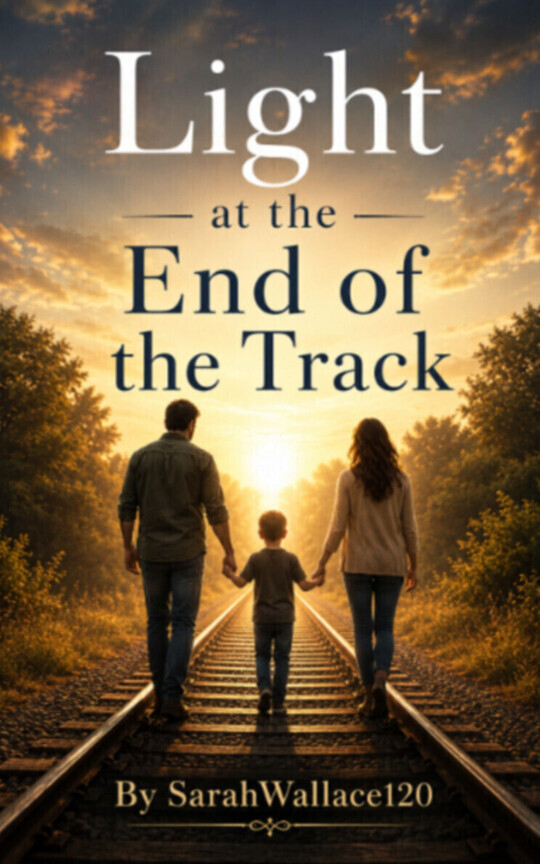
The conversation continued, eventually shifting toward an old camping site the organization had visited years earlier. Marina began talking about a woman who had once written a book about her life. She couldn’t remember the exact publication date, but she recalled that the woman had been in her fifties when she wrote it.
“I think her name was Bella,” Marina said. “She wrote about the man she loved when she was young. It was a beautiful story, although I remember finding the ending rather sad.”
Aurora continued eating.
She had no particular interest in romantic stories, especially those described as beautiful and sad. People had been falling in love and writing about it for centuries. There were entire shelves devoted to people who couldn’t live without one another.
She had other things to worry about.
Then Marina added, almost casually, “Apparently, he lost his memory after an accident. She found him years later, but he had another family by then.”
Aurora stopped eating.
For a moment, the conversation around the fire seemed to fade.
She looked up.
“What happened to her?”
The question came out so quickly that Marina paused.
“To Bella?”
Aurora nodded.
“Well, I don’t remember all the details. I only read an excerpt a long time ago. I believe she decided not to interfere with his life.”
Aurora frowned.
“She just left?”
“I think so.”
“Without telling him who she was?”
Marina considered the question.
“That’s what I understood from the book.”
Aurora stared into the fire.
Something about the story bothered her. She couldn’t explain why. Perhaps it was the idea of someone spending years loving another person, only to disappear from their life without giving them the chance to understand what had happened.
Or perhaps it was the thought that a person could make such a significant decision on someone else’s behalf.
She didn’t know.
But she wanted to.
“What was the book called?” she asked.
Marina smiled, apparently pleased that someone had finally shown an interest.
“I’m afraid I can’t remember. I’ll see if I can find it when we get home.”
Aurora nodded, trying to appear indifferent.
Beside her, Adrian watched her with an expression she couldn’t quite interpret.
“What?” she asked.
“Nothing.”
“You’re staring.”
“I’m observing.”
“Observe someone else.”
He looked toward the fire, still smiling.
“Of course.”
Aurora returned her attention to the conversation, but she no longer heard much of it.
For the first time that evening, she wanted the storytelling session to begin.
She wanted to know what had happened to Bella.
And she had a feeling that, once she learned the answer, she wouldn’t be satisfied with it.