
Prologue
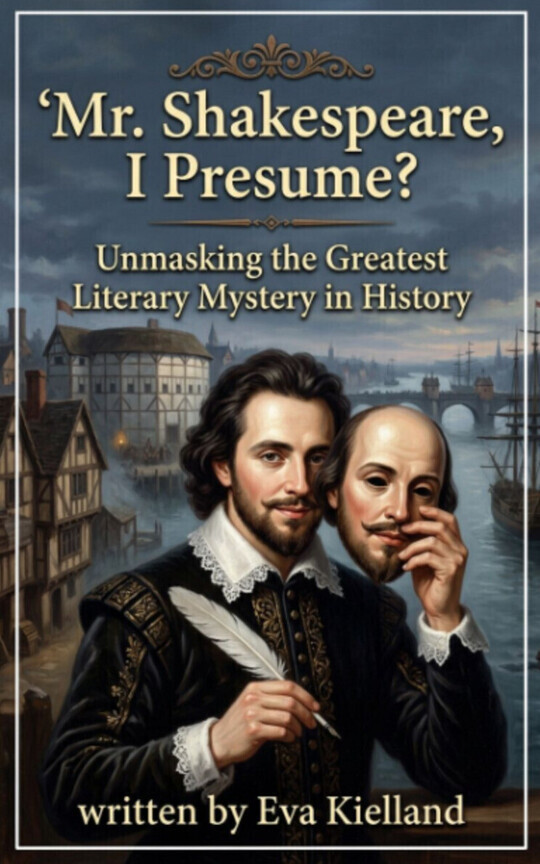
Mr. Shakespeare, I Presume?
Unmasking the Greatest Literary Mystery in History
Written by Eva Kielland
Prologue
Behind the Mask of the Bard
Every schoolchild in the English-speaking world is handed the same neat, comforting biography before they are old enough to question it. Once upon a time, in the quiet market town of Stratford-upon-Avon, a glover’s son named William Shakespeare grew up without a university education, traveled to London, effortlessly mastered royal court etiquette, Italian geography, classical Greek, maritime law, and human psychology, wrote thirty-seven immortal plays and one hundred and fifty-four sonnets, and then retired quietly to count his grain and malt without leaving behind a single letter, diary, or handwritten manuscript.
It is a wonderful fairy tale. The only problem is that when you look closely at the actual historical record, almost none of it holds together.
For centuries, literary purists have treated any doubt about the man from Stratford as something close to heresy. Question the official story, and you will quickly be met with raised eyebrows, polite sighs, and lectures about tradition. Yet some of the sharpest minds in history—from Mark Twain and Walt Whitman to Henry James, Charles Dickens, and Sigmund Freud—looked at the gap between the humble businessman of Stratford and the dazzling genius of the plays and asked the same obvious question: How could one man possibly have done this without leaving a trace?
This book was written for readers who prefer evidence over blind reverence—and who are not afraid to poke a little fun at the sacred cows of literary history. Over the next eleven chapters, we will examine the missing birth certificate, the bizarre curse carved into the Stratford tombstone, the astonishing absence of a paper trail, and the compelling cases for the brilliant minds who may truly have stood behind the quill: a circle of collaborative writers, the philosopher-statesman Sir Francis Bacon, and the fiery dramatist Christopher Marlowe. So pull up a chair, adjust your spectacles, and ask yourself the question that has haunted scholars for four hundred years: Mr. Shakespeare, I presume?
Every schoolchild in the English-speaking world is handed the same neat, comforting biography before they are old enough to question it. Once upon a time, in the quiet market town of Stratford-upon-Avon, a glover’s son named William Shakespeare grew up without a university education, traveled to London, effortlessly mastered royal court etiquette, Italian geography, classical Greek, maritime law, and human psychology, wrote thirty-seven immortal plays and one hundred and fifty-four sonnets, and then retired quietly to count his grain and malt without leaving behind a single letter, diary, or handwritten manuscript.
It is a wonderful fairy tale. The only problem is that when you look closely at the actual historical record, almost none of it holds together.