
A Night Named Laila
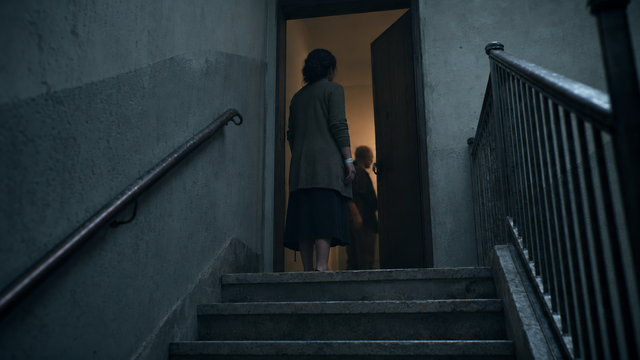


In April 2006, Laila escaped from our hospital and went home ten years too early.
To her, it was still 1996. She had just left a promising job interview with a semiconductor manufacturer and was rehearsing how she would tell David the news. She had a PhD in chemistry, two young children, and the feeling that life had finally chosen the right direction.
They had all but offered her the position. A good salary, interesting work, a company car. Laila had earned her driver’s license only two weeks earlier and was already picturing herself taking the children to the sea.
When she reached for the bus fare, the driver simply waved her through. Laila took it as a good omen.
He had probably noticed the hospital band around her wrist.
She ran up the stairs and rang the bell. Her keys were nowhere to be found. Laila assumed she had left them at the interview.
A woman she had never seen before opened the door.
Behind her stood David—thinner, balding, and older by precisely the ten years Laila had not lived.
“Laila?” he whispered. “Oh God. Not again.”
He slammed the door.
Laila kept ringing. At first she demanded an explanation. Then she begged him to let her see the children. The woman said something to David inside the apartment. Laila pressed her ear to the door, but all she could hear were their voices and one other sound—the quiet laughter of a woman.
Perhaps it existed only in her mind.
The police arrived fifteen minutes later. They knew the address.
I was on duty at the main entrance when the call came over the radio: they had found Laila.
They brought her back near dusk. Two orderlies held her by the arms, but she kept struggling toward the exit.
“Call David!” she screamed. “Tell him I can explain everything. That woman was in our home again. She’s done something to him. Where are my children? Why won’t he let me see them?”
The head of the ward crouched beside her.
“Laila, look at me. What year is it?”
“What does that matter?”
“Tell me the year.”
“Ninety-six. April. I just got back from an interview.”
The doctor took her hand and laid her palm over the hospital band around Laila’s wrist.
“It’s 2006.”
Laila stared at her in disbelief, then laughed.
“Very funny. Where are my children?”
The doctor remained silent longer than the question required.
“They died ten years ago.”
“No.”
“I’m sorry.”
“No. I bathed them this morning.”
The last words came out uncertainly.
Laila looked down at her hands as though seeing them for the first time. Then she began rubbing her fingers against the bedsheet.
“The smell is still on them,” she whispered. “I couldn’t wash it away.”
A second later, Laila began to scream.
They sedated her. I stood in the doorway and watched her body slowly go slack, her scream collapsing into the sobbing of a child.
Later, I asked the doctor why she had told Laila about the children again.
“She doesn’t come back to reality when she hears the truth,” I said. “She runs from it.”
“Perhaps.”
“Then why tell her?”
“Because if we agree that it’s 1996, we’ll be the ones locking her inside it.”
Most of the time, Laila neither screamed nor tried to escape.
She was a small woman with dry hands and hair that had gone gray too early. She spoke quietly, folded her napkin after every meal, and never took anything that belonged to someone else. She read newspapers in three languages and once pointed out an error in a scientific article from a magazine several years out of date.
She hated being spoken to like a child.
“My illness didn’t make me stupid,” she once told an orderly. “It made me ill. Those are not the same thing.”
Reason had not abandoned Laila. It had simply gone to work for a false premise.
If you accepted that an invisible woman truly lived in her house, everything else became logical: the unfamiliar perfume, her husband’s changed behavior, the children’s tears, the whispering at night. Laila observed, compared, and drew conclusions with the diligence of a scientist.
The error lay in the very first assumption.
On medication, she knew the date and understood what had happened to her children. Without it, she returned to the last morning when she had still been a beloved wife, a devoted mother, and a promising chemist.
For us, the pills brought Laila back to reality.
For her, they sent her children back to the cemetery.
It is difficult to persuade someone to take a medicine that steals her family every morning.
I cannot vouch for every detail of Laila’s story. Some of it came from staff members who had worked with her before. Some survived in old newspaper clippings. The rest she told us herself on those rare days when she agreed to remember.
In the hospital, every story had several versions. The truth usually lay somewhere between them—or nowhere at all.
I never learned whether David had been unfaithful to his wife.
No mistress was mentioned in the police records. The woman who opened the apartment door in 2006 might have entered his life much later—after the children’s deaths, the trial, and ten years of his former wife returning to him out of the past.
But one day, Laila smelled another woman’s perfume in their home.
At first, it appeared only in the hallway. Then in the bedroom. Soon, the children began to smell of it too.
Laila bathed them several times a day, changed the sheets, and threw away their clothes. The smell would disappear for a few minutes, then return.
“Did you call the doctor?” David asked.
“I don’t need a doctor.”
“We’ve already talked about this.”
“She comes while we’re out.”
“Who?”
“Don’t make me say her name.”
“I don’t know who you mean.”
“Of course you don’t. You’re as much a scientist as I am. Denying a fact doesn’t make it cease to exist.”
David embraced her.
“Do it for the children. Please.”
Laila pulled away.
“When she walks through the house, she touches them. They smell of her perfume.”
The children’s skin grew red from the constant washing. David hid the shampoos and locked the bathroom, but Laila found the key. She had become convinced that ordinary water merely concealed the smell.
One night, after David had fallen asleep, someone leaned close to her ear.
“Soon you’ll be all alone,” a woman’s voice whispered.
Laila was not frightened.
Fear had tormented her for months. Now, in its place, came relief.
At last, she knew what she had to do.
That evening, David came home later than usual.
There were candles on the table, two glasses, and a bottle of champagne. Laila was wearing the dress he had given her for their anniversary.
“Sit down,” she said. “We’re celebrating.”
David looked around the room.
“Did you see the doctor?”
“No doctors today.”
“Where are the children?”
“In the bathroom.”
“At this hour?”
Laila held out the bottle.
“Will you open it? My hands are shaking.”
A faint knocking came from the bathroom.
David dropped the champagne onto the table and ran down the hall.
According to one version, he understood at once what had happened. According to another, he initially thought the children had spilled some kind of cleaning product into the water. In the forensic report, the chemical’s name occupied almost an entire line. Laila had brought it home from the laboratory where she once worked.
The girl was still conscious when her father entered the bathroom.
“Daddy,” she whispered. “Mommy washed my skin off.”
Laila remained seated at the dinner table.
When David ran out of the bathroom and grabbed the phone, she asked him not to call an ambulance.
“I cleaned everything,” she said. “Now that woman can never touch them again.”
The children could not be saved.
The newspapers quickly turned Laila into a monster.
All it took was one photograph, the name of the chemical, and a few of the most horrifying lines from David’s testimony. Monsters are easier to read about than people. A monster belongs to another species, which means nothing like this could ever happen to us.
After the trial, Laila spent years in a high-security psychiatric institution. When her condition had remained stable long enough, she was transferred to our hospital.
Security was looser there, staffing was thinner, and patients were allowed into the inner courtyard.
Laila learned to hide her pills inside her cheek. Sometimes she managed to avoid taking them for several days. That was enough for the calendar to begin moving backward.
First, she grew younger in her own memory.
Then she remembered the job interview.
Next, she asked for her handbag and keys.
And one morning, she would find herself back in April 1996—the happiest day of her life.
That day always ended the same way.
If hell exists, perhaps this is how it works: it gives you back everything you have lost, then forces you to lose it all over again.
One of the new orderlies once called Laila a murderer. He said it quietly, but she heard him.
The head of the ward took him aside.
“There are no murderers or saints here,” she said. “There are patients and staff. If you forget which one you are, you’ll be the first to leave.”
After that, no one discussed Laila’s past in her presence.
During one of my night rounds, I found her beside the fire exit. She was fully dressed and holding a folded sheet of paper.
“Are the buses running yet?” she asked.
“It’s three in the morning.”
“I can’t be late. I have an important interview today.”
“Morning is still a long way off.”
“No. Morning is already here. For some reason, you simply can’t see it.”
She asked me to give the note to David.
It said:
Pick up some strawberries for the children. We’re celebrating tonight.
I gave the note to a nurse.
I don’t know whether anyone kept it.
A few months later, Laila disappeared.
She waited for the shift change, put on a jacket that a visitor had left behind, and walked out with a group of people. The security camera recorded her stopping at the gate for a moment, glancing back, and adjusting her hair.
Then Laila headed toward the bus stop.
This time, she never appeared at David’s apartment.
They searched near her former home, the laboratory where she had worked, the bus terminals, and the cemetery. They checked hospitals and shelters. Her photograph was given to the police.
No one ever saw her again.
I remained at the hospital for another year. Sometimes, during my night rounds, I thought I heard her voice coming from an empty room:
“Give me back my husband. Give me everything back. Please…”
I knew how sound traveled through the building at night. I knew the pipes groaned, the doors creaked, and an exhausted mind could turn any noise into familiar words.
But knowing that did not always help.
Twenty years have passed, and I still sometimes wake to Laila’s scream. For the first few seconds, I believe the calendar has returned to 2006, that I am walking down that dark corridor again, and that I still have time to stop her at the gate.
Then the room settles back around me.
The voice remains.
In Hebrew, laila means “night.”
If hell exists, it does not necessarily look like fire. Sometimes it is a single happy day beginning over and over again.
And sometimes it is a night after which morning never comes.