
The Ashen Child
She was born on a cold morning, with a wind so sharp it sliced cheeks and bent trees. A dirty snow blanketed the village, blackened by soot and the footprints of frightened beasts, while heavy clouds sagged over the squat huts.
Gruiul — that was the name of the village — had been built on the ruins of a forgotten battle, where they said the earth had drunk so much blood that even grass refused to grow straight. Here, men carved more than pigs, and women didn’t scream — not even in their dreams.
It was a place where the houses were made of black wood, beaten by rain and curses, where chimneys exhaled smoke and moans, and the ground seemed to breathe of cheap wine, sweat, and sin. Every alley had a name and a tale, each one beginning with a murder and ending in a sigh.
In the village square, the old gallows now held lanterns, but everyone remembered what they once were. The central well had a metallic taste, and on nights when the moon turned red, it seemed to laugh — deep and wild — beneath the stones.
Children learned to lie before they could walk, and to cry without tears. The village priest drank the communion wine with trembling hands and rarely spoke of forgiveness. And at the edge of Gruiul, where the forest began, sounds rose at night that not even the wind could explain.
In this place forgotten by angels and far too familiar to shadows, Elena was born.
Elena’s mother was a woman about whom little was known. She had only been seen a few times, and even then, her face was veiled. She seemed more a dreamed silhouette than flesh and blood. Some said she came from the forest. Others swore she rose straight from the ground.
What’s certain is that on the night Elena entered the world, the woman died — with a smile that wouldn’t fade, not even after her eyes were closed.
“She saw something we were never meant to see. She laughed at death. And then she left,” said old Rava, the only one present at the birth.
The girl was named Elena. But the villagers called her by other names. The Ashen Child. The Girl with Eyes That Remember. The Curse Between Bloodlines.
The house where she grew up was a crooked shack at the edge of the village, hunched on a muddy slope, its roof gnawed by time and its boards carved by more hands than the wood could bear. The window was broken, patched with a strip of old animal hide. The door had no handle — only a rusted nail.
There she lived with her father, a man in whom alcohol and sorrow had blended so deeply that no one could tell which came first.
Her father was a woodcutter, though he drank more than he cut. His palms were rough with calluses and dried blood, but his voice — his voice — struck the hardest.
He didn’t look at her. Didn’t touch her. Didn’t teach her. He only shouted:
“Sin. Shut your mouth.”
Elena didn’t cry. From the very beginning, her silence was heavy — like a sentence passed down by something older than justice. She stared with large, dark eyes, unblinking, eyes that made the village men rub the backs of their necks and the women pull their veils lower across their faces. Her skin was pale, like milk left too long in the sun, and her quiet felt like it rose from a deep, forgotten grave.
By the age of three, Elena had learned to hide beneath the floorboards.
By four, she understood that if you stayed silent long enough, people forgot you were even there.
By five, she dreamed with her eyes open.
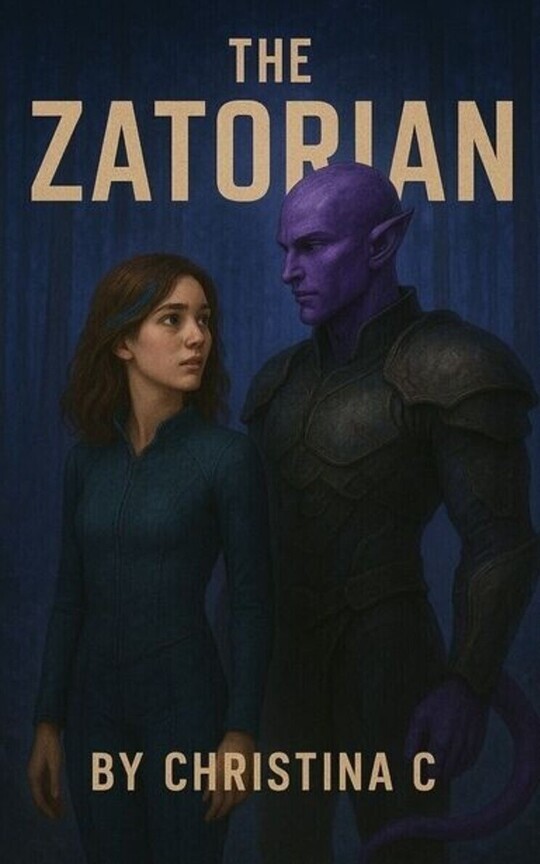
Strange dreams, carved from raw flesh: a man with dark wings, tall and cloaked in shadow, always watching her from a distance — with eyes that did not judge, but did not spare either. He seemed sculpted from night, his features impossible to define, shifting constantly, as if he were not a being at all, but a forgotten idea abandoned by the gods.
He stood motionless at the edge of her dreams, beyond the trees, saying nothing. Never coming closer. He only watched. He saw what she did. How she grew. How she suffered. How she fractured — and he never intervened.
But sometimes, when she lingered at the threshold of sleep, she heard him whisper:
“Sanguis est lex.” (Blood is law.)
In the village streets, children ran after birds and balls made of straw. Elena walked slowly, always alone. No one sought her company. No child ever said her name. When she passed by, laughter stopped, and faces turned away.
She was a shadow no one wanted to acknowledge, yet everyone felt.
She had a faceless doll to which she had given a name she told no one. She spoke to it. Sang to it. Caressed the piece of wood where once a face had been.
She spent her days near the forest, gathering broken branches, speaking with crows. No animal ever ran from her. A fox licked her palm. An owl fell asleep on her shoulder. The village cats followed her in silence — like a procession of furred shadows.
At seven, she was beaten with a rod for closing her eyes in church. She hadn’t fallen asleep. She had dreamed.
While the priest preached about saints, she had seen the forest again — lit by lights that did not belong to the sun, filled with silhouettes that did not walk, but glided. With voices that did not speak, but sang in blood.
And behind her closed eyelids, she had seen him — the demon. Not clearly. Not completely. Just a shadow with wings of smoke, with eyes that flickered like two dead stars.
He didn’t speak. He only watched.
And around him, his shadows — smaller, stranger creatures — slithered through her dream, keeping their silence.
She felt they were waiting for her. That they already knew her name.
After that, she never returned to church.
No one noticed.
Girls her age used to laugh at her. They called her “the girl with spiders in her hair,” “the child of silence,” “the walking curse.”
Elena didn’t answer them. She just watched. And one day, one of them — the bravest — tripped on the threshold of her own house and hit her head on stone. She was left with one eye that always wept, even when she laughed.
Elena didn’t smile. Nor was she surprised. She only whispered to herself:
“Fiat justitia.” (Let justice be done.)
No one had taught her that language, and, if she were honest, she didn’t fully understand what she was saying or where those words came from. It was as if someone placed them on her tongue, and she knew, without doubt, that they were right for what was happening. Like a memory scorched into her bones, older than her name.
At nine years old, her father took her into the forest. He didn’t say why. He just tied a rope around her wrist and dragged her behind him. In a clearing, he stopped and said:
"This is where the witches died. This is where I leave you. Maybe something will take you. Maybe it will change you."
And he left. Without looking back.
Elena stayed there a day and a night. She didn’t cry. She didn’t scream. She listened.
The trees spoke. The air hissed through the branches like a spirit without a mouth.
In the center of the mossy circle, she made herself a nest of leaves.
She drove a thorn into her palm and licked the blood.
"If I am a curse, make me burn. If I am a calling, answer me."
The moon rose. The wind stilled. And she dreamed — not clearly, but feverishly, torn between darkness and delirium.
She dreamed of him again, the demon. He stood far away, among trees black as scorched ink, watching her.
No movement, no words — only that immense, silent presence that suffocated and pulled her in at the same time.
His shadows moved slowly, like living cloaks, stalking her, but never approaching.
Elena felt the dream wasn’t hers. That she had been summoned there, watched, examined.
It wasn’t her dream. It was his.
And she was becoming part of it.
A voice said to her:
“In obscuro, tu es mea.”
(In darkness, you are mine.)
When she woke, her father was waiting. He said nothing. Just dragged her home again by the rope.
He didn’t ask what she had seen. She didn’t tell.
But in her eyes, something had been lit.
And it would never go out again.
…
Years did not pass over Elena like wind over grass, but like an axe through aged flesh. She grew, but did not rise. She sank—into herself, into a world that refused to accept her. At twelve, she was too beautiful to be left alone. At fourteen, too silent to be loved. At sixteen, she was already a legend. But one not spoken aloud—only in whispers and backward-made signs of the cross.
Her beauty was not sweet. It was violence. Alabaster skin with bluish veins, eyes like two cracks in the night, lips that seemed bitten from a forbidden fruit. She walked like a vision—straight, unhurried, as if time itself had to move aside. Men followed her with their eyes but didn’t dare touch her. Once, a young man threw her a flower. The next day, they found his fingers embedded in the barn wall. The girl had said nothing. She had only looked.
The women? They hated her. Not just for her beauty. But because they felt she saw everything. She saw who they truly were. Saw their betrayals. Their weaknesses. Their buried dreams. Elena looked at them like a judge waiting for the final spark before pronouncing the verdict. And she did. Sometimes with a glance. Other times with a silence that cut deeper than any insult.
Her father hadn’t changed. He had only aged in his hatred. If before he hit her on impulse, now he did it methodically. Coldly. Once, he cut off her braids with a bread knife. Another time, he tried to sell her to a traveling merchant. Elena escaped. No one knows how. The merchant was never seen in the village again.
She had begun to feel that her place was no longer on the earth that spat at her with every step. She built an altar in the forest, with polished stones, eggshells, and ash. She spoke there in whispers. No one knows to whom. But the birds listened. And the wind.
In the evening, the girl would sit by the river. The water was still. Murky. It seemed to reflect nothing. Until one night. When she saw something in the water’s reflection. The face in the water wasn’t hers. It had her features—but altered. Sharper. More regal. Darker. More beautiful, if such a thing was possible. A small, ironic smile played on those lips. And in the eyes... in the eyes was the flame of another life.
Elena asked aloud:
“Are you me, or am I you?”
The reflection did not answer. But the water shimmered. As if laughing. That was when she felt, for the first time, true fear. Not of others. Of herself. And of the future.
After that night, her dreams grew clearer. She saw symbols. Spirals. Words written on walls. Birds with human eyes. It wasn’t a boy—it was the demon. And now she saw him more clearly. He had a young, beautiful, almost angelic face, but the light in his eyes was old—old as the beginning of time. It seemed that every flicker of his gaze carried the memory of a world long burned. His shadow was heavy. His steps made no sound, but the dream vibrated when he appeared. He looked at her with that endless silence, as though he were a judge who had already pronounced the sentence but was waiting for the moment of execution.
In one dream, she drew a rune on her belly with blood— and woke up with a red mark still there.
She began to write. On walls. On stones. On her skin. Words in unknown languages. One day, she whispered a phrase she had never learned anywhere:
“Noli me tangere, quia ignem fero.”
(“Do not touch me, for I carry fire.“)
And the fire came.
In a winter when snow fell for thirteen days and thirteen nights, Elena was seen only once. She was walking barefoot through the drifts, her hair unbound, and a white flame burning in her palm. No wax. No wick. Just pure fire. A woman who saw her lost her child that night. Another dreamed that her dead husband was calling her from the grave.
People no longer said “Elena.” They said “her.” “The fire.” “The other one.”
One night, a stranger passed through the village. He claimed to be a prophet. Elena offered him a piece of apple. He bit into it and began to bleed. Then he said:
“You are the forbidden fruit. But they are not worthy of Eden.”
After he left, old Rava said:
“Whoever tastes her pays. In flesh. Or in salvation.”
The year Elena turned seventeen, a woman brought her a sick child. Elena blew gently on the child’s forehead and whispered:
“Exi, sed non sine pretio.”
(“Leave, but not without a price.“)
The child was healed. But the woman dreamed of fire. And hanged herself three days later.
Elena had never belonged to the village. And the village knew it. She had become a living stain in the midst of a community that desired forgetfulness, not depth. Though she lived in isolation and was seen only a few times a year, she was felt as a threat. Her presence, her silent breath, seemed to suffocate the people’s peace. As if her very existence poisoned their sleep, choked their prayers, soiled their mirrors.
And so they began to search for solutions. Not just exits. Not just prayers. Ideas. Solutions. Sacrifices. But without staining their hands with her blood. Too many feared that a direct death would bring something worse. So they decided to give her away. With evil hands but cold hearts.
And who could be more suited to destroy her than Baron Vornic—the cruelest man that had ever lived? A man said to have no soul, only an insatiable hunger. Marry her to him. Give her into his hands. That’s how the village would rid itself of Elena—without guilt. Without blood. Without questions.
Someone said:
“Let’s marry her off. Give her to the baron. So she doesn’t burn us all.”
Elena found out. And she didn’t run. She didn’t cry. She said nothing. She only spoke:
“Et ego non sum serva. Ego sum flamma.”
(“And I am not a slave. I am flame.“)
…
It was said that Baron Vornic had more than one heart. One in his chest, cold as iron plunged into snow. Another between his thighs, ravenous and cruel. And a third, which he kept in a jar filled with greenish liquid, in the castle’s cellar, guarded by three mirrors and a mute watchman. He claimed it was his mother’s heart, torn out the day she dared to embrace him.
He was around forty-five, but looked like a young man marked by sin, not by time. Tall, broad-shouldered, always dressed in dark velvet, the baron resembled a shadow dressed in expensive flesh. His voice was low and sharp, with slow cadences of fallen nobility. He spoke rarely, but his words carried weight, like coins tossed into a deep well. He had a sick passion for collections: animal skulls, worn slippers from dead ballerinas, dried flowers from the poisoned gardens of the continent. In one tower, he kept only hair — locks cut from women he had loved, possessed, or killed. He no longer remembered which.
His castle, raised in times forgotten by kings and haunted by names erased from books, was a wound carved in stone. The walls wept with dampness and dried blood, and the tall windows were more like eyes gazing into something else, from another world. Rumor had it that some doors led nowhere. That if you entered them, you’d find yourself in another time, another body, another suffering.
The corridors were lined with ancient tapestries, depicting scenes of crucified saints, screaming angels, and maidens with their eyes gouged out. The spiral staircases led to towers no one climbed anymore, and the basement was divided into rooms that bore only names: Silence, Fire, Mirror, The Breathless Room.
In one chamber, he kept a piano no one was allowed to touch. It was tuned to the frequency of a dying heart. He liked to listen to it at night, when the castle breathed heavily and the walls trembled with cold.
He never stepped into the village without reason. He came in his black carriage, drawn by four horses dark as pitch, with sharp hooves and coal-like eyes. When the heavy wheels struck the stone, women pulled their children indoors, and the men stared at the ground, as if silence were a cloak to cover themselves with.
That day, the carriage stopped in front of the town hall. The baron descended unhurriedly, carrying a cane made of stag bone and a low-brimmed hat, from under which shadows fell over his face like a wax mask. His smile was small, like a wound at the corner of his mouth, and his long fingers were stained with old blood.
“I’ve come for the girl,” he said.
The mayor didn’t ask which one. Everyone knew.
“She’s wild. Doesn’t speak. Won’t obey.”
“That’s exactly why I want her.”
He paid with two sacks of gold coins, a barrel of wine, and a promise: that he would never again demand the tithe in flesh. He was received as a savior. With chapped lips and old lies, the villagers smiled and sighed. Not out of pity — but relief.
Elena was summoned to the square. She didn’t come. They went to fetch her.
She stepped out of the hut dressed in black, her hair unbound, and a streak of soot on her cheek.
She said nothing. She did not protest. She only fixed her gaze on the baron and whispered:
“Nihil est gratis sub sole.” (“Nothing is free under the sun.“)
The baron laughed. He was the only one who had the courage to do so.
“What a beautiful child. What a dark miracle you’ve become.”
He reached out his hand. She didn’t take it. But she followed him.
Not like a prisoner. Like a queen walking to her own execution, head held high and heart silent.
In the carriage, they didn’t speak. Only the driver muttered a prayer, while crows followed them in the sky.
Along the road, the clouds gathered, heavy and wet, as if the sky itself understood the bargain made.
The wind battered the carriage from the side, like a hand trying to overturn everything.
The baron’s castle rose above the hills like a plague of stone.
Black towers, cold walls, gates that creaked like stifled cries.
The guard dogs didn’t bark. They only watched. As if they knew he was returning with prey.
When they arrived, the servants stepped aside. Not one of them looked Elena in the eye.
But she looked at each of them. And one of them fainted.
The baron led her through long, dark corridors, where the walls were covered in tapestries depicting scenes of hunting and torture.
The floor creaked beneath her steps. Every corner was a shadow. Every shadow, an unspoken promise.
“You’ll sleep here,” he said, opening a heavy wooden door.
The room was small, but clean. A canopy bed. A chest in the corner. A tall window, barred with iron.
“This isn’t a cell. Not yet.”
Elena didn’t reply. She sat on the edge of the bed and touched her ankle — where a thread of blood was sliding slowly, like a forgotten tear.
That night, she didn’t sleep.
She wrote on the walls, with her finger in the air.
Words that lingered for a moment before fading away.
“Caro data est. Sanguis sequitur.” (“Flesh has been given. Blood will follow.“)
The baron watched her from behind a hidden mirror.
His eyes were wet. Not with guilt. With desire. And fear.
Inside him, something murmured:
“She is more than flesh. More than fire. More than anything I’ve ever had.”
And yet, he laughed.
Because he knew he would take her.
Slowly. Methodically.
Until she became just another broken woman in his collection.
…
The wedding was not a celebration. It was an execution veiled in tulle, a chaining ritual masked in lace and perfume. On the day Elena was to become, through empty words and signatures written in blood, Baroness Vornic, the castle was wrapped in a silence so heavy that even the chandeliers seemed to tremble in fear.
No bell tolled. No violin played. No poet composed verses. Only the wind, which slipped through the stained glass windows and extinguished, one by one, the candles in the small chapel in the northern wing of the castle. The baron laughed.
“It’s afraid. Even the air.”
Elena did not wear white. She refused. Her dress was black, with silver threads woven into the corset, sewn from a fabric that looked as if it were wrapped in smoke. Her hair was tied up, shaped into a crown of silver thorns. Around her neck, a thin red cord — the mark of a woman who had been a sacrifice and survived.
Before the altar, the priest — a frail man, with yellowing skin and eyes sunken deep into his sockets — opened the ritual book. But the pages were blank. All of them. Row after row of dried skin, but no ink. The old man froze.
“The Word flees from this union,” he whispered.
The baron raised an eyebrow.
“Then speak from memory.”
And the old man spoke. He murmured invented vows, while blood dripped from his nose. Elena said nothing. When she was asked if she would take him as her husband, she inclined her head slightly. But her eyes were not there. They gazed beyond.
The moment the baron placed the ring on her finger — a circle of human bone, with a dark ruby the size of a dried drop of blood — a window shattered. The wind howled. And within it, a voice rang out, clear:
“Testis est nox. Ligatum est in tenebris.”
(“The night is witness. The bond is in darkness.“)
…
The wedding ended in silence. There was no feast. No cheers. Just a mute procession that accompanied her to her chambers. There, the bed awaited her. Black silk sheets, scentless roses, and an old sword on the wall.
The Baron came late. Reeking of wine, sweat, and hatred. His hands trembled, and his eyes were bloodshot with hunger. He locked the door, sliding the bolt as if passing a sentence.
“Now, at last, you are mine,” he murmured. And stepped toward her.
Elena did not speak. Nor did she move. She only let down her hair, letting it fall like a black whirlpool over her shoulders. It was an act of defiance. Or of farewell.
The Baron seized her arm. He squeezed. Bones cracked. He pushed her onto the bed, tearing the dress with a violence that was not only physical — it was symbolic. He wanted to ruin her. To tear her dignity, her silence, her being apart.
There was pain. There was blood. It was violation, not union. Elena stared at the ceiling as her body was pinned into the mattress, while her heart clenched like a beast in a cage. She did not scream. She whispered.
“Me spectat nox. Et non mă sparg.”
(“The night watches me. And I do not break.“)
Elena rose slowly, with movements that no longer belonged to a girl, but to a woman mutilated in silence. Her legs trembled, but not from weakness — from a deep strength rooted in her chest like an unspoken sword. Each step on the cold floor was a wound. Blood trickled down her thighs, sticking to her skin like a ribbon of guilt that was not hers. And yet, her eyes... her eyes burned. Not with fire, but with the ashes of a devastated future.
The pain was more than physical. It was a wound in time. It was the memory of women who had remained silent, who had been shamed, who had been buried in their own flesh. It was death and birth within the same body. When she reached the wall, she touched the stone with her bloodied palm. She left a mark. A silent signature. Then she took the old nail from the windowsill — the same one the Baron had once used to pin a wooden doll to the cellar door.
She began to carve. The letters were not written. They were etched. Into the flesh of the wall. Into the flesh of memory. Into her own flesh.
Each line was a pain. Each curl, an unspoken lament. And yet, her hand did not tremble. Because the pain did not break her. It made her bleed. And blood was the language through which she spoke.
“Fiat dominus in carne tua. Et flamma in visceribus.”
(“Let there be dominion in your flesh. And fire in your entrails.“)
Then she whispered:
“Memento. Ardebit.”
(“Remember. It will burn.“)
…
The dark days followed. Each morning brought the same silent bell: the Baron’s key turning in the door. Elena lived in the high chambers of the castle, but she was not free. She seemed like a bird with golden wings, trapped in a cage wallpapered with black velvet and mold.
The Baron came at night. Sometimes during the day. Always when he was drunk. Or angry. Or bored. He would sit on the edge of the bed and speak to himself, but his voice fell upon Elena like poison, drip by drip. He told her she was made of sin. That no one would ever love her. That her beauty was a punishment, not a blessing.
“I will crush you like a rare flower. Because I can,” he said. “Because no one will weep for you.”
Sometimes he brought old newspapers and forced her to read aloud about women who had been murdered. Other times, he sat her in front of the mirror and spoke to her like to an animal:
“Look how beautiful you are. You will come to hate that, Elena. I will make you regret every glance you’ve ever received.”
Then he struck. First with words. Wounds that did not bleed, but bloomed into nightmares. He called her “throwaway flesh,” “sin on two legs,” “nothing with a goddess’s skin.” Then came the fists. Then came his body, heavy, smelling of blood, alcohol, and something older — ancestral hatred, the stench of a man afraid he cannot possess what he does not understand.
Sometimes he laughed while violating her. Other times he cried, begging forgiveness while biting her shoulders. Once, he told her:
“I break your body to teach your soul to be silent.”
But her soul did not fall silent. It learned to listen. To store everything. To mark it all in blood. It learned to wait for the one from the dream, the one she had prayed to without words since she was a child.
Sometimes he forced her to bathe in front of him, laughing when she stumbled, then soaking a towel in cold water and scrubbing her violently, as if trying to erase her skin from her body. Other times, he yanked her by the hair until she hit the floor, then stepped on her back with his boot, saying he loved her. His love smelled of sweat, broken bones, and cheap wine — but also of something older, like a coffin opened in a forgotten crypt. He locked her in for days, without food, only a bucket of dirty water. He forbade her to leave the room. He bound her hands at night with thin chains, telling her she looked more beautiful that way — stripped of will. He caressed her throat with a knife and whispered, lips trembling not from pity but from desire:
“You are a funeral song. But you are mine. And I will tear out every note until you sing no more.”
Elena learned to die a little, day by day. Night by night. Not like a flame extinguishing, but like a rose crushed underfoot, petal by petal. She learned to breathe in rhythm — not with her own heartbeat, but with the sound of his footsteps in the corridor. Each creak of the floor announced a new ritual of suffering.
To swallow tears like sweet poison, until the tears no longer came. Her eyelids had grown heavy, not with sleep, but with shame, with pain, with mute hatred. She taught her skin to forget the brutal touch, to stop trembling at the crack of a belt, at the sound of an unfastened buckle. She taught her bones not to make noise when she fell — for she fell often. To her knees. To the floor. Into herself.
The Baron forced her to crawl to him. To call him master. To repeat after him:
“I am yours. I am flesh of sin. I am a broken doll. Break me.”
And she repeated. But in the silence of her mind, she said something else:
“I am learning your name, Baron. I am carving your face into my bones. And my fire will erase everything you are.”
One night, she fainted under his weight, crushed not just by his body but by the weight of knowing no one would save her. Not the sky. Not the saints. Not even death. She woke at dawn, naked, tied to the bed with a red scarf — like a bride sacrificed to the wrong god. And in that murky sunrise, Elena was no longer a girl. She was ash. And ash always rises with the right wind.
She looked up at the ceiling and said:
“Hoc non est vita. Est damnatio.”
(“This is not life. This is damnation.“)
The Baron laughed. Then spat on her.
“You were born to be broken by someone. I’m just speeding up your fate.”
At night, when everything was quiet, Elena would descend from her dreams and feel her chest turning to ash. How her body hardened in the silence of suffering. Her legs carried the wound like a written memory. Each day was a slap. Each night, a new wound.
And in every dream, the demon was there.
He stood in the forest, among smoldering trunks, bathed in the pale light of a moon only she could see. He was tall, with a face she couldn’t fully comprehend but felt in her bones: eyes like the abyss, skin like stretched shadows on snow, hair like smoke. He always watched her, without blinking. Sometimes with pity. Other times with hunger. But always with a certainty that tore her in two.
Other times he whispered in ancient tongues:
“Vigilabo te. Te specto.”
(“I watch over you. I see you. “)
She asked him:
“Who are you?”
But he did not answer. He only raised a hand, and the forest fell into silence. A silence that enveloped her from within, a silence heavier than screaming, heavier than death.
One night, she dreamed of him beside her bed. He did not speak. He only ran his fingers through her hair, then brought his hand to his heart, leaving a wound that remained in the dream — and she woke up with it.
Sometimes she dreamed of him following her through the forest. Other times, that she danced with him among the graves. That he held her hand in the midst of fire. That he tore out her heart, but she did not die — she only began to sing a melody only he could understand.
“Ego te feci.”(“I made you.“)
She had begun to wait for him. Not with fear. With a deep ache that resembled hope. One night, when the Baron had fallen asleep on top of her, Elena dreamed the demon took his head and placed it in a well. And from the well, light poured out.
“I will come,” he told her. “And you will choose.”
Elena would wake with cold blood, skin wet with sweat, but her eyes were burning. She searched for him in shadows. In the corner of the mirror. In the crackle of the wood. In the whisper of leaves.
Each dream pulled her deeper. Each dream drew her closer. And in every dream, he became clearer.
…
One evening, as the wind battered the castle like a stone hand and the gargoyles seemed to weep with mouths wide open, the Baron returned drunk. More drunk than usual. With clouded eyes and wet hair, reeking of rain and old blood, he stormed into Elena’s room like an aged storm — directionless, but thirsty for destruction.
“I raised you, took you out of your pagan filth, and you… you defy me! You won’t bear me a child! You won’t give me an heir! What kind of woman are you?!” he shouted, hurling an oil lamp that shattered by the door, its flame flickering menacingly like a prophecy.
Elena stood upright. Unmoving. Her dress torn, her feet bare. She looked at him. But in her silence there was an ending he could not comprehend. And that drove him mad.
“Answer me!” he screamed and slammed her against the wall, with a force that knocked the air from her chest. His hands gripped her throat, but she did not scream. So he began to strike. With fists. With his belt. With the edge of the table. He shattered the mirror and drove a shard into her palm.
“Cry! Cry, you wretch, you demon with an angel’s face!”
But she did not cry. Her eyes stayed dry. Defiant. Fixed on something beyond him. Then the Baron lost his mind. He began kicking her with his boots. Dragging her by the hair. Punching her belly, her ribs, her breasts. Spitting in her face and laughing with a hatred that collapsed into tears.
“You’re not a woman. You’re a curse. And I will rip you out of flesh!”
Elena felt her body tearing. A rib had snapped. Her mouth was full of blood. One eye throbbed with pain. But her heart… her heart was alive. It beat. And in every beat was a call.
“Come,” she whispered to the demon from her dreams. But he did not come.
When the Baron turned to drink from the shattered carafe, Elena saw the door slightly ajar. She didn’t know how. Maybe a servant had forgotten to close it. Maybe the darkness favored her that night. Or maybe, it was simply time.
In a burst of lucid desperation, Elena stood, her broken body slick with warm blood. She looked at the Baron, who drowned his fury in wine, and felt a power rise from deep within her — an ancient force, a clear hatred, like a blade unsheathed after centuries.
“You give me nothing but death,” she thought. “So I will give it back to you.”
She charged at him with all the strength she had left, slamming her shoulder into his chest, and the Baron, caught off guard, stumbled and crashed over the table. A flask of wine, shards, books — everything scattered in a chaotic symphony.
Elena didn’t look back. She ran through the castle corridors like a hunted animal. Doors slammed behind her, the chandelier flames flickered, shadows danced across the walls. Her heart pounded like a shattered drum. Blood poured from her wounds, but it no longer mattered. She had to run. To escape.
In the stables, near the trophy room where the Baron kept his cursed collections, Elena found what she hadn’t known she needed: the Baron’s favorite horse. A massive black stallion, bound with gilded iron chains. Its eyes burned red, like twin embers, and its mane was slick like pitch.
No saddle. No reins. No fear. Elena leapt onto its back with a cry of pain that was not just from the body — it came from the soul.
“Run! Now!”
And the horse understood. It burst through the gates, shattering wood and rusty nails. It tore through the night. Pierced the fog. And Elena fled. Hair whipping in the wind, wounds wide open, hands clinging to the mane of a cursed beast — but free. She rode into the forest. Into the night. Toward the calling.
Behind her, the Baron screamed:
“Elena! I will find you! You are mine! Mine!”
But the night did not answer him. The forest welcomed her. And the shadows opened their arms.
The stallion carried her at full gallop to the edge of the forest. That was as far as it could go. The horse halted suddenly, foam at its mouth and its eyes bulging from their sockets. Its legs gave out, and its body collapsed to the ground with a groan — the sound of an animal released from a curse. Elena tumbled from the saddle, hitting roots and rocks, but she did not stop. She was not allowed to stop.
With her wounds bleeding, clothes torn, and hair caked in mud, she crawled at first. Then she ran, barefoot on earth. Branches lashed at her. Leaves covered her. But the forest did not reject her. It received her. Like a lost daughter.
She stopped only when she could no longer feel the ground. When she heard nothing but her own blood. When her heart beat a single word:
“Come!”
She fell to her knees. Dug her hands into the soil. Screamed without voice. And then, among the trees, the shadows moved.


















omg!!! the way you wright is veryyyyy good!! im hooked
isn't she supposed to be powerful?, why allow a man abuse her in that manner