
Chapter 1. Greif like Exile.
In the bleak and bracing marshes of North Norfolk, 1852, the grass turned into knives and salt was suspended in the cold and moist air. The wind howled through the reeds as they bent and lashed at the feet of a young woman, whose calm and almost otherworldly dissociation was an astonishing contrast to the sky that was rumbling and the tempestuous wind around her. Her hair cut like razors across her salt-coated cheeks, and along with the wind, caused her eyes to water not just with pain but with the cold air relentlessly piercing her eyes. Her dress trailed behind her as she fought to walk upright, and her shoes sank into the ground with every step. Her breaths became jagged and deep; almost as if she had been running. The storm lived and breathed with the pandemonium inside her mind. The sky broke in a sudden silver gash, lightning splitting the horizon as if some great hand had decided to tear open the air and see what spilled out. She didn’t flinch. Her fingers, numb and raw, curled around nothing—the absence of warmth had long since made itself at home in her bones. Somewhere in the distance, a marsh-harrier cried, the sound carrying like grief deep into her heart. She felt for that bird, for she herself felt as if she wanted to cry out in anguish and pain. She wanted to bend down into the moor and let the acidic soil hug her tightly and never let her leave. The letters in her pocket were already disintegrating; the last thing tying to her past now left in fraying paper and smudged ink, failing the test of time. And so was she, standing; broken and unravelling, her anguish bleeding into the air and the plants and the animals and the rain. By the time her heartache had somewhat lessened, and the clouds had stopped crying in the sky (leaving mizzle in the air and rainwater dripping from the petals of the sea aster) her dress was heavy with the water-filled cotton and her long curls were plastered to her forehead and back. The marshes around her wheezed and sighed like dying lungs, and as she turned—slowly and mechanically—her sodden limbs obeyed as if under command. The wind had slackened to a whisper, carrying with it the scent of brine and the residual echo of thunder, though she did not lift her eyes to the sky again. Her gaze remained unfixed, drifting somewhere between the spectral memories that clung to her heart and the dark outline of the house ahead. It loomed distantly now, the manor—sombre and cruel in its stillness, its windows like blind eyes surveying the expanse of moor with neither welcome nor reproach. Ivy had devoured half the southern tower since her last stay, and the iron gate leaned drunkenly, as if weary of holding off time. Yet it stood, as it always had, keeping watch over generations that had bled into its floorboards. Her feet made no sound upon the muddied path, though the earth protested softly with each step. Inside her pocket, the remnants of those letters wept ink into her skin, vanishing like all things not meant to endure. The trance she walked in was neither sleep nor stupor, but a state unto itself—some cold communion between the ghost of who she had been and the woman whose sorrow the house would once again inherit. As the wrought-iron door creaked under her hand, a chill breathed through the hallway, curling around her like a shawl spun from silence. She entered not with hesitation, but with the inevitability of one returning to the grave of a loved one—no expectation of comfort, only the pull of unfinished mourning. The floorboards groaned with having to keep her from sinking into hell-a feat all to hard for even herself to attempt. Books and newspapers littered the dark floor, their pages warped with damp and age, curling like the fingers of crying souls. Dust rose at her footsteps; thin as smoke, as if the very air recalled her presence and stirred reluctantly to greet it. The wallpaper, once a shade of melancholy rose, now hung in peeling sheets, water-stained and clawed at by time’s quiet cruelty. If she had been her normal self, she would have shook her head and maybe even laughed lightly at her parents poor upkeep of the dilapidated manor, but even the brief flicker of a thought of her parents sent convulsions through her thin body. She was afraid that even one more would break it; that she would split and never be able to pick up the pieces. A broken clock sat hunched on the mantle, its hands eternally fixed at 3:16—she could not recall whether that hour had ever meant anything, but its stillness mocked her all the same. Along the walls, family portraits stared out with washed eyes and faded expressions, their gazes not accusatory but simply absent—as though even the ghosts had long ceased caring. She passed them with neither recognition nor remorse. The hearth was cold, yet scattered ash still lay in its belly, whispering of some long-extinguished fire that once tried to warm this tomb of memory. Her fingers trailed along the edge of the mantelpiece, collecting a furrow of dust as though tracing the spine of a buried story. The room she entered next once held her cradle—and the smell of her mother’s lavender soap still clung faintly to the air like a ghost, as if love itself were trapped within the walls. Cool night laid its weight upon the manor, and with it came the murmurs. Not words exactly; more like the echoes of them, an imprint. Her parents had disappeared on the marsh a year ago, yet they never truly left. Mist curled under the doorways and salted the air, familiarity stinging her nostrils and her eyes but she did not leave. Outside, the marsh shivered beneath the moon. That’s where she’d first seen her—the woman with eyes like sea glass and a voice that felt like dusk. Vivienne. She didn’t emerge from the landscape; she belonged to it, swayed with its wind, spoke in its silence. The marsh had claimed her and her husband. And now there was no way to get them back. In the days that followed, Vivienne haunted the halls and whispered in her dreams. She’d appear in the rose garden at twilight, her fingers brushing petals as if coaxing secrets out of them. Or sit, boots muddied, in the study that no one entered, reading letters she had no reason to find. And yet, she found them. Always.
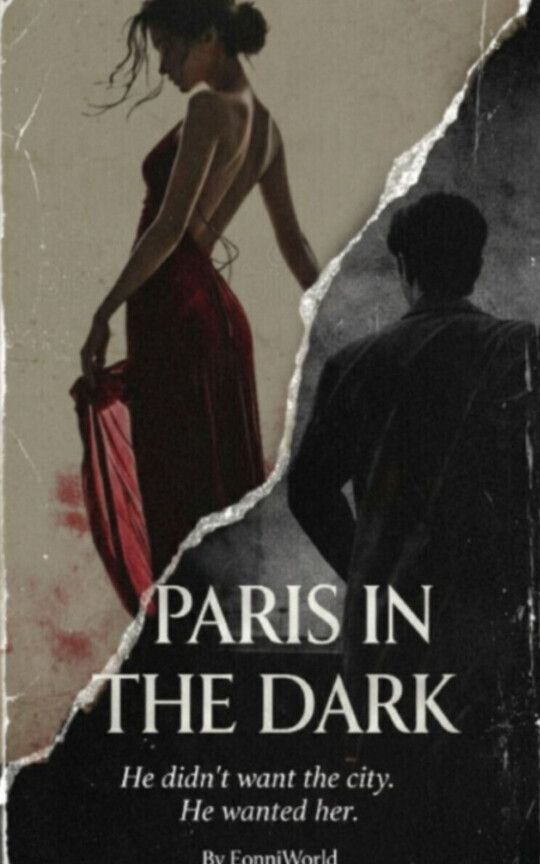
Amongst those letters was an invitation, written in bold and delicate calligraphy for a Miss Evelyn Halle. She scanned the paper, not truly reading through it until she got to the part where it asked her to a party. A party! The audacity of these pompous people! How could she go to a party penned by her mother’s closest friend—a woman who signed simply Beatrix, with calligraphy that felt like silk and threat, when her mother was not yet in her grave? It was a party at the Bellweather Estate: all gilded mirrors and violins, champagne flickering in crystal like ghosts caught mid-dance. She knew these all too well, going to them every year since she was six all the way until eighteen. Now, three years later, she entered alone. She arrived beneath a veil of indifference, wrapped in mourning black and adorned only by the pain she wore like perfume. Her presence rippled like cold across the room—a portrait come to life; too haunting to ignore, too unreadable to approach. She stationed herself, naturally, at the edge of the room, where one could pretend the drapery was interesting and not overhear another breathless recount of a duke’s third affair that she could not care any less than she did about it. Her hair, long and ginger like rust on snow, had not been pinned, and that earned her no few sidelong glances. She could’ve laughed—if laughing hadn’t felt like betrayal right then. She was too pale to be an object of interest, too thin for the men to ask a dance from her. and so, she was left without company like she wished. The crowd shifted again, as if by instinct, when Miss Aurelia Godwin entered. She was not dressed to dazzle, and yet she eclipsed the room. Her gown was a deep garnet, the colour of bruised roses, unfashionably modest but exquisitely cut; her hair dark as ink, caught up in loose coils that defied the stricter styles of the season. She walked as though the floor had been built to bear her, chin slightly raised—not in arrogance, but with a kind of weary vigilance, as if she’d been stared at enough to know how to survive it. She saw Evelyn before she saw anyone else. And then looked away. If she cared to, Evelyn would have snorted.
Perhaps they’ll play Liszt and I can expire appropriately.
Charismatic in the way only those unconcerned with approval can be, she was a terrible flirt with the men around her.Evelyn narrowed her gaze at the young woman across the room. Oh, marvellous, she thought sourly. A creature who smiles. Aurelia tilted her head just slightly, as though she’d heard it through her mind. That glance between them was a held breath. Evelyn looked away first—not out of weakness, but boredom. Or so she told herself. Minutes later, she had slipped out the door, down the lantern-lit path, back into bramble and brine. She wanted to sit in silence with the ghosts of her past; the last remanence she had of it. She needed to be in the marsh, to feel the presence of her family. And yet, she heard steps coming up behind her. For goodness sake. Miss Aurelia Godwin emerged like dusk, untamed and infuriating.
“You left early,” she observed, her tone lighter than Evelyn’s mood. Evelyn’s boots scraped the gravel. 'Oh, splendid,’ She thought. ‘Another woman who speaks like a sonnet.’
“Yes. I imagined it would be less dreadful than staying.”
“No one ever leaves before the pianoforte.” Evelyn’s posture stiffened. “Perhaps I am not so enthralled by pianofortes as others.” Aurelia smiled—a slow, infuriating thing that Evelyn could have truly done without.
“But surely you could’ve endured at least until the pianoforte, and then left?” Evelyn turned to her, frost-eyed and breathing heavily.
“I did not come to be endured. I came, regrettably, because sentiment still compels me to act against my better judgment.” Aurelia’s expression softened into something unreadable.
“You strike me as someone who likes storms more than soirées.” Evelyn raised a brow and stopped heaving.
“Indeed. A storm never lies about its intentions,” She should have walked away then. Should have said nothing more than she already had. But Evelyn stood there, the air thick with brine and rosewater and possibility—and continued. “I prefer thunderstorms to company.”
Aurelia’s smile widened—just enough to reveal sincerity beneath charm. “Then I shall have to become more like weather.”


















Hi Author! I just came across your book and truly believe it has great potential. Sometimes, a fresh and more eye-catching cover can make a big difference in attracting more readers and boosting engagement. If you're open to it, I’d love to help redesign your book cover and also support you with promotion strategies to help your story reach more eyes.
Feel free to reach out anytime:
Discord: Khaldexluq_67528
Instagram: @khaldexluq
Keep writing—you’re doing amazing