Shadows in the Dark
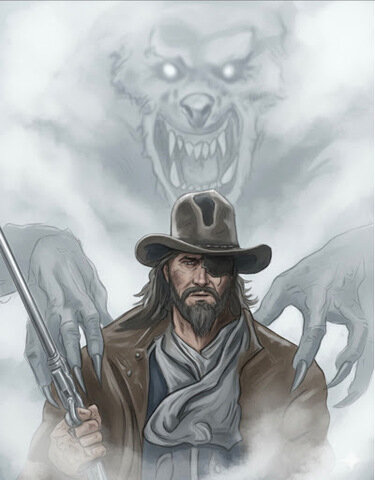
The biting wind was an old friend to Elias Thorne, a constant companion in the vast, unforgiving expanse of the Yukon. His cabin, a stoic sentinel against the encroaching wilderness, offered scant comfort against the gnawing cold that seeped into his bones, a cold that mirrored the one in his heart. A leather patch covered his left eye, a permanent shadow of a past he refused to acknowledge, even to himself. His rifle, “Old Betsy,” was an extension of his arm, its cold steel a more reliable confidant than any man he’d ever met.
This winter, however, felt different. A palpable dread had settled over the land, thicker than any snowfall. The usual sounds of the forest – the rustle of hidden creatures, the distant cry of a lynx – were absent, replaced by an unnerving silence. Traps he’d meticulously set were found mangled, the bait untouched. His sled dogs, usually boisterous, whimpered in their sleep, their eyes wide with unseen terror.
The first whispers came from the nearby Raven’s Roost, a small First Nations settlement he occasionally traded with. Old Man Grey Feather, his face a roadmap of ancient wisdom and sorrow, spoke of the “Wendigo,” a spirit of insatiable hunger, born from starvation and greed, its form shifting like the snow, its heart colder than the glacial ice. Elias, a man of logic and lead, scoffed. “Superstition,” he’d grunted, turning back to his furs.
But then, the howls began. Not the familiar, lonesome cry of a wolf, but something deeper, more guttural, a sound that seemed to tear at the very fabric of the night. It started far off, a mournful lament, then grew closer, evolving into a chilling, triumphant shriek that made the blood run cold. Elias found a deer carcass, stripped bare, its bones gnawed clean, but without the usual tracks of wolves or bears. The marks on the snow were impossibly large, and oddly, shifted in shape around the edges, as if the ground itself couldn’t decide what had passed.
The beast wasn’t just hunting; it was toying with him. It left bizarre “offerings” – a dead rabbit placed on his doorstep, its eyes staring up at the frigid sky, or a small, carved wooden bird, impaled on a branch outside his window, its wings spread in a silent scream.
Each time, a new layer of dread settled over Elias. The creature seemed to know his movements, his routines. He’d hear a faint scratching on the cabin walls when he was alone, or a soft, almost human sigh outside his window when he believed he was truly isolated.
One night, the howls were directly outside. Elias grabbed Old Betsy, his knuckles white. Through a crack in the shutters, he saw it – or thought he did. A swirling column of mist, indistinct yet massive, coalescing into the vague outline of something monstrous. Two points of light, like burning embers, glowed within the fog, unwavering. He squeezed his eye shut, and then opened it. It was gone, leaving only the sound of the wind, and a faint, acrid smell like ozone and fear.
Sleep became a luxury Elias couldn’t afford. The creature, the Wendigo, seeped into his thoughts, pulling at old wounds. He found himself reliving the accident that took his eye, the faces of men he’d left behind in a desperate gold rush, the gnawing guilt of choices made in the name of survival. The Wendigo, Grey Feather had warned, fed on despair, on the loneliness of the human heart. It wasn’t just physical sustenance it craved; it was spiritual.
The final confrontation began with a blizzard, a whiteout that swallowed the world whole. Elias was trapped. He saw the spectral face in the swirling snow, its glowing eyes fixed on him, its hands like skeletal branches reaching from the mist. The cabin groaned under the weight of the storm, and under the presence of the entity outside. “You can’t hide from yourself, Elias!” a voice whispered, carried on the wind, a voice that was both ancient and his own. “Your hunger, your greed, it brought me here!”
He fired Old Betsy, the roar echoing hollowly against the storm. The bullet tore through the mist, finding no purchase, no solid form. The Wendigo laughed, a sound like grinding ice. Elias felt its cold, razor-sharp claws rake against the cabin walls, leaving deep gouges in the sturdy logs. The door began to splinter, pushed inward by an unimaginable force.
Elias knew he couldn’t fight it with lead. The Wendigo was a spirit, a manifestation. He stumbled backward, his hands fumbling for something, anything. His gaze fell upon a small, leather-bound journal he kept, filled with his darkest thoughts, his regrets, the silent confessions of a man broken by the wilderness and his own past. He’d kept it hidden, a testament to his own inner demons.
A terrifying realization dawned. The Wendigo fed on his despair, but it was his despair. It was his hunger for gold, for survival at any cost, that had given it strength. He had to starve it.
With trembling hands, Elias lit the lantern. The door buckled, splinters flying inward. The Wendigo’s glowing eyes were visible through the widening gap, its maw opening in a silent roar. He tossed the journal into the small, roaring fire in his stove. As the flames consumed the pages, a guttural shriek tore through the blizzard. The Wendigo roared in pain, its spectral form flickering, momentarily solidifying into something truly monstrous – a gaunt, emaciated wolf-like creature, its ribs showing through translucent skin, its eyes burning with pure, unholy hunger.
The light from the fire seemed to sting it. Elias understood. It wasn’t his physical demise the Wendigo wanted; it was his surrender to its darkness. He forced himself to remember the good, the small acts of kindness he’d offered, the beauty of the untouched peaks, the resilience of life in this harsh land. He fought against the whispers of despair, against the images of his past failures that the Wendigo projected into his mind.
As the last page of the journal turned to ash, the Wendigo recoiled, its form dissolving back into the blizzard, its howls fading into the wail of the wind. The door slammed shut, the storm seemed to lessen its fury, and the chilling silence returned, but this time, it felt different. Not the silence of dread, but the silence of a battle won, for now.
Elias slumped against the wall, Old Betsy still clutched in his hand. He had faced the demon of the Yukon, and the demons of his own soul. He knew the Wendigo would return, perhaps with the next long winter, for true despair was never fully vanquished. But for tonight, he had stared into the abyss, and for the first time in a long time, he felt a flicker of hope, fragile warmth in the cold heart of the Yukon. The wilderness was still unforgiving, but Elias Thorne, for the first time in years, was not alone in his fight. He had himself.


![Werewolf Hollow [GALATEA DATE TBA]](https://cdn-gcs.inkitt.com/vertical_storycovers/ipad_76bbf380fa2e8dc2f70694197487ab81.jpg)