Prologue
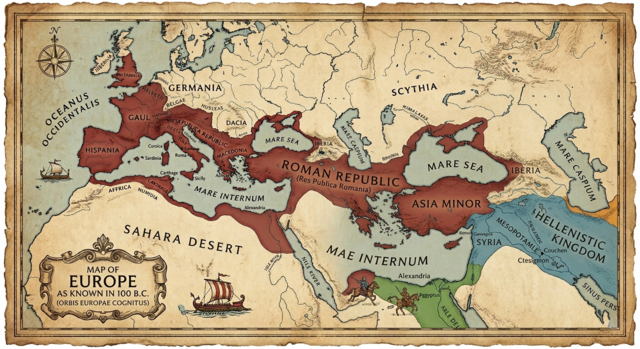


As we know for sure, the rulers of our civilization, since we have historical records, have often been murderers, liars, thieves, oppressors, or a combination of these categories. And that pattern persist in our current stage of development, which remains incipient in terms of socioeconomical equality and civic virtues. Since the dawn of Sumeria over six thousand years ago, humanity has merely replaced spears with Tomahawk cruise missiles, and maces with Leopard tanks. Therefore, the leaders of today are the mirror of a humanity still far from maturity, barely on the second rung of a ten-step evolutionary ladder. It is reasonable to believe that it may take another five thousand years before society overcomes armed conflicts and to reach a fair resource distribution systems. One significant obstacle in this journey is politics, which continues to hinder progress. Our history suggests that true societal evolution is slow, and the path toward peace and equality remains fraught with setbacks, rooted in the primitive instincts that still govern human behavior.
Aristotle, in his Nicomachean Ethics, stated that ethics was a “branch of political science” because the goal of politics is to cultivate citizens of a certain quality—that is, to make them virtuous and capable of noble actions. If we consider the modern definition of politics (from Machiavelli to the present day), this might sound like a bad joke and could not be taken seriously. In truth, Aristotle’s teachings were not taken seriously by his most famous disciple, Alexander the Great, who ended up becoming a universalist conqueror instead of benefiting from the concepts of what came to be known as the city-state. Ultimately, Aristotle had to flee Athens precisely because he had been the tutor of the great conqueror, to avoid being killed by the Athenians as they had killed Socrates. However, if we consider what was said at the beginning about civilization, there is something that can be salvaged from his work: the postulate of Zoon politikon, since it is a fact that man is, currently, a prototype that failed quality control. To explain this, it suffices to apply a little predicate logic: if man is a political animal, and politics is corrupt, then man is, indeed, a corrupt animal.
Politics fundamentally revolves around the pursuit of power, a quest driven by two primary methods: the military method, through the force of arms, and the political method, through the subtle art of corruption. Throughout history, politicians have often resorted to these means, with corruption becoming an almost inherent trait in their endeavors. It is worthwhile to reflect on various historical periods to observe how these tactics have manifested, revealing the persistent and complex nature of political power and its often-shadowy acquisition. The purchase of power has been endemic in the world of politics across all latitudes. Initially, direct purchase was the only conceivable means and proved effective. For example, when the Praetorian Guard mutinied in 193 AD. Against Emperor Pertinax, the Praetorian Prefect, Quintus Aemilius Leto, was sent to calm the situation, but he soon saw an opportunity to profit from the chaos. He joined the insurgents, Pertinax was assassinated, and then Leto and the Praetorian Guard auctioned off the crown to the highest bidder. This is where one of the most audacious politicians in the history of the Roman Empire enters the scene: Senator Didius Julianus. Raised by Domitia Lucilla, mother of Marcus Aurelius, he was governor of Gallia Belgica and proconsul in Africa and later in Asia. He won the auction by offering 25,000 sesterces to each Praetorian (eight times their annual salary), thus becoming emperor. However, in this case, it all ended badly, as 66 days later, the Senate ordered his assassination upon learning that General Septimius Severus was marching on Rome to purge the corrupt officials.
Of course, if we’re going to talk about buying power directly, we must also mention the Borgias during the Renaissance. On the night of August 10-11, 1492, the same day Christopher Columbus was in the Canary Islands repairing and changing the sails of the Pinta, four mules laden with silver left Rodrigo Borgia’s residence bound for Cardinal Ascanio Sforza’s to buy his vote and the votes of others he knew, in order to secure the papacy in the conclave taking place at that moment in the Sistine Chapel. Considering that one of these 400 kg ungulates can carry 25% of its weight, this would be equivalent to US$530,000 in modern currency. Furthermore, after the election, he gifted his residence to Sforza. Years later, Cardinal Giuliano della Rovere, who had opposed Borgia, continued the “tradition” and had himself elected pope in a single day. This was then called “simony,” a term already used by Dante in The Divine Comedy, derived from the anecdote of Simon Magus, who attempted to buy the “divine power” bestowed upon the apostles Peter and John. Of course, according to the Book of Acts, Peter and John rebuffed him.
With the establishment of a new monetary system and the flow of cash, Western societies saw the decline of simony, prompting politicians to turn to indirect funding, especially in the United States—the setting of this narrative. Much has been discussed about the 1896 presidential election, allegedly influenced by oil magnate Nelson Rockefeller, whose wealth then represented 1.1% of the nation’s GDP, a figure dwarfing Elon Musk’s current 0.021%. Rockefeller’s support was further bolstered by railroad tycoon Andrew Carnegie and financier J.P. Morgan, illustrating the era’s intertwining of wealth and political power. Even The History Channel depicts it in a scene from the miniseries “The Men Who Built America” (2012), although the campaign of Democrat William Jennings Bryan, a Nebraska native, was dramatized in an almost novelistic style (“I’m going to end the monopolies! Do you hear me, Carnegie? Do you hear me, Rockefeller?“). The “buying” involved not only money, but also dictating headlines and pressuring workers with layoffs at a time when elections were public. Unfortunately for the big shots, McKinley was assassinated in 1901 shortly after re-election, and Vice President Theodore Roosevelt, who held opposing views, assumed leadership.
Today, it can be said that this phase of “indirect purchases” is also waning, as the investment of large sums and the majority support of the media for a particular candidate have less influence on US elections, as demonstrated by the 2016 presidential election. In that election, the Democratic candidate Hillary Clinton’s campaign cost around $1.2 billion, enjoyed the support of the major news outlets, and yet was a colossal failure. Even worse are the prospects for self-funded candidates, as experienced by former New York City Mayor Michael Bloomberg, who spent $935 million of his own money on a 2020 primary campaign where his only victory was in American Samoa, a territory that doesn’t even award electoral votes in the presidential election.
In Latin America, after the tumultuous wave of military coups subsided, politicians transformed into flamboyant performers, vying for civil power with theatrical flair. Gone were the sober, measured tones of the mid-1940s campaigns; replaced by a carnival of charisma. They now paraded like celebrities—singers, actors, television stars—casting spells over their followers with dazzling spectacle and seductive charm, turning politics into a vivid spectacle of promises and illusion. Just to mention one of the candidates, Ecuador’s Abdalá Bucaram, mayor of Guayaquil, would often take to the podium and perform as a singer whenever he could during his third presidential campaign in 1996. He won with 53% of the vote in the ballotage, but Congress ousted him less than six months later for “mental incapacity” without any evaluation. In 1997 he released an album called Un loco que ama with songs mostly by the band Los Iracundos, for a record label called Armonía Musical.
But, back to the United States again, the most “extraordinary” example (it has to be described somehow) is the election of the Austrian-born bodybuilder Arnold Schwarzenegger as governor of California in 2003. The governor at the time, Democrat Grey Davis, did not appeal a court decision that deemed unconstitutional a proposition approved by 58% of Californians, which prohibited providing medical assistance, education, and services to undocumented immigrants (California voting “yes” to this…how times have changed... haven’t they?), and therefore the proposition was never implemented. For this reason, and due to his dismal 24% approval rating, he was recalled with 55% of the vote, but the process also included the option of voting for a replacement from a ballot containing 135 names, among them Penthouse editor Larry Flynt; the short actor from Different Strokes, Gary Coleman; the “billboard queen,” advertising model Ronia Tamar Goldberg, known as Angelyne, and Bill Prady (William Scott Prady), a television producer who years later would create The Big Bang Theory. Since it was a recall election, Schwarzenegger’s campaign slogan was the title of one of his films, Paul Verhoeven’s Total Recall (1990), and he even named his campaign bus after it. As the State Insurance Commissioner, John Garamendi, put it, the recall had become a circus. And so, Californians voted for the most popular clown: Schwarzenegger won 48.6% of the vote and became governor of the state.
This book, written almost as a dark satire, deals with the rise of Amanda Prentiss, founder of a party that became a third option, challenging the traditional two-party democracy in the United States. Set against a backdrop of a sharply divided America, the story, starting in 2022, unfolds mainly from 2036 to 2046, a period when Virginia’s political landscape tilts dramatically to the right. The protagonist, a young woman with a magnetic presence, had long cultivated an image that resonated with the youth, allowing her to challenge the status quo with daring defiance. After graduating in Columbia University, where her ambitions grew, and she found herself navigating the treacherous waters of political alliances. She relied on the support of far-right factions, whose militant enforcers acted to defend her and her advocates from the forces of traditional parties, shaping the chaos of a fractured nation. Yet, as her convictions deepened, she faced the perilous task of breaking free from these violent groups, an act fraught with danger and inevitable consequences.
Amanda Prentiss could be described as someone who believes she was born to fulfill a long-overdue task of correcting political perceptions (“So many crude things are discarded without any attempt to refine them, it’s as if the pencil was invented, but nobody thought to invent the eraser”). Her ultraconservative ideas and speeches did not go unnoticed by the media, which gave her enough visibility to receive the necessary financial support for her mission. The deaths that unfold in the pages of this book, the lies, bribes, and conspiracies, may seem brutal in their execution, but they don’t detract from the work’s dark satire. I’m not looking for comparisons with other published works (although I must confess, I’ve read a lot of John Irving), since the vast majority of this text takes place in the future, which will be the past in a few years. Because, after those years have passed, that “future” will not have happened as narrated, “Prentiss” is a perishable work, and the assessment we give it will depend on the path we choose from now on. But, as I said at the beginning, with five millennia still to go before we achieve the positive awareness that leads to the progress of what we call civilization, we will surely be on the wrong path.
Copyright 2025 by Fernando Salinas.








![[Moving to Galatea 11/5] What We Never Healed](https://cdn-gcs.inkitt.com/vertical_storycovers/ipad_b00b828931c645f2eccdf3396cb15498.jpg)