
Chapter One: A New Case of One Lucy Harper
Augustus Hale was a man of his word, and he had given his word to a desperate woman.
He stood at the riverbank, a familiar fog rolling in, the one that dampened the footsteps along cobblestones and muffled the sounds of motorcars and carriages alike. A thick void had settled over the streets to the point where his lit cigarette became a beacon in the night.
Augustus took a long drag as he turned his collar to the wind. His fingers trembled slightly, betraying the calm facade he wore like a mask. It was only the cigarettes and the flask hidden in his coat pocket that kept the memories at bay, memories of a war that had stolen seven months of his life and left him with a scar that throbbed with the changing weather.
He exhaled, watching the smoke mingle with the fog, becoming one with the murky air. He had been waiting for nearly an hour, but it was better to meet in public than his office, for one too many reasons.
A slight figure emerged from the fog, a woman with her hair bundled under a hat, her coat pulled tight around her thin frame. Her eyes were wide, darting around as if expecting something to leap out of the shadows. Augustus crushed his cigarette under his heel, his gaze sharpening.
“Mrs. Harper,” he called, his voice low but carrying through the quiet. The woman flinched at the sound, then hurried towards him, her hands clenched together as if in prayer.
“Mr. Hale,” she breathed, stopping before him. “Thank you for meeting with me. I didn’t know who else to turn to.”
Augustus nodded, his expression softening slightly. “Tell me everything,” he said, leading her to a nearby bench.
She tried to get comfortable but he could sense her unease, the desperation in her voice. “It’s my daughter, Lucy,” she began. “She’s been missing for two days. I’ve been to Scotland Yard, but they said…” She swallowed, wringing a handkerchief in her hand that looked like used parchment, “They said she’s probably run off, that girls her age do that. She’s a good girl, Mr. Hale, a good girl. She wouldn’t just leave me.”
Augustus listened, his face a mask of calm, but inside he felt the familiar stirrings of anger. He had heard it all before, the dismissive words of Scotland Yard, the way they brushed off cases that didn’t fit neatly into their books. He had seen too many mothers like Mrs. Harper, their eyes hollow with worry, their hands trembling with fear.
“What did she say to you, the last time you saw her?” he asked quietly.
“She said she was going to meet a friend, a boy from the bakery,” Mrs. Harper replied, her voice hitching. “But she never came home, and he claims she never showed up. I’ve asked everyone I can think of, but no one’s seen her.”
“Were they courting? Any chance of a relationship gone wrong?”
“She’s but sixteen,” Mrs. Harper replied. “She’s only eager for friendship. She’s in the Junior Choir, she tutors. In truth, she was hoping to acquire an internship at the bakery once her studies finished in the spring. We… we haven’t been well off since my husband’s passing.”
Augustus nodded, his mind already working through the possibilities. “Did she have any enemies, anyone who might wish her harm?”
Mrs. Harper shook her head, tears glistening in her eyes. “No, no one. She’s just a girl, Mr. Hale. Just my Lucy.”
Augustus reached into his coat, pulling out a small notebook and a pencil. “I’ll need a description of her, and any friends she might have mentioned recently. We’ll start there.” He kept his voice steady, reassuring, even as the chill in the air seeped deeper into his bones.
As Mrs. Harper began to speak, going into detail about Frederick and Kathleen, Augustus scribbled down notes, his mind piecing together the puzzle. He had no illusions; cases like these rarely ended well. But he had to try. For Lucy, for Mrs. Harper, and for himself. Because every time he found someone, every time he brought a lost soul back from the brink, it was like clawing his way back from the darkness that threatened to swallow him whole.
And if there was one thing Augustus Hale understood, it was the darkness.
The fog swirled around them, the river flowing silently by, carrying secrets to the sea. Augustus’s cigarette lay smoldering on the ground, a faint ember in the night. He lit another, his eyes narrowing as he looked out over the Thames. Somewhere out there, Lucy Harper was lost, and Augustus Hale would find her.
No matter what it took.
With the cigarette dangling from his lips, he scribbled down the bakery address with quick, precise strokes, the pencil moving like a dagger carving through the fog of uncertainty. The fog was so dense now it was almost palpable, a silent spectator to their clandestine meeting by the river.
“Thank you, Mrs. Harper. I’ll start looking into this right away,” Augustus said, tucking the notebook back into his coat pocket. “I’ll be in touch whenever I have news worth reporting. I will find your daughter.”
Mrs. Harper nodded, wiping away the tears that had begun to streak her cheeks. “Thank you, Mr. Hale.”
Augustus tipped his hat, a solemn promise in the gesture. He watched her disappear into the fog, her footsteps fading into the night, and then turned on his heel, his mind already sifting through the scant clues he had.
He slipped his hands into his coat pockets, feeling the familiar weight of the flask against his fingers. He fought the urge to take a swig, to drown the unease that always lingered after he took on a case like this.
Not yet, he told himself. Not until he had something more concrete. He needed his wits sharp, his mind clear.
He turned up the street leading to his office in Whitechapel, but a few blocks away. As he walked, he thought of Lucy, a face he had only seen in the tired lines of her mother’s eyes, a name on a missing persons report that no one else cared about. He thought of the other cases, the other lost souls he had tried to bring back. Not all had happy endings.
His steps slowed as he neared the mouth of a narrow alleyway, a dim glow from a distant streetlamp casting long shadows across the bricks. He heard a noise, faint but distinct, a soft shuffle followed by a muffled groan.
He stopped, his instincts kicking in, the same instincts that had kept him alive on the battlefield. He turned his head, peering into the darkness of the alley.
Out of the shadows stumbled a young man, barely more than a boy, his face as pale as his blonde hair, his eyes wide with shock. He was clutching his neck, his hand smeared with blood, his movements unsteady as though he were walking through a minefield. His coat hung off one shoulder, his shirt torn, exposing a sliver of wounded skin beneath.
He knew this face. It matched the description from another missing person’s case, one he had been keeping in the fifth folder from the top of the pile. An eighteen-year-old named Jonathan Graves. Disappeared a week ago. He was worried it had become a case gone cold. Until now.
“Help…me…” the boy gasped, his voice barely a whisper as he staggered toward Augustus. He swayed on his feet, his legs giving way beneath him.
Augustus was at his side in an instant, discarding the cigarette in favour of catching the boy before he could collapse to the ground. His skin was cold, clammy, his breath coming in short, desperate gasps. Augustus pulled his hand away from his neck, revealing a pair of small puncture wounds, oozing blood, unmistakable against the pallor of his skin.
“What happened?” Augustus demanded, his voice low and urgent. “Who did this to you?”
Jonathan’s eyes were glazed, unfocused, as if he were looking at something far away. “She…she…” His voice was a hoarse whisper, and then he coughed, a wet, rattling sound that sent a shiver down Augustus’s spine. He was in no state to answer questions. Not now.
Augustus looked around. The fog pressed close, the streets silent. There was no time to waste. He couldn’t take Jonathan to a hospital; Mr. Graves had specifically hired him to keep quiet and they would ask questions, questions Augustus didn’t have answers to. His office was closer, a few blocks away, and it was equipped for emergencies, a habit from his days as a soldier; you never knew when a detective’s office had to double as an infirmary.
“Easy, lad,” Augustus said, slipping his arm around Jonathan’s waist, supporting his weight. “I’ve got you. We’re getting you somewhere safe.”
He half-walked, half-carried the boy out of the alley, his eyes scanning the shadows, every nerve in his body alert. They moved as quickly as they could through the fog-shrouded streets, Augustus’s heart pounding with every step, the weight of the boy a reminder of the urgency of their situation.
When they reached the door of his office, Augustus fumbled with the keys, his fingers numb from the cold and the adrenaline coursing through his veins. The lock clicked, and he pushed the door open, dragging Jonathan inside.
Augustus glanced at the narrow staircase that led up to his office, the steep steps climbing into darkness. With a deep breath, he slipped his arm under Jonathan’s legs and heaved him up, grunting as the boy’s weight settled awkwardly against his chest.
Augustus’s muscles strained, the old wound in his side flaring with pain, but he gritted his teeth and started up the stairs, his boots thudding softly on the wooden steps. Each step felt like a battle, his breath coming in sharp bursts, but he pressed on, Jonathan’s head lolling against his shoulder.
By the time they reached the top, his legs burned, and sweat dampened his brow, but Augustus kept moving, the urgency driving him past his own discomfort. With one last heave, he pushed open the door to his office and staggered inside, carefully laying Jonathan down on the worn leather couch, his own breath ragged and heavy.
He moved as quickly as he could to light the gas lamp on his desk, the soft glow filling the room.
Jonathan’s eyes fluttered open, his hand still pressed to his neck, blood seeping through his fingers. He reached beneath the desk, pulling out an old tin first-aid kit, its edges worn from years of use but still serviceable, the tools of a different kind of battlefield.
“You’re safe now,” Augustus said, his voice calm but firm, as he tore open a sterile bandage from the kit. The fabric was rough, thick — far from the modern amenities but reliable. He pressed it firmly to Jonathan’s neck, staunching the bleeding, though the sight of the wound made his pulse quicken.
As he worked, he couldn’t shake the image of the bite marks, the same marks he had seen before on other victims, the ones who had disappeared and returned with no memory of where they had been.
And now, one of them was in his office.







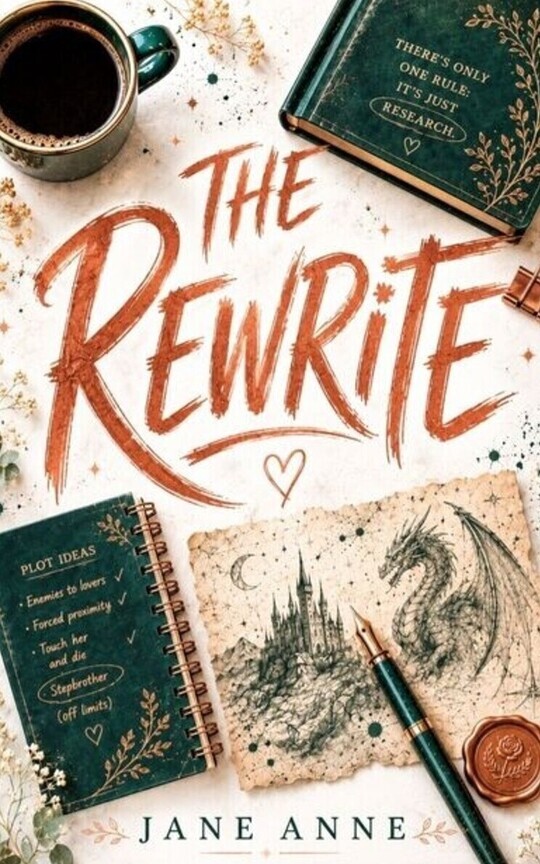











I wasn’t sure which book to start but as I’m waiting on ToD this was the shortest! 🤣 I already know I’m 🪝🪝🎣🎣🥰
Hi! I came across your story today and found it very engaging. The emotional scenes were handled in a very genuine way. Wishing you continued success with your writing I’ll be keeping an eye out for future updates.
I am hooked! Well-written🤩