Bubbling Spring
I stared into the mirror. Nothing left. Nothing but a skeletal figure staring back at me. I’ve hit bottom many times. This was different. The end of the road. I could barely stand. Scabs covered my arms, 6 foot tall but only 95 pounds, the smell of urine was overwhelming saturating my clothes. Bones with thin slices of meat laid over them. Blood on my chin that came from my insides. No more bridges to burn, just a ghoul staring back at me.
Was it the voice of the woman I’d seen the day before — the one who massaged my shoulders and whispered softly in my ear, “What are you holding on to? Let go”? Was it the fact that I couldn’t keep food down anymore? Or was it the looming threat of homelessness again — knowing that one small mistake in the halfway house could mean another few months on the street?
Does it really matter?
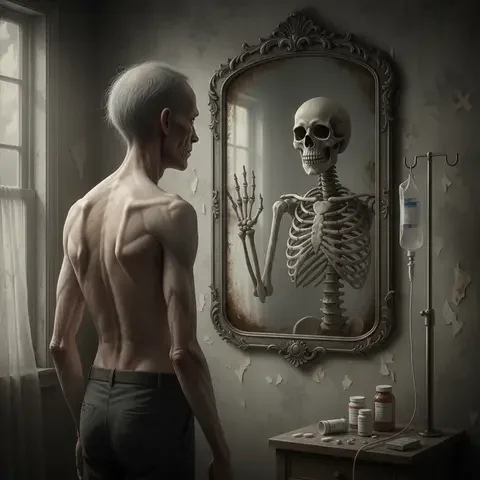


My ribs hurt when I breathed. Neurological jolts made my whole body spasm. My reflection wavered in the mirror, hollow-eyed and unrecognizable. The tears were gone, wrung out long before this moment. What remained was a constant, silent cry — grief beyond sound, beyond tears.
What gripped me in that moment is something I’ve been trying, and failing, to describe ever since. I don’t know why I keep trying. Maybe because it’s the only real thing that’s ever happened to me. It was Mom. It was every best friend I’d ever had. It was a lover. It was the dragon I chased with meth. It was none of those things.
It turned off the lights. It turned off everything. It stopped time. It took away my sight. It took away the pain but didn’t replace it with joy. It simply stopped me dead in my tracks. It grew — or rather I diminished. A dream with no fragments of thought, no colors, nothing for my memory to latch on to. It was nothing but it was everything. And it reached a place I didn’t know even existed and pulled my spine out. Yet it did no such thing. I simply melted away with everything around me. It was not new. If only it were that simple. I knew exactly what it was. It knew exactly what I was. It was everything. I was nothing. As it had always been before the prism of life.
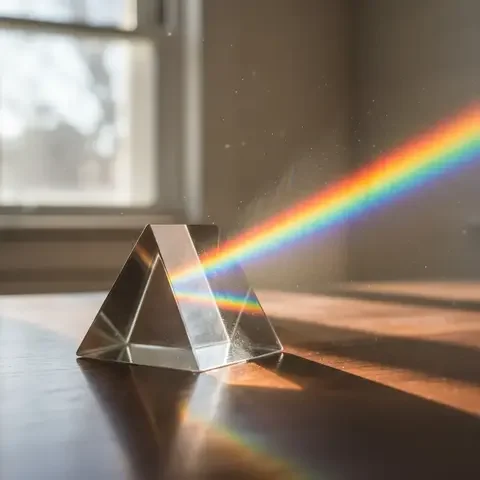
As the presence built I fell to my knees, eyes closed wondering if I was having a psychotic episode of some sort. But I welcomed anything over the hell that was my default. The more I let go, the more it announced itself. Not as a foreign entity, not as a super natural force. Something that I was all too familiar with. When the band that held my machine together snapped, the code of a simulation was erased. The program crashed. When I gave in fully, I became a liquid light pre-existent to everything I had ever known. Yet I did not become anything. I unbecame. It held me but it never did not. It dissolved me like a vampire exposed to sunlight. It was always there. How could I have possibly forgotten? How was that even possible. Like forgetting my own eyes.
It was what I was and what I was in before I became separate. Before I believed I was separate. A pure hum of belonging. Not new. What I’ve always known was there underneath my noise. No ecstasy, no enlightenment, no wisdom, no connection. A connection implies a plug and an outlet. This was foundational. Nothing wrong. Nothing right. Simply home. Belonging.
Some would say it was my “true self” breaking through the cracks of a crumbling persona after all defenses had fallen. But I disagree — at least with how they use the word self. At no point did I feel “better.” There was no sense of healing or improvement. There were no thoughts at all, really — only one, echoing like a single bell: “How could I have forgotten?”
The closest I can come to describing it is this: I wasn’t really “thinking” in the middle of it, any more than one is truly thinking in the midst of an orgasm. And I’m not comparing the two. It was as if I had been living inside a movie, believing it to be real, and suddenly the projector jammed and the film stopped.
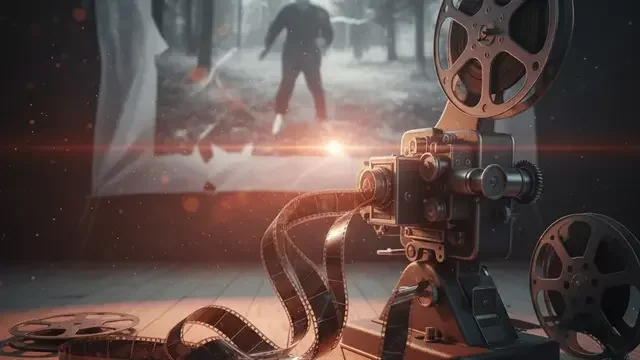
For the first time, I looked around the theater and saw the seats —remembering them, as though I had known them before the movie ever began. Then, for the first time in my life, I walked out of that theater into the spring air, hand in hand with someone — or something — that had never once let go. I knew it was always there because our hands were not two hands, but one. There was no need to ask, “Where were you all this time? ”I knew.
It didn’t speak, it absolved. Tears of joy are sweet, even when you think you have none left to give. How could I forget? I kept repeating it, like a stunned child. How could I have forgotten? The only response I felt was simple and wordless, carried like a pulse: “I didn’t.”
I knew my “sleep self,” my “hell self,” was still there in the background. I knew the movie would start again soon. From a distance, that old self reached out, pleading, “Please don’t go away, ”to this new presence. But I knew it was nothing more than a butterfly net I had woven myself. Why beg something to stay that has never left?
None of it mattered. The need for reassurance only stirred when the projector flickered, threatening to come back on — like the last flashes of consciousness before anesthesia fully takes over. And then it did.
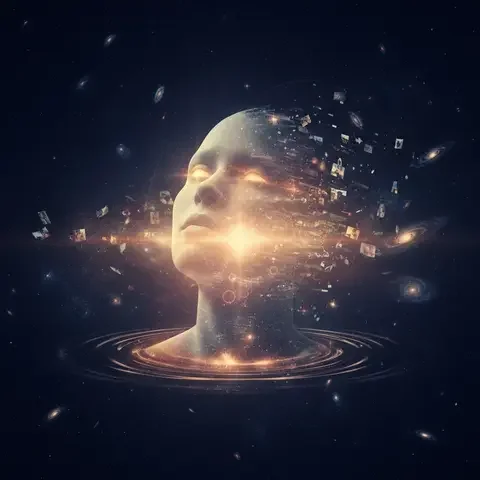
The message had come in waves, wordless and perfect, like a glance that needs no explanation. This is why my attempts to write about those thirty minutes have always felt awkward and inadequate. It wasn’t tranquility, it wasn’t peace, it wasn’t love — and yet, somehow, it was all of those. They were the ripples, not the source.
How do you explain something that is and is not at the same time? It was me, but not the me I was born as. And certainly not the me I became.
Neale Donald Walsch, in his Conversations with God books, describes a concept called IsNotIs. A quick search gives this summary:
The origin of creation: In the beginning, all that existed was a singular, undifferentiated consciousness. It could not experience its own magnificence because there was nothing else to compare it to. To “know” itself, it had to create a dualistic universe.
The purpose of creation: In this dualistic reality, “God” split itself into separate parts and gave each part the ability to experience itself. To know light, there must be darkness. To experience joy, there must first be sorrow.
The cosmic joke: While the individual pieces appear separate, they have never been disconnected from the whole. All of creation — with its seeming separations and opposites — is still one singular being. IsNotIs captures this irony: all is “is,” and all is “is not,” at the very same time.
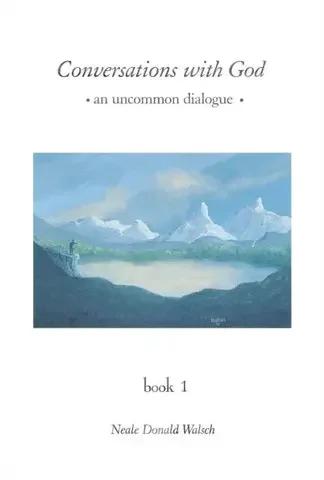
As a quick side note, I am not endorsing this book as gospel. As with everything we can find pieces of puzzles.
Where did I leave off? Oh yes…, this appearance of separation can be removed, sometimes temporarily, and perhaps permanently — though I have no proof of the latter. We can speculate, of course. Christ, Buddha, Sadhguru?
But for me, it was temporary. What the Big Book of AA would call “a reprieve.”
I do take slight issue with one part of the above summary — the phrase “in the beginning, all that existed.” It implies some cosmic decision, a “before” and “after,” as though this whole thing started at a certain point in time. I don’t see it that way. I think it was always split and not split, always whole and appearing separate.
But then, my “experience” didn’t grant me any ultimate knowledge — only a glimpse at a state of being behind the curtain of this reality. I can tell no one what it is. I can only say that it is.

To borrow one last CWG reference: IRe-Membered.
I didn’t learn anything. I remembered something I had forgotten. What I remembered was Home. A state. A natural presence.
And because it was a remembering, I have nothing to add to the endless library of philosophical “deepities” — a term Daniel Dennett coined to describe statements that sound profound but reveal little.
Skeptics often dismiss such moments as “subjective,” as though subjectivity itself were a flaw. But all conscious experience is subjective by definition. Every perception is filtered through an individual’s unique mind — their feelings, memories, and interpretations — even when observing what we might call objective reality. While the external world might exist independently, the way we experience it can never be perfectly shared or replicated.
But here is the problem: This wasn’t an experience. This was what is before any experience takes place.
Before I take my first spoonful of chocolate ice cream, I am not experiencing it. I might imagine what it will taste like, but it hasn’t entered my mouth yet. Once it does, I am experiencing chocolate ice cream.
What happened to me was not new. It wasn’t a something that happened. It wasn’t an event. It was what is happening when there are no events that require objects and subjects and before and after. It was what is always happening. It was the complete halting of all experience. It was the spoonful being removed from my mouth entirely. For thirty minutes, I remembered what it was like to not be tasting anything at all. I was not conscious of it. I was simply out of its way. The lasting impressions of it are nothing more than my mind trying to put it in a folder.
Are you experiencing your red blood cells pumping right now? Are you consciously aware of the air filling your lungs? Usually not — and yet these things are happening. When we remember something, we are experiencing that memory — with all its images, smells, voices, and feelings. But…,
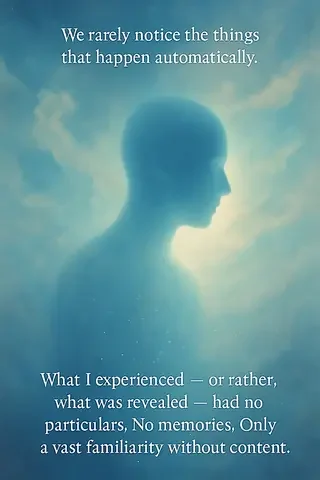
It was like having amnesia and suddenly remembering your spouse. The first moment of recognition is raw, pure, and wordless:“ Sharon! How could I have forgotten you?” Any feelings that follow — the joy of recalling her smile, her scent, your shared life — come after the initial remembering.
But what I dwelt in for those thirty minutes had no memories at all. The closest metaphor I can offer is an infant being held by its mother. The baby does not think, “I love her because of all she’s done for me.” It has no catalog of memories to justify its connection. The bond simply is.
Even if the sensations of touch, warmth, and smell are taken away, the connection remains. Most mothers will tell you this is true. Imagine that infant trying to write a Substack article about its connection to its mother — and you’ll understand my struggle here.
Something held me. But it didn’t reach out to hold me. It had always been holding me. The only difference was that, for a brief moment, I remembered.
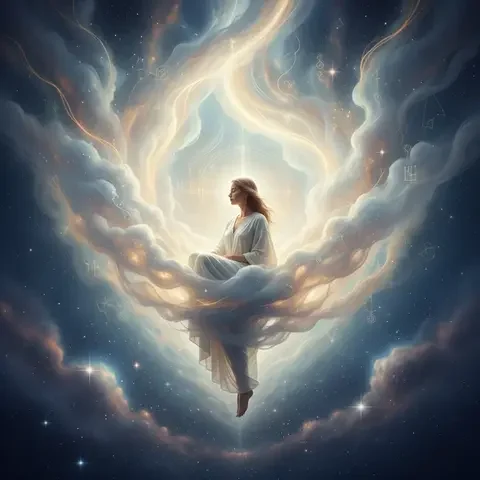
Why did I recognize it then and not before? The question only mattered for a flicker before the connection pulsed again, washing away even that inquiry. Afterward, my mind tried to fill in the blanks, but ultimately it didn’t matter. Nothing did.
It wasn’t like an itch finally being scratched. There simply was no itch. Looking back, every high point in my life — every moment of ecstasy or revelation — was just an itch being scratched. This was bedrock. This was where I had always been before the amnesia set in.
My mind still tried to cling, whispering, “Don’t go away. ”But the very instant that thought appeared, it was swept away by the deeper knowing: “That’s impossible.” And I knew.
I have had minute-long orgasms on methamphetamine. I’ve had revelations on LSD so profound they left marks on me that never faded. I’ve had lucid dreams where I soared through galaxies and encountered beings of light who mistook me for a god.
I’ve made love so deeply that my partner and I lost all sense of where one ended and the other began. Afterward, we would look at each other, breathless, and whisper, “Did that really happen? ”None of it compares.
Those peaks were echoes — aftertastes, window dressings. Itches being scratched. They were feelings. They were ecstasies. They were desires being fulfilled. But that thirty minutes of Home…, that was a living death. Not reborn. Preborn. And complete.
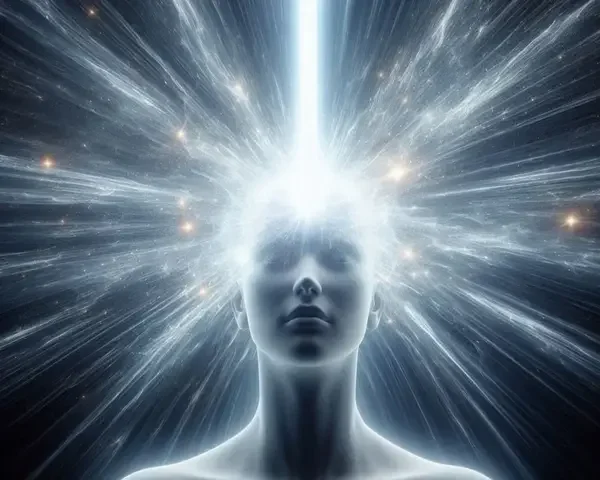
Afterwards the eclipse returned. The skeleton was in the mirror again. But I could not unsee what had happened. Something had infected my psyche and began burning the dark forest that I planted. It was anything but sudden but the exit of this reality would not be played off as a glitch in the matrix or some anomaly — although my brain tried everything to dismiss it. Afterwards, I never even thought about the possibility of doing meth again. Just didn’t seem interesting anymore. Afterward, I searched through history for descriptions of anything remotely similar that had happened to others. I found many.
One account comes from the Gnostic Gospel of Thomas. Christ asks his disciples to describe him. They each try: a wise man, an angel, a teacher. But when it is Thomas’s turn, he says, “Master, my mouth is not capable of saying what you are like.”
Christ pulls him aside and says, “I am no longer your Master, for you have become drunk from the bubbling spring.”
The bubbling spring.
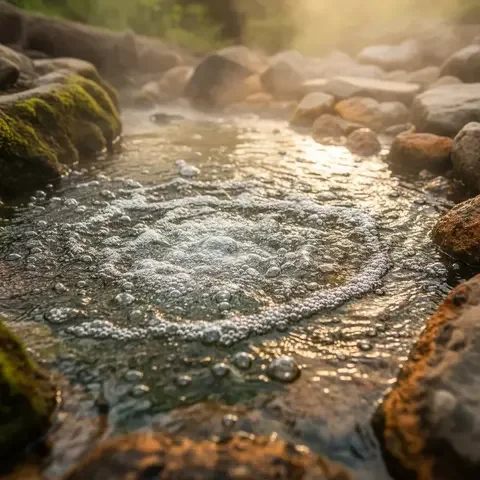
When the reprieve ended, questions returned. But never questions about whether it had been real. That was beyond doubt.
The questions were more like: Why does the amnesia return? Why can’t I know Home all the time?
Speculation is all I have. My best guess is that forgetting is essential to the game. If we lived constantly aware of Home, what point would there be in living at all?
If I already knew — in the deepest way — that I was one with the jelly donuts in my lap, why would I bother eating them? Why would I delight in the burst of strawberry jelly on my tongue?
The slowing of energy into matter is the stage setting itself for the play. Without it, there is no stage, no costumes, no actors to inhabit the roles. Pure, unbound energy is like a blank canvas — it holds everything, yet reveals nothing. By condensing, by slowing, by taking form, it creates contrast. And contrast gives rise to movement, to time, to story.
This is why a dream has characters, landscapes, and events: not because the dreamer needs them, but because they are the scaffolding through which the dream unfolds. Without matter, there is no dream. Without the dream, there is no way for the vastness to even whisper to itself, “Ah, there I am.”
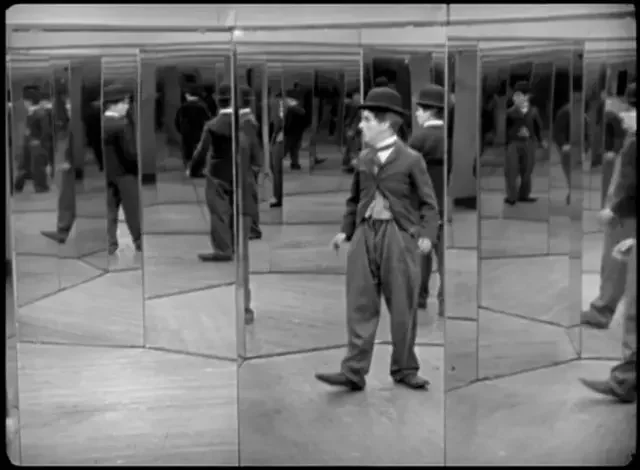
But here is the twist: The dream never really begins, nor does it end. The stage lights dim, the actors bow, and yet the theater remains exactly as it always was. Amnesia is the curtain between acts.
We forget so completely that we swear the play is reality itself. To remember in the middle of the play would shatter the illusion of time and choice. Only by forgetting can we taste experience fully — believing, even if briefly, in the separations that give experience meaning.
Home cannot be described as an experience. Experience requires two: the experiencer and the experienced. The taster and the thing tasted. The seeker and the sought.
Home is before all of that. It is the blank page before the first word, the silence before the first note. In Home, there is no “this” and “that,” no grasping or letting go. It simply is.
When I slipped into that state for those thirty minutes, there was no me left to measure it. No one to declare, “I am having an experience. ”It was like discovering that the one who walked the path was, and had always been, the path itself.
And so we return, again and again, to this condensed dream of matter. Even now, as I type these words, my hands striking keys, lungs breathing air — I know somewhere deep down that these are just vibrations caught in temporary form.
One day, the atoms will scatter back into energy, just as roles are abandoned when the play concludes. To call that “death” is to miss the larger truth: there was never truly a birth either. Only shifting appearances.
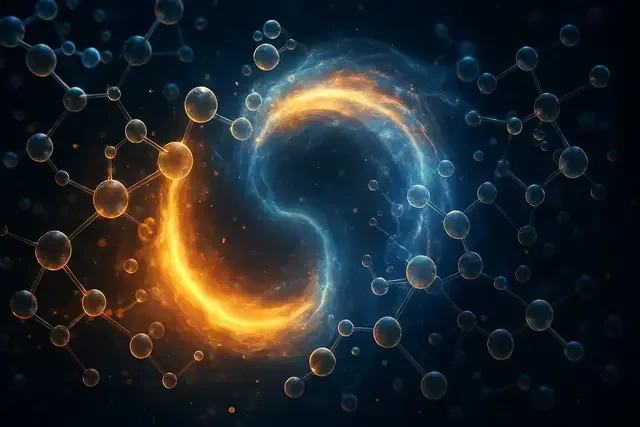
We forget willingly. No one forces the amnesia upon us. It is the natural result of playing a role so deeply that we become it. Like an actor who forgets mid-performance that he’s acting, we lose ourselves in the part.
This is what gives weight to joy and sorrow, triumph and failure. Without forgetting, even love would not taste like love. And then, one day, the remembering comes — and we see that the silence was never disturbed. The music was only ever silence playing at being sound.
So if you ask me why the amnesia exists, why we leave Home only to return, I can only say this: We are both the leaving and the returning. We are the play and the stage. The actor and the audience. The eater and the donut.
Existence is this paradox of being and becoming, of forgetting and remembering. And maybe the point was never to figure it out. Maybe the point was simply to play. And to think we’re told to stop — and grow up.
Home
Home is not a place. It is not even a “state” as we usually think of states. It is before movement, before longing, before the first flicker of identity.
In Home, there is no striving to be more because there is nothing missing. It is not bliss — though bliss may echo from it, like a shadow hints at the form casting it. It is not peace — though peace may arise when the turbulence of mind dissolves into it.
Home is beyond even these. It is the stillness from which both bliss and chaos emerge, untouched by either. Even the word “stillness” is too much.
In that return, there is a staggering familiarity. Not because you learned something new, but because you remembered what had never left. It’s like suddenly recognizing the face of someone who has been beside you all your life.
There are no fireworks, no announcements, no spiritual awards. Only the wordless knowing: this has always been so. And with that recognition, all questions dissolve — not because they are answered, but because you see there was never a question to begin with.
There is no hunger there, no thirst, no itch to be scratched. Even the subtlest longing — for understanding, for transcendence, for permanence — cannot survive.
Desire collapses like mist at sunrise, leaving only what always was. This is why no experience, no matter how exalted, can compare. Experiences are temporary. They come and go. But Home does not come or go.
It remains when all experiences, even mystical visions, fall away. It is the canvas beneath every painting, unmarked and infinite.
Only a few, in rare moments of surrender, have remembered this fully. They are not special, though later they may be called saints or sages. They simply stopped clinging, even for an instant. And in that cessation, the veil lifted.
Some return and speak of it in metaphors: a bubbling spring, a boundless sky, an uncaused love. But these are only fingers pointing to the moon. The Home state itself needs no description, for it has never been apart from you.
In the end, to speak of Home is to fail. Yet silence alone would be a lie.
So we whisper, gesture, and hint — knowing that words can never contain it. And maybe that’s enough.
Maybe remembrance comes not from being told, but from recognizing what has been humming beneath every moment of your life.
Home is not something to seek or reach. It is what remains when all seeking stops, when all reaching ends.
Nothing to fix. Nothing to gain. Nothing to lose. Just the eternal familiarity of being — unchanging, unborn, and utterly whole.
- Michael Clever


![Werewolf Hollow [GALATEA DATE TBA]](https://cdn-gcs.inkitt.com/vertical_storycovers/ipad_76bbf380fa2e8dc2f70694197487ab81.jpg)