
Chapter 1: The Deep Hum
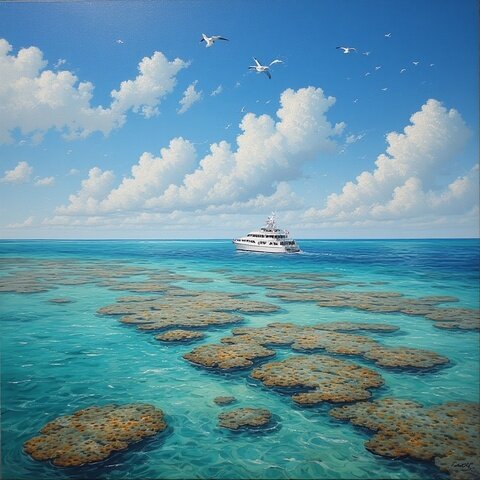
The Fremantle docks, a sprawling testament to human industry, baked under a sun that felt less like a distant star and more like a malevolent eye, scrutinizing every sweat bead, every shimmer of heat rising from the asphalt. The air, thick and heavy, hung like a suffocating blanket, making even the simplest breath an effort. The usual symphony of the port – the clang of metal, the distant thrum of engines, the mournful cries of gulls – seemed muted, absorbed by the oppressive heat. Lincoln Whitford, standing on the deck of the Southern Cross, felt the sun’s relentless assault on his skin, a familiar sensation that had long since ceased to bother him. He was a man forged in the crucible of the Australian sun, his skin tanned and leathery, his eyes, a piercing blue, narrowed against the glare. He was a creature of the elements, comfortable in the face of nature’s extremes, a man who understood the raw, untamed power of the world around him.
His gaze swept across the Indian Ocean, a vast, indifferent blue that stretched to an unseen horizon. It was a deceptive calm, he knew, a placid surface that concealed unimaginable depths, a world of crushing pressures and alien life forms. He had spent a lifetime navigating these waters, charting its currents, deciphering its moods, and yet, it still held secrets, still whispered promises of the unknown. Today, however, the whispers were louder, more insistent, a premonition of something vast and terrible stirring beneath the waves. He felt it in his bones, a primal unease that had nothing to do with the heat or the humidity, but everything to do with the mission that lay ahead.
Edward Fox, his chief deep-sea diver, a man whose very presence exuded an earthy solidity, stood beside him, a mug of tea steaming in his massive hand. Edward was a man of few words, but his silence spoke volumes. He was a rock, a steady presence in a world of constant flux, and Lincoln trusted him implicitly. Edward’s eyes, though weathered by years of sun and salt, held a surprising depth, a quiet wisdom that came from a lifetime spent battling the ocean’s unpredictable nature. He was a man who understood the unspoken language of the sea, its subtle shifts and hidden dangers, and he was as much a part of the ocean as the currents themselves.
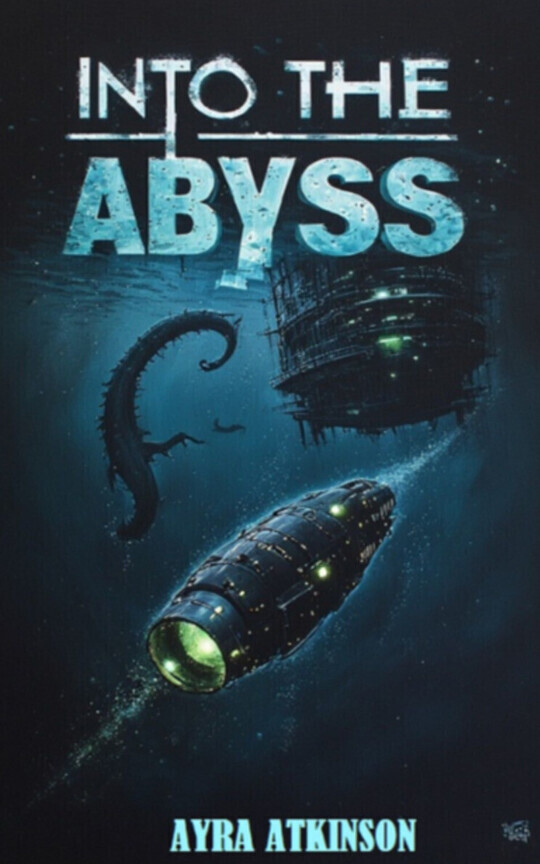
“She’s a beauty, isn’t she, Commander?” Edward’s voice, a low rumble, broke the silence, his gaze fixed on the Southern Cross. The submersible, a sleek, black marvel of advanced alloys and cutting-edge technology, shimmered in the heat, its polished surfaces reflecting the harsh sunlight. It was more than just a vessel; it was a lifeline, a home in the hostile environment of the deep, a testament to human ingenuity and a symbol of their unwavering ambition.
“Aye, she is, Edward,” Lincoln replied, his voice a low growl, like distant thunder echoing across a vast plain. “And she’ll need to be. This isn’t going to be a walk in the park.” He wasn’t one for flowery speeches or grand pronouncements. His words were always measured, precise, carrying the weight of his experience and the gravity of the mission ahead. He knew the risks, had calculated the odds, and understood the immense challenges that lay beneath the deceptively calm surface of the water. This wasn’t a joyride; it was a plunge into the unknown, a dance with the leviathans of the deep, a confrontation with forces that dwarfed human understanding.
Edward grunted, taking a long swig of his tea, the warmth a stark contrast to the growing heat of the day. “Never is, down there. But if anyone can get us through it, it’s this old girl.” He patted the gleaming hull of the Southern Cross with an affection usually reserved for a favourite kelpie, a loyal dog that had seen him through thick and thin. The submersible, a sleek, black marvel of advanced alloys and cutting-edge technology, was more than just a machine to them; it was a partner, a lifeline, a home in the hostile environment of the deep. “And us, of course,” he added, a wry grin playing on his lips, a subtle acknowledgment of their own crucial role in the upcoming endeavour. He was a man who understood the value of teamwork, the strength that came from a shared purpose, and the unwavering loyalty that bound them together.
Below deck, the hum of the submersible’s systems was a constant, reassuring thrum, a mechanical heartbeat that filled the confined space. It was the sound of power, of life support, of the intricate dance of technology that kept them alive in a world designed to crush them. Toby Beck, the Southern Cross’s sharp-as-a-tack navigator and communications officer, was hunched over a console, his fingers dancing across the holographic displays with the effortless grace of a concert pianist. He was young, barely out of his twenties, with a mop of unruly sandy hair that perpetually fell into his eyes, and an energy that seemed boundless, fueled by an insatiable curiosity and an almost childlike wonder at the world. He was a whiz with the tech, a digital native in a world of analogue dangers, capable of coaxing information from the most recalcitrant systems and navigating through the most complex data streams. But Lincoln knew this mission would test him in ways no simulation ever could, pushing his intellectual and emotional limits to their breaking point. He was a prodigy, a brilliant mind, but he was also young, and the deep had a way of stripping away all pretensions, of revealing the raw, vulnerable core of a man.
“All systems green, Commander,” Toby called out, without looking up, his voice echoing slightly in the control room. “Hydroponics cycling, life support nominal, comms array at full capacity. We’re ready to roll, fair dinkum.” His enthusiasm was infectious, a youthful counterpoint to the seasoned stoicism of Lincoln and Edward. He was eager, almost buzzing with anticipation, oblivious to the deeper anxieties that gnawed at the older men. He saw the mission as an adventure, a grand scientific endeavor, unaware of the lurking dangers that lay beneath the surface, the silent, crushing forces that could extinguish life in an instant.
Lincoln allowed himself a small, almost imperceptible smile, a rare softening of his usually stern features. “Good on ya, Toby. Keep an eye on those deep-scan readings. We’re heading into uncharted territory.” The phrase hung in the air, a subtle warning disguised as an instruction. Uncharted territory. It was both the allure and the terror of their profession. The promise of discovery, the threat of the unknown, the tantalizing possibility of uncovering secrets that had been hidden for millennia. He knew that every journey into the deep was a step into the void, a dance with the unknown, and that only the truly brave, or the truly foolish, dared to venture there.
Their destination, or rather, the area of their current focus, was a section of the Perth Canyon, a vast, submerged gorge that plunged thousands of metres into the abyssal plain. It was a place of immense pressure, crushing darkness, and alien beauty, a world teeming with life forms that defied conventional biology, thriving in conditions that would instantly extinguish human existence. For months, AMSO, the Australian Marine Science Organisation, had been monitoring unusual seismic activity in the region, subtle tremors that hinted at something far more significant than typical tectonic shifts. These anomalies, faint whispers from the earth’s restless core, had been the catalyst for their current mission. It was these anomalies that had prompted the deployment of ‘The Coral Cradle’, a cutting-edge deep-sea research habitat, designed to study these geological phenomena and the unique extremophile life that thrived in such conditions. It was a bold venture, a testament to human ambition and scientific curiosity, a fragile outpost of knowledge in a hostile world, a tiny bubble of human ingenuity against the raw, untamed power of the abyss.
Dr. Mariam Price, the lead scientist of ‘The Coral Cradle’, was a name whispered with reverence in marine biology circles. Her dedication was legendary, her insights groundbreaking, her reputation preceding her like a scientific aura. Lincoln had met her briefly during the planning stages of the habitat’s deployment, a fleeting encounter that had left a lasting impression. She was a woman of fierce intellect and quiet intensity, with eyes that seemed to hold the secrets of the deep, reflecting a profound understanding of the ocean’s intricate ecosystems. He’d admired her pragmatism, her unwavering focus on the science, even when faced with the immense logistical challenges of building a permanent human presence in such an extreme environment. She was a force of nature in her own right, as relentless and unyielding as the ocean she studied, a woman who commanded respect not through force, but through the sheer power of her intellect and her unwavering dedication to the pursuit of knowledge.
Now, however, a different kind of hum was beginning to resonate through the Southern Cross – a low, almost imperceptible vibration that wasn’t part of the submersible’s usual operational symphony. It was a subtle shift, a discordant note in the otherwise harmonious rhythm of the deep, a premonition that prickled at the edges of Lincoln’s awareness. He felt it in his bones, a primal warning that bypassed his logical mind and went straight to his gut, a cold dread that whispered of impending disaster. Edward, standing beside him, stiffened, his gaze fixed on the distant horizon, his own senses attuned to the subtle shifts in the environment. The air seemed to thicken, the silence to deepen, as if the very ocean was holding its breath, anticipating the coming storm.
“You feel that, Commander?” Edward murmured, his voice low, almost a growl. “Like the ocean’s clearing its throat.” His words were a grim confirmation of Lincoln’s own unease, a shared premonition of something vast and terrible stirring beneath the waves. It was the kind of feeling that seasoned sailors knew well, a primal instinct that warned of impending danger, a whisper from the deep that spoke of forces beyond human control.
Lincoln nodded, his eyes narrowing, scanning the seemingly placid surface of the water. “Aye, Edward. And I reckon she’s got something big to say.” His voice was laced with a grim certainty, a foreboding that settled heavily in the air. The ocean, they both knew, was a fickle mistress, capable of both breathtaking beauty and unimaginable destruction. And it was about to speak, its voice a roar that would shake the very foundations of their world. The sun, once a benevolent presence, now seemed to mock them, its golden rays a stark contrast to the growing darkness that lurked beneath the waves. The gulls, once a comforting presence, now seemed to shriek a warning, their cries echoing the rising tension in the air. The Southern Cross, a tiny speck on the vast canvas of the ocean, was about to embark on a journey into the heart of a storm, a confrontation with forces that would test their courage, their resilience, and their very understanding of the world. Fair dinkum, the deep was calling, and they had no choice but to answer.
Far below them, in the crushing darkness of the Perth Canyon, ‘The Coral Cradle’ was experiencing a different kind of hum. A violent, shuddering roar that tore through its titanium-alloy shell, twisting metal and shattering reinforced glass. The subtle tremors that had been their focus for months had suddenly erupted into a cataclysmic, unprecedented seismic event – the Serpent’s Strike. It was a geological convulsion of unimaginable power, a raw, untamed force that ripped through the very fabric of the earth. The seafloor beneath them, once solid and unyielding, had liquefied, turning into a churning, viscous soup, and the entire habitat, a beacon of human ingenuity in the abyss, was plummeting into a newly formed, impossibly deep trench. Mariam Price, along with her team, including the bright-eyed Elise Miller, were about to discover just how truly indifferent the deep ocean could be, how quickly it could reclaim its territory and erase all traces of human ambition. Their world, once a sanctuary of scientific discovery, a haven of knowledge and exploration, was rapidly becoming a tomb, a crushing prison of metal and despair, and the hum they now felt was the prelude to a silence that might never be broken, a final, suffocating embrace of the unfathomable depths. The very air they breathed, once a symbol of life, now felt heavy, laden with the unspoken promise of oblivion. The lights, once a comforting presence, now flickered with a desperate urgency, casting long, dancing shadows that seemed to mock their fragile existence. The Coral Cradle, a testament to human ambition, was about to become a monument to human folly, a silent tomb in the heart of the abyss. And no one, they knew, would even know where to begin looking for them. Not yet, anyway. The distress signal, if it had even managed to get out, would be a faint whisper in the vast, indifferent ocean, a desperate plea lost in the crushing silence of the deep. Mariam closed her eyes, a single tear escaping, a silent acknowledgment of the impossible odds they faced. But even in the face of such despair, a flicker of defiance remained. They were scientists. They would fight. They would survive. Or they would die trying. Fair dinkum.