
Prologue: The Dollmaker’s Lament
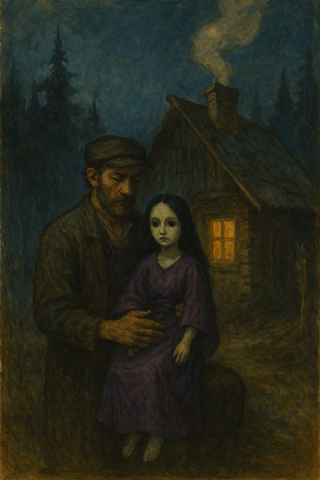
They say a dollmaker once lived at the edge of the woods, in a house made of smoke and pine.
He was a quiet man—foreign, some claimed. Soft-spoken, but always humming to himself as he carved things too delicate for war and too beautiful for prayer.
He had a wife with strange eyes and lilac perfume. The women called her a witch.
The men called her worse.
They say she danced beneath moonlight with bare feet and a silk robe the color of dried violets—too fine for a villager’s wife.
And when she died suddenly, without illness or warning, the dollmaker did not mourn like a normal man.
He shut himself in his cottage for thirty days. Thirty nights. No light. No food.
Only carving.
When he emerged, he brought with him a doll.
A beautiful thing, dressed in his wife’s purple robe. Eyes like stormglass. Lips like prayer.
He called her Elira, same as his wife. But others whispered it wasn’t a doll at all.
That it was their child.
Born not of blood, but of longing and bone dust. A child made from grief.


One night, the village caught fire.
They found the dollmaker hanging from a tree, his hands black with ash.
The doll was never found.
But some say they buried her with him. Others say she walked away.
No one lives near the old manor now. The dolls there don’t gather dust.
And every seven years, they say, a girl in violet walks the halls.
Looking for her mother.
Or maybe for someone else.
No one agrees on what she wants.
But all agree on one thing:
She remembers who lit the fire.









