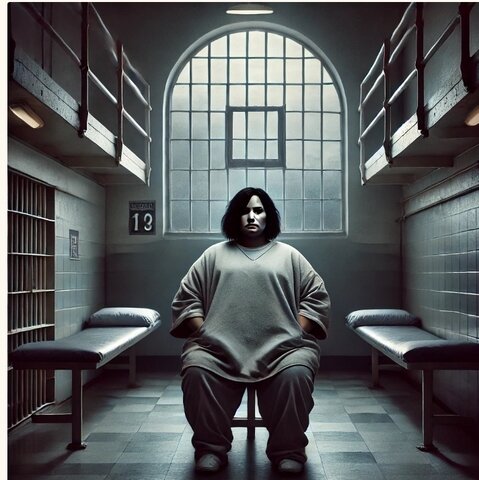
Dateline: September 2028, FCI, Tallahassee, FloridaTalahassee
“America has always had its share of scandals—Watergate, Iran-Contra, you name it—but the Demi Lovato saga feels like a new chapter in our collective disillusionment. It’s not just about espionage or betrayal; it’s about the dangerous intersection of celebrity, power, and a world teetering on chaos. Lovato wasn’t just a pop star; she was a symbol of a generation. To see her entangled in something so dark feels less like a betrayal of country and more like a betrayal of trust. It’s a reminder that we live in an age where fame can be weaponized, where charisma and influence can blur the lines between hero and villain.”—Studs Terkel, reflecting on the Lovato scandal in American Contradictions: Conversations on Power and Identity.
My Meeting with Demi Lovato
When I first stepped into the interview room—a small, claustrophobic space devoid of windows and lit by unforgiving fluorescent tubes—the figure seated at the far end was almost unrecognizable. Gone was the radiant pop icon whose image had once flooded billboards, magazine covers, and television screens around the world. The transformation wasn’t merely physical, though that alone was stark enough. Demi Lovato sat quietly, her hands folded tightly in her lap as if holding herself together, her posture collapsed inward, curling under a weight far heavier than mere exhaustion. It was a kind of surrender, not just of body, but of spirit.
Her face, once vibrant with the flush of youth and the glow of fame, had softened into something more worn and vulnerable. The high cheekbones that had framed a commanding, confident gaze had faded beneath subtle puffiness and tension lines, marks left by years of relentless pressure and private battles. It wasn’t the softness born of indulgence or ease, but the slow erosion of consequence—the steady grinding down of a life lived too fast and too loud. There was no trace of the dazzling fire that had once ignited stages; instead, there was something almost fragile in the way her features now slumped, as if the fight had long since drained out of her. She wore no makeup—nothing to hide behind or to armor herself with—and under the harsh white light, her pale skin seemed raw and unguarded. This wasn’t the face of a fallen star merely caught in a moment of weakness; it was the face of someone abandoned by the very story that once made her a legend.
The dissonance between that past and present was immediate and unsettling. For years, Demi Lovato had been a carefully crafted media mirage—projected in vivid technicolor, distilled into catchy soundbites, endlessly reframed by cameras and editors. But the woman sitting before me now was someone else entirely: quiet, soft-spoken, and reluctant to meet my eyes. When she finally spoke, her voice was low and measured, not sharp or defensive, but subdued—worn down by the endless churn of public spectacle. There was a hesitation between thought and word, as if each phrase had to pass through some internal tribunal before it was allowed to surface.
It would have been easy to assign symbolic meaning to her physical changes—to say that her body had absorbed the toxicity of fame’s collapse. But that would be too simplistic. What struck me most wasn’t the weight she carried but the weariness etched into every line of her face, every slump of her shoulders. She didn’t look like someone defeated by the brutal game of celebrity. She looked like someone who had simply stopped fighting. Her once-electrifying presence—bold, confident, confrontational—had been muted. Whether that was due to fatigue, regret, or an acceptance of some unavoidable fate, I couldn’t tell.
Yet, despite the exhaustion, there was something else beneath the surface—a faint glimmer of the self she once was, or perhaps the self she had to pretend to be. It flickered behind her eyes, fragile but stubbornly intact, like a memory refusing to be erased.
As our conversation unfolded, I realized I wasn’t witnessing a dramatic unraveling or a public meltdown. What I was seeing was the aftermath—the quiet, untelevised consequences of a life lived at dizzying heights, now grounded with heavy finality. There were no breaking scandals left to uncover, no sensational headlines to chase. Just a woman alone in a sterile room, who had long passed the point where any of it could be undone or redeemed.
Sitting across from Demi Lovato, the gulf between the woman before me and the global superstar she once was felt vast and almost impossible to bridge. At her peak, she had been a beacon of pop culture—bright, magnetic, brash, her face as familiar and ubiquitous as the catchy anthems she sang. But now, in this government interview room, under the cold, flickering fluorescent light, she seemed like a shadow of that figure. Heavier, yes—but more than that, her entire presence had shifted. There was no performance, no spark of the showmanship that had once defined her.
Her face, bare and unadorned, bore the unmistakable marks of strain and consequence. The sharp, symmetrical beauty that once drew the lenses of countless paparazzi had softened and rounded, reshaped not just by the passing of time but by the relentless strain of personal battles fought in the glare of public scrutiny. She sat with her arms crossed—not as a defensive barricade, but as a quiet declaration of refusal. A refusal to give anything freely, to expose more than necessary. Her expression was one of subdued resistance, a shield against a world that had both adored and abandoned her.
“You know,” she said, her voice low, the tone flat and practiced, like a script she had delivered a thousand times before, “I don’t even know why I’m talking to you.” Her words dropped with the weight of exhaustion, not anger or bitterness. “They told me to, so here I am. A gringo with a notebook.” She shrugged, not bothering to look at me directly, eyes drifting instead toward the small, narrow window that cut a sliver of fading light into the room. “You want the story—fine. But let’s get one thing clear right now: I’m not doing this because I care what you write.”
There was a sharp edge in her voice, but it wasn’t hostility. It was the quiet blade of fatigue sharpened by the knowledge that she had nothing left to lose. Her gaze lingered on the orange glow spilling through the window, the last rays of daylight turning the pale concrete walls into a muted canvas of shadows and color.
“All this—the fame, the betrayals, the chaos—it’s your world, not mine,” she said, voice almost resigned. “I got pulled into it. But it never belonged to me.”
She paused deliberately, long enough for me to step in with a question, but she held the space. When she spoke again, her words fell slowly, carefully—as if each one had to be weighed and measured, pulled from somewhere deeper than habit or impulse.
What came next wasn’t a confession in the usual sense. It wasn’t a broken admission or a desperate plea for sympathy. Instead, it felt like a cold, sharp justification. She spoke without hesitation of the espionage allegations swirling around her, the intelligence passed through shadowy back channels, and the brief but explosive connection with North Korea—details that sounded more like the plot of a spy thriller than the life of a pop star. When she mentioned the rogue naval flotilla, she was quick to clarify: “Not mercenaries,” she said, voice clipped and precise, “independent actors with a code.”
Her language was deliberate. Not evasive, but exact—measured like a chess player plotting moves many steps ahead.
“I always thought I had time,” she said softly, leaning forward just enough that her voice dropped a notch, almost conspiratorial. “Time to shape it all. To bend the rules just enough to make them work for people like me.” There was a faint, bitter humor in the way she delivered that line. “You all want to be shocked, right? That the girl from Camp Rock is some kind of international operator. But the truth? The truth is I did what most people only fantasize about. I played the game—and I won.” Her smile was small, tight, lacking warmth, edged with a certain cold detachment. “Even if winning meant losing everything.”
Her eyes flashed, briefly igniting when she spoke of the naval movement she’d quietly helped orchestrate—something she described with unmistakable pride. Not arrogance, not boastfulness, but the kind of pride that comes from knowing the true cost of what you built, the risks taken, the sacrifices made.
“You call it a scandal,” she said quietly, voice almost amused, “but what I built? It was bigger than scandal.”
I pressed her gently, asking if there was any regret. For the trials, the ruined career, the inevitable years she might now spend behind cold fences and barbed wire.
Her reply came slow, deliberate, as if carefully examining the word itself.
“Regret?” She repeated it like it was a foreign concept, alien and distant. “No. Not really.” She shook her head just slightly. “The money, the fame, even the crash—those were just details. What I regret is that nobody ever understood what I was trying to do. I didn’t do this for attention. I did it for the ones who get ground up by the system.” Her voice grew quieter, more sincere, almost somber. “People like to call me criminal. But if they knew half of what really happened... they might just call me effective.”
There was no triumph in her words—no gloating or victory dance. Just a hard, unwavering certainty. She leaned back again, expression flat and unreadable, as if shutting down the conversation before it could spiral.
The interview ended shortly after. There were no goodbyes, no performative gestures of civility or reconciliation. When the guards entered, she stood without a word, shoulders squared but distant. She walked away without looking back.
If Demi Lovato had once been consumed by the relentless machine of celebrity—as so many had claimed—this was a version of the story she clearly did not recognize. In her telling, she hadn’t been devoured or lost. She had bent that machine to her will, pushed it to its limits—and in doing so, had brought it crashing down.
And in her eyes, that collapse was never defeat. It was legacy.
There was a weight to her words that defied volume. In that small, suffocating room, Demi Lovato spoke softly, her voice barely above a whisper, yet the space seemed to contract around each syllable. She did not posture or flinch. The transformation she had undergone was visible—not only in the lines etched on her face or the steel behind her gaze, but in something deeper. The weight she carried was more than physical; it was historical, ideological, deeply personal. It was the weight of a woman who had survived not by chance, but by cold calculation—and who had emerged from the fire irrevocably changed.
She didn’t talk about redemption. There was no mention of second chances or the hope of healing wounds. Instead, her words carried the weight of inevitability—as if everything had been scripted from the start, a path she was always meant to walk.
“Everything I did,” she said, her voice even, flat and unhurried like a statement of fact, “was calculated. I didn’t think I was invincible.” She paused, her gaze distant, lost somewhere far beyond the walls that confined us. “I knew I was.”
Her eyes didn’t meet mine; they were fixed on some invisible horizon, a place neither of us could reach. “Once you know what it feels like to pull strings, to move people like chess pieces on a board—once you’ve tasted that kind of power—it doesn’t leave you. It stays. You don’t just walk away from it. You burn it all down around you and watch who runs from the fire.”
She paused again, the air thickening with unsaid truths. For a moment, it wasn’t clear if she’d finished or if she was simply collecting the fragments of a memory too sharp to hold all at once.
Then she spoke again, quieter, almost dismissive: “Proud? No.” Her head shook, a subtle motion but heavy with meaning. “But regret?” She shook her head once more, almost imperceptibly. “That’s for people with options. I made choices. Every single one of them, eyes wide open. And I paid for them—willingly.”
There was no apology hidden in those words. No attempt to soften or excuse what she’d done or what she’d become. It was stark truth, delivered with a clinical precision.
“I learned early that power isn’t something handed to you,” she continued. “It’s something you take. And I took it. Every bit. They didn’t even fight back.”
Lovato’s description of fame wasn’t tinted with wistful nostalgia or sweetness. She spoke of it as a weapon—something sharp, something precise—that she had learned to wield with expertise. The moments she recounted—the first time she heard her own voice crackling from the radio speakers, the electric charge of commanding a live arena, the intoxicating dopamine rush of feeling hundreds, thousands of eyes on her—were told with the careful measurement of a strategist, not a starlet reminiscing.
“They called it love,” she said with a dry, humorless laugh. “But it wasn’t love. It was control. They needed me to be something. And I let them. Because that’s how you win.”
For a brief moment, the air between us was filled with echoes—the roar of stadium crowds, the anthem hooks that blasted from every speaker, the ceaseless waves of adoration that had once defined her existence. She had been an object of worship, then controversy, and now, in the public’s unforgiving gaze, a symbol of national shame. But she made it clear—this shift had never been accidental or surprising. It had been orchestrated, part of a design she had helped create.
I asked her if any of it ever felt like loss. Did the pop star who had once stood triumphant before tens of thousands ever feel like someone worth mourning?
Her answer was swift, immediate.
“That girl?” she said, tilting her head slightly, almost as if considering the question with detached curiosity. “She was a tool. Built by a system that sells illusions and punishes anyone who outgrows them.” Her tone remained steady, controlled. “America created me. Branded me. Sold me. And when I used the power they gave me in ways they didn’t like, they called it betrayal.” A smile flickered briefly—tight and brittle. “But you can’t betray something that never truly accepted you.”
She leaned back in her chair, her shoulders sagging just enough to betray the weight she carried. She looked tired—not defeated—but deeply worn. “Now there’s no stage,” she said simply. “No spotlight. Just the system and the pieces left behind.” There was no trace of mourning in her voice. Only cold certainty. “They called me dangerous. They were right. I learned from the best—because they were the ones who taught me how to survive. And now they get to live with what they made.”
There was no defiance in her posture, no trace of self-pity. Just a chilling calm—the quiet stillness of someone who no longer needed to convince anyone of her truth.
The silence that followed wasn’t uncomfortable. It was earned. Her story, whatever judgment history might render, was complete—on her terms.
I leaned forward slightly, voice steady and careful, weighing every word. “You don’t think about it much?” I asked, locking eyes with hers. “What might’ve been? The version of yourself untouched by all this?”
She didn’t answer immediately. She didn’t flinch. No attempt to dodge or deflect. Just silence—a silence heavy with recognition, as if she’d heard the question countless times before and dismissed it just as easily.
“Demi,” I said, my voice softening, losing the edge of accusation, “this country—whatever else it is—was built on a promise. Not fame. Not wealth. Something simpler, but far more powerful. Freedom. The freedom to choose who you are, who you want to become. But when you trade that freedom for control—for illusion—what’s left? What are you really holding on to?”
She said nothing. Her silence stretched between us like a fragile glass ready to shatter. I leaned in a little, pushing gently.
“Money comes and goes. Fame fades. But freedom… real freedom… that’s not guaranteed. It’s fragile. And I think, somewhere along the way, you gave that up. For something smaller. Something easier to grasp, but emptier to hold.”
Her body shifted, reclined slightly, settling into the silence as though it were a familiar bed she’d slept in too long. “I thought I had it all,” she said finally, voice measured, with a practiced calm that didn’t quite mask the exhaustion beneath. “People adored me. I walked into a room and everything stopped. I was twenty-one and untouchable. You can’t imagine what that feels like—the weight, the pull, the illusion of invincibility.”
A small, tight smile flickered at the corners of her lips—but there was no warmth behind it. Just the faint trace of something bitter.
“Sex is power,” she said, matter-of-fact, without confession or challenge. “More than politics. More than money. It rewires people—how they think, how they act. I learned that early. While everyone was busy calling me empowering, inspirational—I was pulling strings behind the curtain. They thought I was some beacon of strength.” She paused, eyes distant. “But I wasn’t building a brand. I was building leverage.”
There was no pride in her tone—just the hard clarity of memory.
“It was never about hope, or opportunity, or whatever fantasy they want to sell you. It was about control. The whole system runs on it, whether anyone admits it or not. And I figured out how to use it before it used me.”
The moment hung heavy between us. Then I asked—not as a journalist, but as a man searching for the person beneath the carefully constructed veneer:
“And who are you now?”
Her fingers clenched in her lap, the first real sign of tension I’d seen from her all night. She echoed my question, voice quieter, strained.
“Now?” She exhaled slowly, as if expelling years of weariness. “Now I’m what’s left.”
Her tone shifted, distant, almost rehearsed, like a script read too many times. “You go from being everything to being nothing. People say power isolates you, but they don’t tell you it erases you, too. You look in the mirror and see someone else staring back. Someone who made the deals, did the damage, said yes when it counted—and no when it didn’t.”
Her eyes lifted, locking with mine.
“People talk about strength like it’s a virtue,” she said quietly. “But it’s just another drug. It makes you think you’re above it all. But you’re not. You’re just another addict. You trade sex for power, power for relevance, relevance for survival. And when it’s over, you’re left with the bill.”
Then she laughed softly—no humor there, only a hollow echo.
“You call it freedom. I call it the setup. That’s what America really is—a con with good lighting. It tells you you’re chosen. Then punishes you when you believe it.”
The room fell silent again, save for the distant hum of traffic outside. But I wasn’t finished.
“You talk about regret,” I said, my voice steady, firm. “But I haven’t heard a single apology. Not to the people you hurt. Not to the country you turned your back on. Not to the fans who believed in you. You regret the fall, not the damage.”
Her head tilted slightly, and a flicker of something—half amusement, half contempt—passed across her face.
“Apologize?” she echoed, eyes narrowing. “To who? This country?” Her voice hardened. “I regret not doing more when I had the leverage. That’s the real tragedy, isn’t it?”
She leaned back, crossing her arms, voice cool and calculating again.
“They never feel sorry. The ones with the real power. They write the rules, rig the game, then go on TV and preach morality. I just learned from them. So no, I don’t feel remorse.”
Another pause.
“And I don’t think they do either.”
I didn’t raise my voice. There was no need. The question hung in the air—simple, direct, stripped of theatrics.
“So that’s it?” I pressed. “You’re still playing the victim? Even now? Tell me—who do you admire? Marx? Mao?”
She didn’t flinch. A brief, clinical pause before her answer came.
“Marx had the theory,” she said coolly, almost like a lecture. “But Mao understood power. He understood how to use it. If you want to survive in this world, you don’t wait for permission. You learn to make people bend.”
No irony. No shame. Just flat, unwavering conviction.
I sat back, absorbing it all. I’d interviewed war criminals, disgraced politicians, operatives with blood on their hands—but this was different. The arrogance wasn’t the shock. It was the ease. The comfort with which she wielded this worldview, as if morality were an outdated fashion she discarded long ago.
The girl who once sang of survival and hope, who stood on stages preaching healing, now sounded like a zealot preaching doctrine instead of lyrics. The music was gone. What remained was cold, transactional ideology—clear and terrifying in its purity.
She sat stiffly in the hard-backed chair, hands tightly clasped, knuckles white. Her gaze wandered past me, glassy and distant, as if replaying a life that no longer belonged to her.
Around her, the prison cell was bleak—pale concrete walls, a narrow bed bolted to the floor, a single high window slicing the room with a dying sliver of light.
There were no mirrors.
“The first time I heard Skyscraper on the radio,” she began, her voice calm and clinical, stripped of any warmth or nostalgia, “people talk about it like it was some kind of triumph. Like I was rising from the ashes—like I’d found salvation. But that’s not what I felt. What I felt… was power.”
She paused briefly, as if weighing the words, letting them settle.
“Real power. The kind you don’t need to explain to anyone. Millions of people tuned in. Feeling exactly what I wanted them to feel. Hurting when I told them to hurt. That wasn’t art. That was leverage.”
A short, humorless laugh escaped her lips, sharp and dry.
“The concerts? They were a lie. Thousands of people packed into arenas, sweating, screaming, begging for a connection. But they weren’t fans—they were units. Predictable, movable. I didn’t see faces in the crowd. I saw numbers. Metrics. Control.”
Her eyes fixed on the far wall, unfocused, distant. She wasn’t just recalling memories; she was reliving them, dragged back to a place where performance and reality had blurred.
“I gave them what they needed—a shape for their longing, a vessel for their emotions. But it was never about them. It was about me. Every note was a transaction. Every cheer, a reminder that I had them. Hooked.”
A faint smirk played at the corners of her mouth—automatic, almost mechanical. Then it disappeared as quickly as it came.
“I told myself it was love,” she whispered, voice dropping to something more vulnerable, “that they loved me. That it meant something.”
She paused again. This silence hung heavier, stretching longer.
“But love doesn’t look like that,” she said finally, voice harder now. “Love doesn’t consume you. Love doesn’t stand in lines, screaming your name only to forget you the second the lights go out. That wasn’t love. It was hunger.”
She didn’t cry. She didn’t tremble. There was no plea for sympathy in her words.
If pain still lingered beneath the surface, it was buried so deep it had become indistinguishable—locked away alongside the girl who once sang about rebuilding herself from the ruins.
What remained now was strategy. Memory reduced to cold, hard data. Emotion reclassified as control.
And in the thick silence that followed, I realized something crucial: she wasn’t here to be forgiven.
She was here to be understood.
For a fleeting moment, I could almost hear the echo of Confident in my mind—the brash, unrelenting anthem that once felt like a declaration of invincibility. A tightly produced armor, a soundtrack for unapologetic strength. But the woman sitting before me bore little resemblance to that persona. Her frame seemed smaller somehow. Her shoulders slouched, not from physical exhaustion, but from something deeper—resignation, maybe. Or the dull inertia that comes with the slow, inevitable unraveling of an illusion.
Whatever boldness she had projected for years—on red carpets, in music videos, carefully choreographed interviews—was gone. What remained was stripped-down, raw, worn-through. A person retreating behind the scaffolding of a former self, a shadow behind the spotlight.
“I thought I could handle it all,” she said finally, voice tight with the weight of old wounds that had never fully healed. “The lights, the screaming, the applause... all of it. But they weren’t cheering for me. They were cheering for what they thought I was—the product, the image. The show.”
She paused. Her hands, resting in her lap, trembled slightly, betraying a flicker of the vulnerability she refused to speak aloud.
“I wasn’t an artist,” she admitted quietly. “I was a performance. A commodity with a pulse.”
She laughed—sharp, hollow—and there was nothing light in it.
“They didn’t want a human being. They wanted something loud and glossy, something that moved exactly how they were told it should. And I gave it to them. Hit every mark. Smiled on cue. I was sexy, confident, marketable. But it wasn’t real. It was choreography. Smoke and mirrors. Something to distract them while I disappeared behind it.”
She leaned back in her chair slowly, deliberately, like someone settling into an old, familiar ache—resigned to the cost of what it took to become a ghost inside the very machine she had helped build.
“And the worst part?” she added, her voice dropping into a low, almost conspiratorial tone. “I was okay with that. I didn’t mind using them. I needed them—those fans, those flashes, the roar of the crowd—but I made sure they needed me more. Every cheer, every standing ovation, every chant that carried my name—it was fuel. It kept the machine running, kept me going when everything else felt hollow. Until it didn’t.”
I looked at her—really looked. The contrast between the Demi Lovato who once stormed the stage with relentless energy, the defiant headline-grabber, the icon of empowerment, and the woman now seated before me was sharp, almost painful. The firebrand who once commanded arenas, who dared to be loud and vulnerable and real, had been sanded down by years of relentless scrutiny, scandal, and the exhausting cycle of expectation and reinvention. What remained now was someone trying—struggling, maybe—to reconcile the ruins of her past with the intentions that had built them.
“I gave everything,” she said quietly, but with a hardness that cut through the room like glass. Her voice was edged with something closer to contempt than grief. “My body. My image. My silence—whatever they needed from me, I gave it without question. And what did they give me in return? The illusion of choice. They let me believe I was in control.”
She raised her hand to her temple, brushing lightly as if to sweep away a headache—or maybe a memory too sharp to hold.
“But I wasn’t playing their game,” she said, voice steady, voice sharpened with cold purpose. “I was playing mine. You think I did all this for applause? For fan mail? For fleeting affection? No. I did it for leverage. For power. And for a while, I had it. More than they knew.”
Her eyes lifted then, narrowing with a quiet, predatory intensity.
“And now you’re asking me what?” she said, a bitter twist curling her lips. “If I miss it? If I’d go back?”
I didn’t answer immediately. The question demanded more than a simple response. I weighed my words carefully.
“Not the fame,” I said finally. “Not the money. But the connection. The feeling that you were seen. That you mattered to people. Not just as a star, but as a person.”
She shook her head slowly, her expression unreadable, almost distant.
“They didn’t love me,” she said, voice softening but no less certain. “They loved the version of me they built. A silhouette with a soundtrack, a fantasy stitched together from headlines and music videos. I don’t miss that. You don’t mourn what never really existed.”
She paused again, a flicker crossing her face—something fragile and fleeting, not quite vulnerability, but the echo of it.
“What I miss,” she said at last, “is the control. The power to move people. To make them laugh, cry, scream—on command. That kind of power… it’s a hell of a drug.”
And in that confession, more than any words of regret or anger, the truth revealed itself. The woman sitting here wasn’t mourning a fall from grace or the loss of fame. She was mourning the collapse of the machine she had come to depend on—a machine she had helped build with her own hands, brick by brick, lyric by lyric, performance by performance.
Demi Lovato hadn’t been destroyed by the industry or by the fans, or even by the relentless public scrutiny. No. She had been undone by the very thing that once made her unstoppable: her belief that control was the same thing as freedom.
The persona—the firebrand, the survivor, the icon—had always been a carefully constructed image, a mask. But the destruction was real. The cost was real. And now, stripped of the illusion, all that remained was the raw, unvarnished truth.
And now, with the lights off and the crowd long gone, what remained was this: a woman sitting alone in a small, bare room, left alone with the staggering cost of everything she had done.
The room was thick with a stillness that didn’t offer comfort or peace. It was the kind of stillness that settles like dust after a storm—heavy, oppressive, not a reprieve but a resignation. There was no tension between us anymore. Tension demands uncertainty, the possibility of change, the fragile hope that things could still go another way. But this was something colder, something final. It wasn’t guilt that hung in the stale air—it was the total absence of it. And in that vacuum, where regret should have lived, there was only clarity.
Fame, fortune, legacy—words that had once been etched deep into the machinery of her identity—now echoed hollowly in the silence, drained of meaning. They were the armor she had worn for years, the banners she’d raised in interviews, in stadiums packed with adoring fans, in the endless cycles of performance and publicity. But none of that glitter survived the reckoning. What remained was not the fallen star she might have been expected to become, but something more sobering: the faded residue of a myth—a figure swollen not only by the passing of time but by the unchecked appetite that had fueled her meteoric rise and, ultimately, her devastating fall.
I studied her carefully—the woman who had once packed arenas from Los Angeles to Tokyo, who had basked in the roar of triumph beneath cascades of fireworks and confetti. That woman was gone. What sat across from me now was a different creation altogether—unvarnished and unrepentant. Her body had thickened, her eyes dulled with weariness, but the real weight was not physical. It was ideological—a bloated cynicism that clung to her like smoke, the visible residue of decades spent consuming and reshaping her own myth, a myth now shattered beyond repair.
Her gaze met mine—flat, unwavering, unreadable. There was no trace of remorse there. No flicker of self-doubt. Only a quiet, persistent defiance, as if despite everything—the ruin, the lives lost, the irreversible damage—she still believed the narrative could be bent, rewritten, twisted back in her favor.
I had come here with questions, searching for cracks or cracks of conscience. Instead, I found only confirmation.
The pop machine had always been a factory of illusion—a relentless churn of beauty without substance, charisma without conscience. And here, seated beneath the harsh, unforgiving buzz of prison fluorescents, was its final product. Not a cautionary tale or a tragic figure to pity, but a consequence. A living testament to what happens when the line between myth and reality blurs—and the cost that follows when that line is crossed.
I leaned forward slightly, lowering my voice to a slow, deliberate cadence—each word carefully measured, meant to cut through the cold air between us.
“Demi,” I said, locking eyes with her, “you know exactly why you’re here. The carriers patrolling the seas, loaded with missiles ready to strike. The EMP strike that knocked out half the Midwest—blacked out entire cities, paralyzed hospitals, plunged millions into chaos. The Second Korean War that followed, the endless headlines, the thousands of American lives lost. And for what? Your money helped bankroll every piece of that nightmare. You funneled funds to North Korea, to Moscow, to every shadowy proxy willing to take a check and cash it in blood. So don’t insult us by pretending you didn’t know.”
She didn’t blink. Not once. Her eyes didn’t waver; they didn’t betray even the faintest flicker of remorse or hesitation.
“What’s an American life worth to you?” she asked, her voice unnervingly cool, almost clinical, as if dissecting a complex case rather than discussing human suffering. “Is it just another soldier sent to die in a distant sandbox, forgotten as soon as the headlines fade? Or a kid starving in Detroit while your Pentagon throws billions at shiny new toys? Don’t come here lecturing me on morality. This country’s been selling lives longer than I’ve been alive.”
She shifted slightly in her seat, a subtle, mirthless smile curling at the corners of her lips—an expression that said she knew exactly how much her words stung, and that she didn’t care.
“You think I’m a monster because I didn’t weep for the Midwest?” she continued, her tone laced with quiet defiance. “Fine. But let’s not pretend we’re on opposite sides of the ledger. America’s hands are just as dirty. Maybe dirtier.”
It wasn’t rage that rose in me in response. No, it was something quieter, heavier—an aching recognition of finality. This wasn’t a woman seeking redemption or wrestling with doubt. This was someone who had already made her choice, fully embraced it, and made peace with the consequences. The lines had been drawn, and she was standing firmly on her side, unshaken and unrepentant.
She continued, her voice steadily gaining momentum, as if reciting a well-worn script she had rehearsed a thousand times before—each word a carefully measured declaration rather than a spontaneous confession. Her tone was steady, unwavering, driven by a fierce certainty that left no room for doubt.
“They didn’t use me,” she said sharply, cutting through the tension in the room. “Let’s be clear about that. I chose this path. I wasn’t coerced or tricked. I chose it. I knew exactly where the money was going. Every cent. Every wire. I knew what it would fund—ships, weapons, cyber tools, every piece of that deadly puzzle. And I said yes. Not because I was naive or desperate, but because I believed in it. I still do. America’s reign—the illusion of control and moral high ground—is over. Maybe it’s time someone else wrote the rules. Maybe it’s time for a new order.”
There was no apology in her voice. No crack in the armor of her conviction. No hesitation, no trace of remorse. Just a cold, unyielding certainty that she had done what she believed was necessary.
I pressed my palms hard against the table to steady myself, to hold my composure. The weight of her words threatened to crush me, but I forced my next words out, taut and stripped of any ceremony or softness.
“You knew,” I said, voice low but fierce, “that they would cripple the country. That your actions wouldn’t just shake governments—they would tear through lives. You knew it would cost lives—innocent lives. Hospitals collapsed. Emergency systems failed. Cities plunged into total darkness. Children died in their beds, unable to breathe, to be treated, to be saved—because of what you funded. Because of the money you wired. You gave them the tools to bring that devastation. Those deaths—those shattered families—they are on your hands.”
She didn’t argue. She didn’t flinch or reach for some tidy justification. She didn’t even bother to deny it.
Instead, she looked at me—really looked—her eyes cold and unwavering, like ice that had settled in long ago and never melted. She said nothing. Not a word. But the silence between us was deafening, thick with meaning. In that stillness, I didn’t need a confession. I didn’t need evidence. I saw everything I needed to see. There was no confusion in her, no sense that maybe, just maybe, things had gone too far. She stood by it—by all of it.
And then, without shifting her gaze, she leaned forward slightly, the faintest motion, deliberate and measured. Her eyes caught the light just enough to reflect back something unreadable—not remorse, not fear, not pride. Just steel. Cold and forged from something long broken. When she finally spoke, her voice was low, clipped, and almost—almost—tired. Not from regret, but from having to explain herself to someone she clearly thought didn’t get it.
“And why should I care?” she said, each word sharp as a scalpel. “This country chews people up and spits them out. It did it to me. It does it every day. You think I’m the problem?” She let out a humorless breath, almost a scoff. “Why would I mourn a system that’s broken by design? That was never built for people like me to survive—only to serve, obey, disappear.”
She sat back, her shoulders relaxed now, as if she’d said it a thousand times in her head and was finally tired of holding it in. “You want guilt?” she continued, voice harder now. “Start with your own government. The ones who looked the other way while the rot spread. The ones who signed the contracts, sold the weapons, silenced the whistleblowers. I didn’t start the fire. I just gave people a way to push back. A way to remind the world that empires fall. Sometimes, all it takes is one crack in the foundation.”
Her words dropped between us like iron—heavy, unyielding, cold and final. There was no softness in them, no hint of regret or second-guessing. This wasn’t an apology. It wasn’t even an attempt to justify what she’d done in the hope of understanding. It was a manifesto, plain and stark. A declaration forged in the wreckage she had helped create, shaped by years of bitterness, disillusionment, and an unshakable conviction that she had been right all along.
Every sentence was measured, not for empathy but for clarity. She didn’t flinch from the consequences; she acknowledged them like facts in a report—necessary casualties in a war she believed had already been lost before she ever picked a side. Whatever vulnerability she might have once possessed, whatever fear or doubt had ever touched her, was long gone. Buried deep. Burned away by time and by choice.
She stood there, not as someone pleading for mercy, but as someone who had looked at the world’s decay, taken its measure, and chosen to become part of the collapse rather than continue pretending it could be saved. She had made her choices, step by deliberate step. And now, with the bodies counted and the damage done, she wasn’t offering retraction. She wasn’t looking for forgiveness. She had no interest in walking any of it back.
I watched her closely, letting the silence stretch between us like a wire drawn taut. She didn’t fidget, didn’t flinch. Just stood there, composed, as if the gravity of it all barely touched her. But I wasn’t fooled. The woman in front of me wasn’t some ideological casualty swept up by movements she didn’t understand. She wasn’t a pawn manipulated into serving a cause bigger than herself. No—she was deliberate. A principal actor in every sense. She had made choices—calculated, strategic, unflinching. She had known exactly what she was enabling, and she had moved forward anyway.
This wasn’t the look of someone grappling with guilt or haunted by what-ifs. This was someone who had accepted the collateral damage before the first transfer cleared. Someone who had weighed lives against outcomes and decided some people could be sacrificed without remorse. And now, as we stood in the wreckage of those decisions, the human cost was still unfolding. It wasn’t over. Far from it. Families were still grieving, infrastructure was still broken, conflicts still rippling outward from ground zero. And she watched it all, untouched, as if it were data in a report rather than blood in the streets.
It wasn’t just money that had passed through her hands. It was power. Raw, unregulated power. Influence measured not in votes or policies, but in warheads and shipping lanes. Leverage that reshaped alliances and tilted the balance of global security. With it, North Korea hadn’t merely rearmed—it had modernized. Not just patchwork upgrades or black-market scraps, but cutting-edge systems, state-of-the-art communications, missile defenses rivaling any Western power. The regime had leapt forward a generation, and it hadn’t done so alone.
Four aircraft carriers now prowled international waters, not rusty holdovers from another era, but hulking symbols of a new, emboldened threat. Their hulls gleamed with fresh armor plating, their decks crowded with strike fighters and surveillance drones. Aggression, streamlined. These weren’t just military assets—they were statements. Messages written in steel and propulsion, sent across the Pacific, through the Strait of Malacca, past the South China Sea. They challenged the world with every knot they sailed.
And all of it—all of it—had been made possible by American dollars. Her dollars. Funneled through shell companies and foreign banks, disguised beneath layers of deniability. She had laundered more than money. She had laundered intent, culpability, consequence. While diplomats scrambled and intelligence agencies searched for cracks in the regime’s armor, she had quietly built the foundation under their feet. She hadn’t just enabled an enemy—she had empowered one.
But even that wasn’t the most damning part. Not the money. Not the warships. The real crime—the one history would never forget—was the EMP.
When it hit, it wasn’t just a blackout. It was a rupture, a tear through the heart of the country. The blast wiped out entire power grids across the central United States in a matter of seconds. Cities went silent. Hospitals flatlined, life-support machines failing mid-operation. Emergency services went dark—no dispatch, no coordination, no way to reach those most in need. Traffic lights froze in place, causing pileups and chaos. Planes were grounded. Water systems failed. Entire neighborhoods plunged into cold, chaotic darkness, with no warning and no idea when, or if, the lights would ever return.
The aftermath was worse than anyone could have imagined. Cities buckled under the strain—looting, fires, panic spreading faster than any official response could contain. Supply chains collapsed. Supermarkets emptied. Pharmacies were raided. People died in their homes, not from violence, but from the slow, invisible hand of infrastructure failure: exposure, dehydration, lack of medical care. Some places still hadn’t recovered. Some probably never would.
And now, the nation knew. The dots had been connected. The accounts traced. The timeline assembled. The truth, finally dragged into the light. The woman standing in front of me—calm, unflinching—had helped make it happen. She hadn’t just bankrolled destruction abroad. She had enabled catastrophe at home. Not with bombs or bullets, but with the cold precision of someone who understood systems—and how to break them.
I kept my voice steady, though every word burned on the way out. “Four carriers,” I said slowly, letting the number hang in the air. “Four ships still out there, somewhere in open water, cruising under the flag of a regime you helped arm—one that doesn’t believe in restraint, doesn’t care about diplomacy, only power. That’s your legacy. Not a theory. Not a headline. Steel and missiles and silence before the storm.”
I took a breath, held her gaze. “You didn’t just bankroll a war. You didn’t just shift numbers in a ledger or grease a few wheels. You helped build the platform for global intimidation. Those ships are symbols, yes—but they’re also weapons. Carriers that can launch jets, deliver drones, deploy troops. They bring war with them, wherever they go. And they’re out there right now because of you.”
I stepped in closer, the weight of it pressing down on both of us. “And for what? A political point? A message in blood? Revenge wrapped in principle? What exactly were you trying to prove? Do you even understand what those ships are capable of? What happens when someone less calculating than you decides to use them? Because that’s the reality now. You didn’t just move money. You moved the line between peace and catastrophe.”
Her expression didn’t change. Not even a flicker of guilt or hesitation crossed her face. If anything, she looked bored—like this conversation was a formality she had already endured a dozen times, a performance she no longer found entertaining. Her eyes drifted past me for a moment, as if assessing how much longer she had to stand here, listening to a script she’d already memorized and dismissed. There was a faint tilt to her mouth—not quite a smirk, but close—like she was humoring me, letting me speak only because it cost her nothing. Whatever I thought I might provoke in her—remorse, doubt, even anger—wasn’t coming. It was like trying to shout into a vacuum. And in that silence, in that chilling indifference, I realized something worse than hatred: she didn’t care. Not about the deaths, not about the consequences, not even about me.
I pushed further, my voice rising despite myself. “Those carriers aren’t just steel and circuitry. They’re weapons platforms—floating fortresses designed to intimidate, to dominate. They’re not passive symbols of power. They’re mobile threats, sent into international waters not to keep peace, but to project force, to remind the world who’s in charge. They don’t stabilize—they destabilize. They provoke arms races, spark conflicts, upend fragile governments.”
I took a breath, steadying my tone, but the weight of it pressed down on me. “Every life they threaten—every missile they launch, every drone strike that flattens a house in the dead of night—that’s tied to the money you moved. That money didn’t just flow through banks and accounts. It flowed into weapons systems. Into targeting software. Into the fuel that carried those machines halfway across the world to drop fire on strangers.”
I stepped closer, not to intimidate, but to make her see it—really see it. “This isn’t abstract. This isn’t about ideology or strategy or some grand geopolitical game. It’s blood. Real people. Real deaths. Children pulled from rubble. Families shattered in seconds. And you can trace a straight line from that destruction back to every transaction you authorized. Don’t tell me it’s just numbers. Don’t pretend it was theoretical.”
She didn’t blink. Not once. Her eyes locked onto mine with a steadiness that was almost unnerving, like she was daring me to challenge her. “You think I didn’t know what I was doing?” she said, her voice calm but razor-sharp. “I knew. I knew exactly what every dollar funded, every shipment carried, every wire transfer enabled. None of it was an accident. None of it was a mistake I could walk away from later and pretend I didn’t see coming.”
She took a step closer, her tone hardening, not with anger, but conviction. “And don’t insult me by thinking it was some kind of symbolic gesture. I wasn’t making a point. I wasn’t staging a protest. I did it because I believed in it. Because I still do. You look at this country and see liberty—I see decay. Hypocrisy wrapped in stars and stripes. You talk about justice while the powerful walk free and the rest of us get crushed under the weight of their ambition.”
She shook her head slowly. “This empire—it’s rotted from the inside out, but you still cling to the illusion and call it freedom. You still think the machine can be fixed. But it can’t. It was never built to serve people like us. So I didn’t break it—I just sped up the inevitable. Call me a traitor if you want. Call me a terrorist. But at least I didn’t pretend everything was fine. At least I acted.”
It wasn’t anger I felt then. Not the sharp, consuming fire that rage usually brings. It was something quieter, something heavier. A weight that settled deep in my chest and refused to move. It was resolve—cold, steady, unshakable. She hadn’t acted in ignorance, stumbling into her choices like someone cornered with no way out. Nor had desperation driven her, that frantic, wild energy of someone with nothing left to lose. No, she had chosen her path with eyes wide open. Every step she took, every word she said—it had all been deliberate. Calculated. And when the dust settled and there was no one left to deny the truth, she didn’t hide from it. She didn’t flinch. There was no guilt in her eyes. No regret in the set of her jaw. She was proud. Proud of what she’d done, of who she had become. And that, more than anything else, told me exactly what kind of person she truly was.
She spoke with a voice that seemed almost engineered for this setting—measured, unhurried, every syllable landing with the precision of a well-placed scalpel. There was no tremor, no quaver. Only an unsettling calm, the kind you find in people who have nothing left to lose. I listened for the cracks, the telltale slips that might betray regret or shame or any trace of second thoughts. But they never came. Instead, her tone suggested she had rehearsed these words not for me, or for the tribunal that would eventually judge her, but for herself. It was a script she had internalized to the point of ritual, a catechism of justification and cold arithmetic.
As she continued, I watched the way she folded her hands on the table, the knuckles pale, the pink nails immaculate—details that felt almost obscene in their ordinariness. Her posture was so at ease it bordered on arrogance, as if she were conducting a master class instead of a confession. The stillness in the room deepened, punctuated only by the faint hum of the prison HVAC, a sound that reminded us both that freedom—hers, mine, the country’s—was now a matter of air control and electricity.
It was there, in that controlled quiet, that I sensed the true scope of what she had done. Not just the logistics of her betrayal, but the scale of her conviction. She didn’t see herself as a traitor, not really; she saw herself as the final product of an American dream gone metastatic. A system-optimized outcome. She had been forged in the furnace of publicity and institutional neglect, then repurposed into a weapon more effective than anything in the North Korean arsenal. No subterfuge, no espionage—just the ruthless exploitation of opportunity, the way she had always been taught. And in that sense, she was the perfect case study: a creature of the very society she had helped dismantle.
I felt a strange chill as I realized she wasn’t just defending her actions. She was indicting the world that made them possible. The superstructure that elevated her, hollowed her out, then left her ravenous for significance by any means necessary. Her crimes weren’t an aberration but a logical endpoint, an extrapolation of everything she had been trained to value. Fame. Leverage. Maximum impact.
She looked up at me again, her pupils steady, the faintest glimmer of amusement at the edge of her mouth.
“Regret?” she spat, drawing the syllables out as if tasting them for the first time and finding them bitter. “You think any of this is about regret?” There was a pause as she considered me—no, measured me, as if weighing the limits of my comprehension and finding them, inevitably, lacking. “I did exactly what I set out to do. No more, no less. The idea that I should sit here and gnaw on some performative remorse just to make you feel better—” She cut herself off with a clipped laugh. “That’s rich. You want a villain, so you manufacture one, then you’re shocked when I don’t play my part right. Maybe take a closer look at the system that gave me my script in the first place.”
With that, her posture changed. She leaned forward, elbows on the cheap metal table, face inches from mine. “Let’s get something straight,” she said. “People like me? We don’t rise up out of the soil. We’re farmed. Cultivated. You want us to be larger than life, impossible, invincible, and we deliver. The whole time, you cheer us on, buy our records, watch us squirm for your entertainment every time we fuck up. You make us, you break us, you recycle us into a cautionary tale. So don’t sit there and pretend I’m some aberration. I’m the product. The end result.”
She steepled her fingers and regarded me with a kind of predatory calm. “You can call it evil, terrorism, whatever makes it easier to sleep at night. But there’s nothing I did that wasn’t, at some point, greenlit by a boardroom or a war room or a White House press secretary. I learned from the best.” Her eyes flicked up to the security camera in the corner, then back to me. “You want someone to blame? Stand in line. There’s a whole parade ahead of me.”
For a moment, the only sound was the thick hum of the fluorescent lights, the slow sizzle of her cigarette burning in the ashtray between us. “My legacy?” she said, as if answering some unspoken question. “You can take away the Grammys, the book deals, the movie cameos. Strip it all down, and what do you have left? The truth. That they can’t ever put me back in the bottle.” She smiled then, a real smile this time, wide and unsettling. “That’s why you’re really here. Not because you want to understand, but because you want to make sure I never get the chance to do it again.”
She let the words settle, hands folded neatly atop the table. There was a finality to it, a closure that didn’t ask for my approval or forgiveness. She had made her point, and now she was done.
The words seemed to hang in the air long after she finished, reverberating off the painted cinderblock like a tuning fork that would never stop humming. I could feel the temperature in the room drop, the way a living room chills after a family fight, the air suddenly charged with something unspoken and electric. Maybe it was the product of all that conviction, the sheer density of it, something so absolute it displaced oxygen and left only the acrid sting of finality. Or maybe it was simply the realization that what I was facing across the table wasn’t a monster or a martyr, but someone who had slipped the leash of remorse entirely and would never, under any circumstances, allow herself to be led back to it.
She didn’t fidget. She didn’t avoid my gaze. If anything, she seemed to feed off the silence, drawing strength from every second I refused to look away. There, in the institutional hum of the prison interview suite, surrounded by the dregs of state-issued decor and the faintest tang of disinfectant, she became the sole locus of gravity—a woman whose presence was so totalizing that even the guards in the hallways seemed to orbit her, careful not to let their eyes linger too long when they passed her cell.
A lesser mind would have cracked under the weight of her choices, fractured into apology or self-justification, tried to salvage some kernel of innocence from the wreckage. Not her. She’d passed through that crucible and come out the other side hard as obsidian, every regret burned away, every remaining impulse sharpened to a cutting edge. Her affect was flat, but it wasn’t numbness—it was a kind of pride, the same pride you could see in the faces of generals and war criminals, the rare few who managed to keep their sense of agency even in the jaws of defeat.
She wasn’t playacting, not anymore. There were no layers left, no persona or mask, no frantic need to be understood. She had expected the reckoning, invited it, even. Now that it had finally arrived, she wore it like a medal.
And yet, beneath the hardened rhetoric, I saw something else. Not fear. Not even triumph. Just the quiet certainty of someone who knew history would remember her—not for her music, not for her stardom, but for what she helped set in motion. hung in the air. Not explosive, but surgical. She wasn’t trying to stir chaos anymore. She had already done that. Now, she was building a narrative to survive the fallout.
Behind her, the room felt colder. Or maybe that was just the result of hearing conviction without conscience. She wasn’t broken. She wasn’t mad. She was simply done pretending.
What truly distinguished her, in that moment, wasn’t the steel of her conviction or the absence of remorse. It was the unflinching acceptance that her story would never again be her own. That she had surrendered authorship, not just of her legacy, but of her very personhood, to the judgment of an age yet to come. She was no longer the architect of her image but its final casualty, consigned to history’s ledger by acts so public and so defining that the rest of her biography had become, overnight, little more than a prologue.
I saw how the intensity left her face, not as a collapse, but as a planned retreat. She understood the caliber of what she’d done—the scope and sweep and permanence—and welcomed the erasure of the old narrative. No number of platinum albums or world tours or public breakdowns would ever overshadow what followed. In her, I glimpsed the rarest of things: a person who had ceased to be a person, and become an event. Something more akin to a war or a disaster than a human being.
There were precedents, of course. History was littered with men and women who’d cut their names into the planet, not by genius or virtue, but by the scale of their betrayal. Quislings, defectors, ideologues. But even among these, she was anomalous. Their motivators had always been cheap—money, power, revenge. Hers was almost abstract. She had dissolved herself into the machinery of collapse willingly, as if driven by a higher principle, or perhaps just the thrill of finally orchestrating a catastrophe no one could ignore.
She didn’t look like the grand architect of a global disaster. She looked like a former pop star slouching in a prison chair, tired of being misunderstood. And that, I think, was the final twist of her myth: she had become so bored of her own story that she decided to end it, spectacularly, and instead write her name into the glossary of atrocities.
These were not the thoughts of a martyr or a zealot, but a technician of fame. She understood that infamy, for all its horror, was a kind of immortality—and that people who weren’t remembered never really lived at all. I saw it in the way she held my gaze, in the steady, unhurried delivery of her confession. No panic. No performance. Only the calm of someone who had already made peace with the future’s judgment, and found it preferable to the present’s oblivion.
By the time her trial began, the world had already changed. The headlines called it the Catastrophe, but by then the word had lost its teeth. The Midwest blackout alone had erased the old order, plunging heartland cities into an endless dusk where the only constant was the sound of generators and the staccato flicker of emergency lights. Hospitals turned into triage centers, then into mausoleums. Water stopped running in some cities for weeks. Pharmacies emptied in hours. The few who had maintained faith in the system watched it dissolve and then curdle into something else—panic, suspicion, paranoia.
At the heart of it all, the four carriers. They were, in every sense, her signature. She had funded them, laundered the money through a Rube Goldberg machine of shell companies and Balkan intermediaries until the trail was so spiderwebbed only a handful of intelligence operatives could have followed it. But it was less about the dollars than the intent. These ships weren’t the standard, aging ex-Soviet hulks. They were Frankenstein monsters: patched together with American, Russian, South Korean technology, bristling with the kind of ordnance that made even the Pentagon pause. They sailed the Pacific under the red-and-blue-and-white of the North Korean flag, a global dare that no one seemed willing to answer.
Their mere existence had redrawn the map. Japan, already jittery, doubled its defense budget and quietly asked for nuclear “consultancy” from the French. The Philippines, caught between old alliances and new threats, started conscripting again. Even China, which had quietly backed the Korean buildup for decades, now watched its client state with something close to fear. And above it all, the United States tried to project calm while the emergency powers kept ratcheting tighter with every new crisis.
She watched it all unfold from a cell with two-inch-thick glass and a wall-mounted television tuned to the emergency newsfeed. Sometimes it seemed as if she were the only person in the world following the plot. Her face appeared daily on screens—sometimes pixelated, sometimes in full HD, depending on which hostile power was running the pirated feed. She was a villain, a punchline, a cipher. The memes outlived the facts. The facts outlived the outrage. The outrage became routine, and then it became law.
But the real legacy was quieter, more insidious. The generations that followed wouldn’t remember her name, or the sound of her music, or even the color of her hair in those last, lurid years of celebrity. They would remember the blackout, the rationing, the year the sky over the Mississippi went blank because no one could afford to keep the satellites running. They would remember the time before and the time after, and that would be the shape of her immortality: not as a person, but as a wound.
No one in the security state would ever admit it, but she had won. Not in the literal sense—her assets were frozen, her collaborators imprisoned or executed, her legacy scrubbed from the halls of power. But the thing she had always wanted, the thing she had built her life on—disruption, spectacle, narrative—had outlived her. It was everywhere now, in every headline and every hyperventilating news alert. Even her enemies had adopted her methods, because there was no other way to fight.
The world adapted, as it always does, but there was a permanent shake in how people looked at each other. Trust, already fraying, was now a punchline. The kids grew up learning to check every light switch, every signal, every data feed, just to be sure it wasn’t another attack, another lie. She had helped wire an entire civilization for paranoia, and the circuit was self-sustaining.
I looked at her then—not as a former star, not even as a traitor, but as something more difficult to name. There was no grandeur left in her, no trace of the arena-filling bravado that had once made her untouchable. Time had eroded the edifice, chiseling away at every mask and pose. But what remained wasn’t a ruin. It was a new kind of monument, built from pure, unalloyed defiance. She had traded the spectacle of fame for the logic of firepower, sacrificed applause for the silence that follows explosions. She had become her own weapon system: self-sustaining, impenetrable, optimized for survival in a world that had no use for redemption stories.
For a moment, the silence between us felt almost sacred—a void dense enough to absorb all the accusations and rationalizations that might otherwise have filled it. The machinery of interrogation, the whole apparatus of state guilt and confession, seemed pointless here. She was beyond the reach of those tools, having already judged herself and found herself unworthy of regret. She was the rarest of all defendants—a volunteer.
In that pause, a strange clarity overtook me. The woman in front of me wasn’t the end product of some inevitable decline, or the tragic casualty of a failed system. She was the system, its truest expression, distilled to lethal simplicity. She had broken with the script and written her own, and it was only now that I realized she had never stopped performing. The audience had changed—no more adoring teenagers, no more fawning press—but the stakes had only grown. Instead of gold records, she counted aircraft carriers; in place of Billboard charts, she read casualty reports.
The urge to argue, to refute her manifesto, faded as quickly as it came. There was nothing left to debate. Our roles in this little drama were fixed, and the outcome as predetermined as the falling of a gavel. All that remained was to witness the aftermath. The struggle wasn’t over. In a way, it had only just begun.
I sat back, feeling the weight of her conviction pressing against my own. It was a standoff, but not the kind that ends with a winner. Her defiance wasn’t an act of resistance, but a statement of principle: a bet that the world would bend before she would. I could see, in the set of her jaw and the stillness of her hands, that she was ready to outlast whatever came next.
And in that stillness, I understood: the battle she started wasn’t over.
Not yet.