
Chapter One.


Monday, 18. January, 1972.
1220 N Fillmore Street,
Arlington.
Virginia 22201, USA.
The insistent cadence of the telephone on the bedside cabinet had a certain sense of urgency to it. Central Intelligence Agency Officer Stacey McKenna stirred from the warmth and comfort of her bed, switched on the bedside lamp, and glanced at the alarm clock. The time was five minutes to six. It was still dark outside. Sleepily, she picked up the receiver and spoke into the mouthpiece.
‘Yes?’
It was the Langley switchboard instructing her to get to Headquarters. Director Helms wished to see her as soon as possible. She replied in the affirmative and replaced the receiver. Sinking back into the pillows, she wondered what the hell had happened now. Her partner, C.I.A. Officer Alex Shepard, with whom she shared the condo, was away; flying some junket of lard-assed Congressmen on some so-called fact-finding mission to some Mickey-mouse African Republic. He had taken the Chevelle down to Andrews Air Force Base the previous morning to prepare his airplane, which meant that she would have to take either a cab, or catch the Langley shuttle bus that picked up over on Tenth Street N; a few blocks to the north.
Getting out of bed, she hit the bathroom, showered, and put on her make-up. She dressed in a sensible business suit and double-checked her briefcase to make sure she had everything she was likely to need for the day.
Coming out of her bedroom; she made her way to the dining area of the kitchen for a quick breakfast. A cup of coffee and a slice of toast later, she left the kitchen and proceeded to the living-room. She made a quick check to see that nothing was left out that would compromise her identity... as was standard procedure when an operative’s apartment was to be vacant for any length of time… and the phone-call suggested that it might well be just that. The shuttle bus didn’t seem to be the best option… getting snarled up in the commuter traffic of Washington DC was not the way to go when being summoned to the Director’s office. She picked up the telephone and ordered a cab.
The Yellow cab journey up to Headquarters took thirty-five minutes. At the security gate, Stacey left the cab and was taken up to the Headquarters entrance by a security patrol car. She entered the building and walked across the large granite CIA seal set into the floor of the lobby. The handsome young man wearing a dark civilian suit, sat behind his polished reception desk, a little way beyond the Memorial wall on the north side of the lobby, and looked up as she approached. She smiled at him.
‘Good morning, Kyle.’
He returned her smile.
‘Good morning, Ma’am. Go right on up. The Director is expecting you.’
At the door of Helm’s suite on the seventh floor, she paused, and swiftly primped herself. She knocked on the door. A muffled voice said,
‘Come.’
Entering the large suite she was confronted with Richard Helms. He was wearing a beautifully-tailored suit. He stood from behind his huge desk, and motioned her to sit with an expansive flourish of his hand. As she took the chair in front of his desk, he sat again, smiled, opened a black-tabbed folder, and said, in his soft voice,
’Good morning, Officer Mckenna; I have here, the detailed medical reports from the Walter Reed Army Medical Center and Camp Peary; and also, reports from the Deputy Director of the Office of Medical Services… Dr Charles A Bohrer; and a competence report from the Air Branch of the Special Activities Division clearing you for full reinstatement to active service.′
Stacey studied him with a puzzled stare.
‘Reinstatement to what, Sir? I’ve been riding a desk as an Intelligence Analyst since my return from Israel and the Operation Plumbat affair.’
Richard Helms drew a signal form from the folder.
’I have here a priority signal from the Laos Division of Air America; specifically, from Tom McCauley in Vientiane. It states that your old firm is looking for any experienced pilots who are familiar with ‘The Other Theatre’, and, with the situation over there going down the John, pretty-quick-smart; he wants you back in the team as he considers that you were one of his best helicopter pilots when you were out there on your previous tour.′
He looked up;
‘If you buy into this situation, it’ll be the same deal as before; ostensibly as part of USAID’s Public Health Development project except, that this time, you’ll be pulling our people out, rather than dropping in supplies and ordnance.’
He closed the folder, and scrutinised her carefully.
’On December 18, The North Vietnamese and Pathet Lao forces launched a counter offensive to recover the Plaine des Jarres. The key town of Sam Thong, which had been the administrative centre for a large part of north central Laos was evacuated by the Laotians when it was attacked by North Vietnamese troops advancing from the Plaine des Jarres into the mountains to the southeast of the plain.'
He glanced down at another signal on his desk
'The North Vietnamese pushed past Sam Thong towards Lima site 20A, Long Tieng, ten miles over a mountain ridge to the south-east, but despite rocket attacks and a series of infantry attempts to take the heights that provide control of Long Tieng, the North Vietnamese have so far been unable to shake Vang Pao’s domination of the Long Tieng area. Our problem, to start with, is to pull the Department of State and USAID staff and our guys in the CIA compound at Long Tieng out of harm’s way. The RLAF and Thai guys are sitting tight, for now; and the Ravens are due to depart 'The Other Theatre' in June of 1973; but the Commies are streaming down across the Plaine des Jarrs from the north; and Nixon is beginning to pull our ground forces out of Vietnam. That means that the bombing campaign will probably start up again pretty soon to try and prevent the North Vietnamese from overrunning the South Vietnamese forces.′
He leaned back in his chair.
‘Where is Officer Shepard at present? He was a Raven out of Long Tieng, wasn’t he?’
Stacey nodded.
’He’s out flying some junket of Congressmen on some fact-finding mission to some Mickey-mouse African Republic at the moment.′
Richard Helms nodded, and pushed the folder and signal away to the side of his desk...
’So, that’s the deal, Stacey. Tom McCauley needs a response to this signal within the next couple of days. There is no requirement for you to accept this assignment; but I would appreciate it if you could give it some serious consideration. If you do accept; you’ll be going into Laos in the dry season. I’ve also asked that Officer Shepard be assigned to accompany you on this mission. As you are aware; the HQ PACAF Directorate, Tactical Evaluation CHECO Division report of November, ‘67 made specific a recommendation to the Embassy in Vientiane that Air America helicopters assumed responsibility for all search and rescue operations in Laos. USAF-marked helicopters would take responsibility for SAR missions in North Vietnam, flying out from Thailand, and using Sites 36, 46, and 107 for prepositioning and refuelling; but were to leave Laotian territory before nightfall. That situation, according to Tom McCauley, has left his operation in a dangerously precarious position with regard to extracting our assets. He wants you back as part of his team based at Wattay to run these asset extractions.’
Stacey nodded.
‘When would you expect me to leave, Director?’
Richard Helms opened a drawer in his desk and removed a buff, red-tabbed folder. He opened it and withdrew two documents. Tracing his finger down the close-typed contents, he looked up.
’I can fly you out from Andrews to Dover Air Force Base in Delaware tomorrow afternoon to take a 436th Airlift Wing Starlifter bound for the Naval Air Station at Atsugi. I understand that your mother, Major Charlotte Mckenna was based there as Deputy head of the Translation Department of the resident “Joint Technical Advisory Group” facility in the Fifties, and that you were born there... so you’ll be in familiar surroundings to begin with.′
He extracted a buff envelope from the folder, and slid it across the desk.
‘This contains your authorised Overseas Agent Employment Contract. As you are aware, it provides for compensation during the performance of your future missions, and death benefits for any family member should you be lost on assignment. I presume, having studied your file, that the likely beneficiary will be Officer Shepard. A similar contract is provided for him, and logically, you would be the beneficiary in the same circumstances.’
He studied her face.
‘If you are willing to accept this assignment I need you need to sign the contract now.’
Stacey nodded.
‘OK, Director; I accept. What will happen with the Fillmore Street apartment?’
Helms smiled;
‘Clear all your personal effects and we’ll store them for you at our expense. We will probably use your condo as a Company apartment, or, if you, and Officer Shepard decide to move elsewhere when you return; we will purchase it outright from you at an enhanced market value. In this case; all expenses, including relocation costs will be met by us.’
Stacey nodded;
‘That’s very generous of you, Director. It appears that I am about to start “flying the friendly skies of South-east Asia” again… as Tom McCauley said when I first dropped into Long Tieng.’
She reached across the desk and picked up the buff envelope. Opening it, she unfolded the contract document; accepted the fountain pen that Helms offered, and signed it. Handing the pen back, she looked up.
‘So, that’s it, Director?’
He nodded.
‘That’s it, Stacey. I’ll signal McCauley in Vientiane to expect you, and contact Officer Shepard. Thank you, Stacey; it really is appreciated.’
The Langley motor pool car arrived at 07.00am on Wednesday morning to collect Stacey from Fillmore Street. She had packed her old canvas valise with a few toiletries, her battered old A4 flying jacket... emblazoned with the Wartime W.A.S.P’s official mascot “Fifinella” patch.... Josie Pullen’s old flight jacket; and her original tour combat fatigues and jungle boots. The driver placed the valise in the trunk and opened the rear door for her to get into the car.
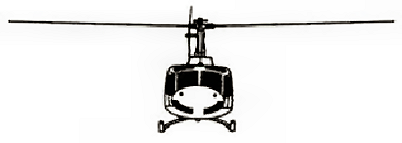
He started the motor, engaged drive, and swept away, heading south for Maryland Route 29. The seventeen-miles drive down to Andrews Air Force Base took a little over thirty-five minutes. The driver flipped an ID card at the guard on the main entrance gate and was beckoned through. He drove through the sprawl of buildings and hangars on the west side of the base, and pulled up alongside a military Bell UH-1H Huey helicopter parked on the West ramp. The driver opened the door for Stacey, and removed her valise from the trunk which he handed to the young Lieutenant pilot of the helicopter, who stowed it in the rear compartment and opened the starboard door to allow her to board the chopper.
Climbing into the port seat, he began to run through his pre-fight check list. His initial checks were that the cyclic, collective, and throttle friction locks were off. He then checked the cyclic, collective pitch and pedals for full travel, centred the cyclic and pedals, and placed the collective pitch fully down. Stacey smiled quietly to herself. She had done this a thousand times before.
The young Lieutenant checked that the landing light and searchlight switches were in the OFF position, and that the A.C. circuit breakers were in. Next, he checked that all radio equipment was off; that the governor was switched to AUTO and that the de-ice/hot-air valve was off. That covered all the pre-checks.
He nodded, reached up, and set the overhead switches and circuit breakers; checked the primary system instruments and set the centre pedestal switches. Having completed the flight controls check, he set the altimeters and radio frequencies, and flicked on the BAT switch and fuel switches.
A quick glance to check that the rotor blades were clear, and he switched on the Ignition key lock-switch, set the throttle, and pressed the engine start switch.
As the whistling whine of the turbine spooling up filled the cockpit, and the rotors began to lethargically rotate above them; he flicked the inverter switch to MAIN ON, watched the engine, and transmission oil pressure gauges wind their pointers up towards the green segments of their respective dials; disconnected the GPU and switched on the avionics.
The rotor blades were speeding up, casting strobe-like, flickering shadows across the cockpit interior, as the first faint resonance of the familiar flat, “Whup-whup-whup-whup… Whup-whup-whup-whup” began to build as the turbine wound up to an indicated six thousand revs-per-minute, and the tip of the advancing rotor blade began to break the speed of sound, creating a small sonic boom.
The Huey began to gently shimmy and dance on her skids as he increased throttle to full open, holding the collective pitch full down. He selected desired lift-off rpm with the INCRease-DECRease switch, shifted the cyclic control into the neutral position, increased collective pitch control slowly and smoothly, and the Huey lifted off.
As she attained a hovering altitude of about three feet, he applied tail rotor pedal to maintain her heading and gently increased collective input. Hovering briefly, he checked that the engine and flight controls were operating correctly, and applied forward cyclic pressure as the Huey accelerated smoothly forward into effective transitional lift into clear air and began the ascent.
With the Andrews west ramp falling away, he gently lowered the nose to increase airspeed. As he lowered the cyclic to achieve this, there was a momentary sensation of settling. This was caused by the helicopter moving from the ground cushion effect, and the tilting of the tip-path plane of rotation of the main rotor blades to obtain forward airspeed. It was perfectly normal, but always gave Stacey momentary butterflies in the stomach although she had experienced it a hundred times before.
As the Huey climbed out over the airfield boundary the young Lieutenant maintained take-off power until a safe auto-rotative airspeed was attained, then eased back on the throttle to establish the desired rate of climb.
Stacey nodded approvingly. Nice take-off. She asked the flight time. He replied that it was about seventy-eight-and-a-half miles, and would probably take about forty minutes.
Heading on a South-east flight path, they flew at about ten-thousand feet out across the Chesapeake Bay, crossing Kent Island; crossing the Maryland-Delaware State Line and began their descent over the city of Dover, orbiting to starboard to line up on final approach.
The young Lieutenant keyed his Command set.
‘KDOV approach. Musel Beach-One Actual. Request zero orbit transit, and clear west ramp. Over.’
Dover Control crackled through their headsets.
‘Musel Beach-One Actual. KDVO approach; Runway 1/19 clear. Overfly to west ramp. Wind direction 119 degrees, Wind speed 08 knots. Dew point 10.7 degrees Centigrade; Humidity 97 percent. Over.’
He nodded;
‘KDOV approach. Musel Beach-One Actual. Roger.’
He brought the Huey around to the right and lined up with the northern threshold of runway 1/19. A white, and pale-grey Military Airlift Command Lockheed C-141 Starlifter sat mid-way along the west ramp surrounded by vehicles and ground crew fuelling and preparing the aircraft for flight.
Lining up on his selected put-down spot, he began to slowly lower the collective as he eased back on the cyclic... whilst keeping the bird straight with the pedals. The Huey responded obediently. Nose-up and tail-down, she came clattering in to hover over the flat area, and, as the young Lieutenant pushed the collective fully down and eased off on the throttle twist-grip, touched down with the merest jolt. The Huey’s rotors began to slow imperceptibly as the turbine wound down, and, across the ramp, a jeep detached itself from the group surrounding the Starlifter and came howling across the wide expanse of the ramp, to stop beyond the sweep of the Huey’s rotors.
Stacey thanked the young Lieutenant; climbed out, and retrieved her valise from the rear compartment.
Walking across to the jeep, she saw that it was driven by a middle-aged Air Police Lieutenant. He saluted, climbed out, and said;
‘Officer Mckenna? Welcome to Dover, Ma’am.’
He took her valise, tossed it into the back seat of the jeep, and climbed back into the driving seat. As Stacey climbed into the front passenger seat, the Huey pilot gently pulled up on his collective, increased the revs, and the Huey lifted off. Pushing forward on the cyclic, and keeping her straight with the pedals, he achieved effective transitional lift, clattering away out over the runway, and banking out in a graceful climbing turn to the left; heading back out in the direction of Chesapeake Bay.
The Air Police Lieutenant drove the jeep across the west ramp, and stopped behind the Starlifter. Getting out of the driving seat, he lifted Stacey’s valise from the back seat of the jeep, handed it to her; and accompanied her across the ramp to the open rear loading ramp of the aircraft. A young airman walked down the ramp from the cavernous interior of the cargo hold and accepted Stacey’s boarding documents from the Air Police Lieutenant, who turned; saluted Stacey, and returned to his jeep.



















your writting is incredible.
Chapter Thirty-one... Alex Shepard is back!
Your story has a beautiful balance of emotion, imagination, and expression. Every scene is powerful in its own way and leaves a lasting impression on the reader. The writing is so engaging that its feeling stays long after the story ends. Truly heartfelt work. All my details are available on my profile.