
All That I Have
Sometimes, a single word is enough to close the door on an entire human being. Once a name has been given, there seems little reason to look any further. We begin to believe that we know a person simply because we have found a word to describe them.
But how much of a human being can a word truly contain?
We are quick to judge what we do not understand. A silence becomes arrogance. An unusual thought becomes madness. Kindness is mistaken for weakness, while a person's suffering is often overlooked until it becomes impossible to ignore. We condemn the parts of others that make us uncomfortable, rarely asking what we might have misunderstood.
Perhaps the greater tragedy is not that human beings are capable of cruelty, but that we sometimes deny one another the dignity of being understood.
For every person we meet, there is a life we have not witnessed, a burden we have not carried, and a part of their existence that remains beyond our knowledge. Yet we judge as though we have seen everything.
And what of those who see the world differently? Those who feel another person's suffering as though it were their own, who offer kindness without expecting anything in return, or who refuse to turn away from pain simply because it belongs to a stranger?
Would we recognise their humanity, or would we question it?
Perhaps it is easier to name someone than to understand them. Easier to condemn than to listen. Easier to call a person a monster than to consider whether we have mistaken something unfamiliar for something terrible.
This is a story about a man.
Not a man without flaws, nor one who stood above the rest of humanity, but a man whose way of seeing the world would lead others to question him. His kindness, his thoughts, and his understanding of suffering would mean different things to different people.
Some would see what was good in him. Others would see something they could not explain.
And perhaps, in the end, the question would not be what kind of man he was, but how much of him the world had ever truly tried to understand.
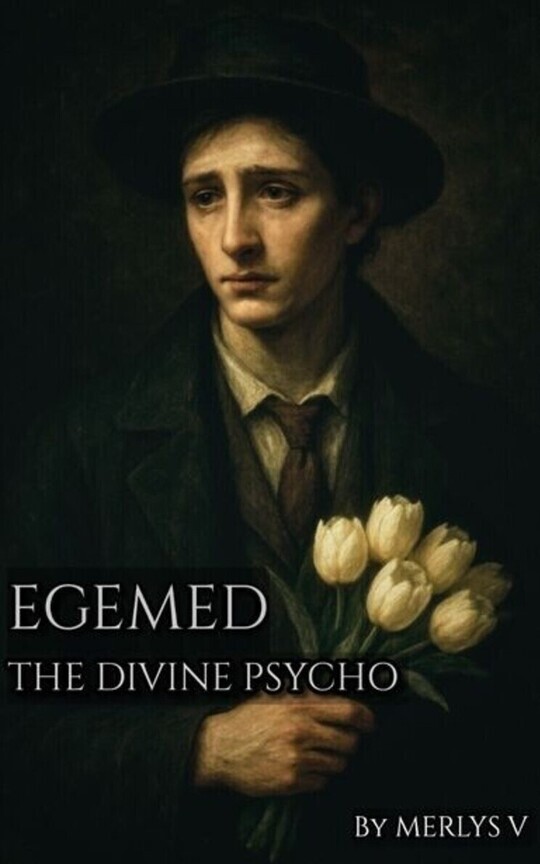
His name was Egemed Mychen.
* * *
“Ah… such a beautiful morning.”
The air clung to his skin like a whisper from a sacred realm—pure enough to wash the world's sins away.
'Once I finish helping my mother, he thought, I will climb the hill again… to breathe this holy air.'
By evening, the sun bled toward the horizon like a dying ember. Atop the hill, a lone figure stood, eyes closed, as the wind teased his wavy hair. His long black coat swayed like a dark banner against the fading light. With a sigh deep enough to stir the air, he opened his eyes and watched the river below shimmer like molten silver.
His hazel eyes carried a quiet sorrow, as if he had seen too much of the world. His gentle smile could ease the pain of strangers. Standing tall against the dying sun, he looked almost like an angel about to unfold his wings at a divine command.
A trembling voice broke the stillness.
"Egemed! What are you doing here at this hour? Darkness is coming—what if some villain strikes while your eyes are closed?"
An old woman, bent beneath a bundle of straw, hobbled toward him.
Egemed chuckled softly, a sound soothing yet edged with something unreadable.
"Aunt, fear not. If my hour has come, it will find me whether I stand here or rest in my room."
"Why speak so?" she whispered.
"It is truth, Aunt. Death is always close. We ignore it only because it frightens us."
She shook her head.
"You speak as if wiser than the world, young man… I am merely an old woman, yet you sound as though you carry lifetimes."
"No, Aunt. You are not ignorant. It is natural to worry for the young. Now—give me your burden. I'll carry it."
He lifted the bundle effortlessly and walked beside her down the hill.
"Your coat, dear… it will be ruined! Why wear such finery to the hill?"
Egemed laughed—soft, dark, gentle.
"I love this coat, Aunt. But clothes can tear, wash, or fade. I cannot carry them into death. And should I let you struggle for the sake of fabric? I am young and strong—and respect demands action."
The woman fell silent.
"Do not worry," he added. "As long as I breathe, there is no need for worry. I love others more than myself… heh."
"Do you wish for punishment, child?" she teased lightly.
"No. But it is true. Without love, humans are nothing but selfish shadows. Love comes first; duty and respect follow. Everything I do comes from love… cannot you see?" He chuckled.
"And those who serve evil? Those who obey tyranny knowingly?"
"That too is love," he said quietly. "Love of darkness. Love wears many faces."
"Hmm…" she murmured.
"Do you not agree, Aunt?"
"You may be right," she admitted.
They reached her home. Egemed placed the straw in the shed.
"Take these oranges before you go," she insisted.
"I need nothing, Aunt."
"Take them! Don't be too polite."
He smiled softly, accepting them not out of desire, but out of kindness.
"I cannot let your heart feel ignored. Thank you, Aunt… goodnight."
That night, after bathing, dining, washing dishes, and preparing his parents' bed, he slipped into sleep. The world quieted around him, folding into darkness like a velvet shroud—carrying him into dreams both gentle and strange.
But behind his closed eyes, a shadow stirred. He knew: peace never lasted long in Egemed's world.