Rising Moon
Mayella
I walked slowly toward the village square, the packed earth firm beneath my sandals. Above the rooftops, the moon climbed higher—round and bright enough to turn the ocean beyond our port into a strip of silver. Torches already burned along the edges of the open space, their smoke curling into the night.
The feast was about to start. And tonight would be the first time I stood in the circle during the moon ceremony.
My stomach felt tight, not from excitement, but from something colder. I had turned twenty-one two months ago. I had reached the age where I was supposed to find my mate.
I felt like the only member of the Lunar Winds pack who didn’t want one.
It wasn’t rebellion. It wasn’t disobedience. It was the feeling lodged deep in the center of me, steady and unmoving, that my fate lay somewhere else—somewhere far beyond this square, beyond these cliffs, beyond the rules that had shaped every breath of my life.
Lunar Winds had an ocean-side port, but we were still isolated from the rest of the world. Ships came and went, sailors traded goods and stories, and then the sea swallowed them again. I had listened to those stories my whole life—other lands, faraway places—and every time, my chest tightened and my heart beat too hard.
I was meant to go. Not stay here.
I had said as much to my father once.
He had made sure I understood what my place was.
Even now, my tongue found the gap at my back molar—an old ache I could still taste, even years later. My father’s backhand had been quick, practiced. His voice after it had been quieter than his shout, which somehow made it worse.
Disobedience would not be tolerated.
So I learned. I kept my mouth shut and my head down, and I did what I was told. But my mind still drifted, slipping through cracks I didn’t let anyone see. It carried me to places where pack hierarchy had been dismantled, where no one bowed because another wolf had been born higher.
I remembered the sailor from the Seven Realms—weathered hands, salt in his hair, the smell of rum on his breath—leaning against a crate near the docks while a small crowd gathered around him. I had stood at the edge, half-hidden behind stacked nets, holding my breath as he described a kingdom with no packs. No caste systems. A place where everyone was valued, where everyone chose their part in keeping the kingdom thriving.
It was ruled by an immortal Lycan king, he’d said, and a council made up of representatives from all regions.
I could hardly believe a place like that existed.
Where you chose your own destiny.
My heart had pounded hardest when the sailor spoke of the king and queen—not mates, not bound by law or ceremony, but empowered by something stronger.
Twin Flames.
He’d said they had chosen each other a thousand years earlier, and somehow—against time itself—they had found one another again.
Now, walking into the square, that story pressed against the inside of my ribs. Not hope, exactly. Something sharper. Something that made my skin prickle beneath my dress.
I reached the edge of the moon ceremony and took my place beside my family.
My father, Mitus, stood with his arms folded across his chest, already watching the crowd the way a warrior watched a battlefield. That was what he was—a pack warrior. Our family wasn’t elevated in status, but we weren’t diminished in shame either. We were simply… there. Useful. Replaceable.
It had always been a relief, blending in. Being unnoticed.
Except it was hard to be unnoticed when you had seven younger brothers.
They spilled around me, loud and restless, shoulders already thickening with training, grins too sharp for their age. They were being raised to be warriors themselves, and it made them insufferable. They practiced their “hunting techniques” on me every chance they got—jumping out from behind doorways, dropping from low roofs, snapping twigs in the dark to make me spin.
More than once, they had made me drop the wash in the dirt or startle hard enough to knock a cup from the table and shatter it.
Tonight, they were on their best behavior only because our father was near. Even so, I caught one of them leaning toward another, whispering something that made them snicker. I didn’t ask what. I didn’t give them the satisfaction.
I had shifted at fifteen—my chocolate-brown wolf matching my hair, my strength enough to keep up, my instincts sharp enough to earn nods from the older warriors. I had been a good daughter: obedient, hard-working. I spent most of my days helping my mother manage our house and the chaos of so many male bodies and hungry mouths.
My mother, Adrianna, stood close to me now. Gentle hands, gentle voice. Even in the torchlight, she looked soft—not weak, never weak, but calm in a way that made the world feel less jagged. She had always been my anchor. Her fingers brushed lightly at the back of my arm, a quiet touch that asked if I was all right without forcing me to answer.
My father was harsh and commanding. Cold, with impossible expectations. The only person he ever allowed himself to soften for was my mother. Watching them together had always been confusing—how a man could be stone to everyone else and still look at one person with something close to tenderness.
The night unfolded in feasting and dancing. The smell of roasted meat and sweet bread drifted through the square. Drums pulsed near the center, steady and low, and the pack moved with the rhythm—laughing, calling out, spinning in circles that tightened and loosened again.
I ate because it was expected. I smiled when someone spoke to me. I nodded at the right moments. But my hands wouldn’t stop twisting together in my lap, fingers worrying the fabric of my skirt until it wrinkled under my grip.
I did not want a mate.
But my father would be disappointed if I didn’t have one. Worse than disappointed. His gaze would harden, his mouth would flatten, and I would feel that familiar tightening in my throat—the warning that my life could become even smaller.
As the moon rose higher, the air changed. The ceremony always did that. It pulled the pack’s attention upward, outward, inward all at once. Conversations softened. Laughter thinned. Wolves—human and not—seemed to lean toward the same invisible point.
When the moon reached its apex, I felt it.
A tug deep in my gut.
My hand went to my lower abdomen without thinking, palm pressing there as the sensation sharpened. The pull grew stronger, not a flutter or a passing ache, but something deliberate—something that felt anchored inside me and drawn tight toward a single direction.
My wolf stirred beneath my skin, restless. She pressed against my bones, uneasy, a low whine building in my chest. The pull didn’t fill me with anticipation the way it was supposed to.
It filled me with dread.
Whatever called to us did not feel good. It did not feel safe. It felt inevitable.
Around me, the crowd shifted and murmured. The word mate began to ripple through the square, passed from mouth to mouth as young wolves found each other under the brightest moon. Cheers rose, sharper and louder as more pairs turned toward one another, eyes wide, hands grabbing, laughter breaking free.
I moved because the tug demanded it.
Step by step, I followed it through the press of bodies, through the torchlit haze and the drifting smoke. People brushed my shoulders and didn’t notice. Someone bumped my arm and muttered an apology, already turning away. I kept going, pulled through the heart of the square as celebration swelled behind me.
I crossed the entire expanse without finding anyone waiting with softened eyes and trembling hands.
For one brief moment, hope flickered—thin and fragile—that I had been wrong. That my stomach had simply turned from the food, that the sensation would fade and I could slip back to my family and pretend this night was like any other.
Then a growl sounded behind me, close enough that the hair at my nape lifted.
“Mate.”
The word was rough, possessive. Not wondering. Not relieved.
Claiming.
I spun.
My belly went hollow.
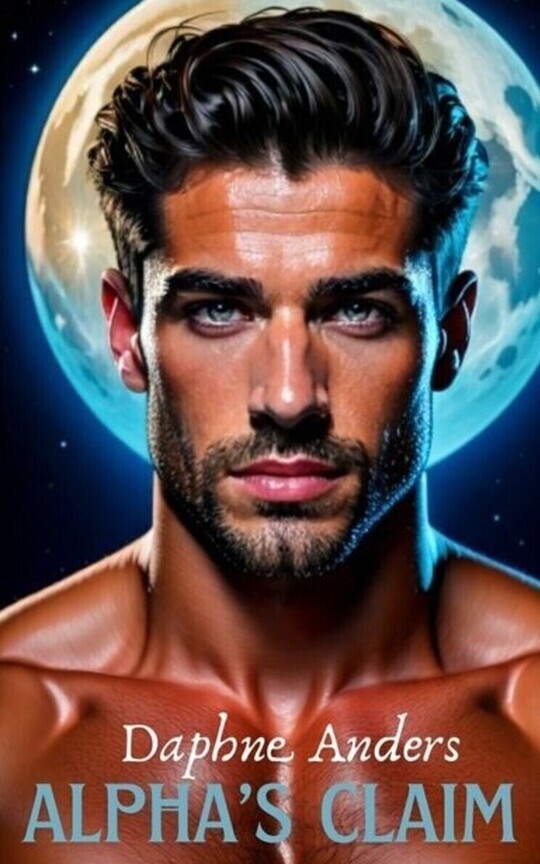
A man stood there—twice my size, shoulders impossibly broad, arms thick as tree trunks beneath the sleeves of his tunic. His jaw was square, shadowed by a light beard. A tribal tattoo wove up the left side of his face, dark ink stark against his skin. Blond hair was braided back into intricate plaits that looked more like war than ornament.
And then my eyes caught on his.
Cold gray. Unblinking.
Eyes I had never dared to meet until this moment—eyes that pack law required me to lower my gaze from because of his status.
The eyes of the Alpha.