
The Codicil
Damon Cole preferred decisions that could be reduced to columns.
Green for viable. Red for dead. Notes in the margin if someone insisted on sentiment.
The conference room on the twenty-ninth floor had been built to flatter that preference. Glass on two sides, matte black table, twelve ergonomic chairs no one relaxed in. Outside, late-March rain pressed the city into a grey blur. Inside, a founder from Seattle was finishing a sentence about runway and mission alignment while Damon studied the revised burn chart on the screen and waited for the lie to end.
“Your customer acquisition cost doubled in two quarters,” he said when the founder finally ran out of oxygen. “Your hospital pilots didn’t convert. You have a product that requires clinicians to give time they don’t have and administrators to approve spend they can’t justify.”
Across the table, his CFO slid a folder toward him. The red tab already marked the recommendation.
The founder leaned forward. “We can pivot into outpatient—”
“You already tried.” Damon closed the folder. “We’re done here.”
No raised voice. No theatrical cruelty. That was what the press never understood. He did not enjoy this part. Enjoyment implied appetite. Damon had not trusted appetite in years.
The founder’s mouth thinned. “You built your name backing ambitious medicine. Now you cut anything that takes too long.”
“I cut what dies slowly and takes better work down with it.”
Silence. A few board members looked at their screens. Damon signed the memo, capped his pen, and handed the folder back to legal.
He was reaching for the next agenda packet when the conference-room door opened without a knock.
Lydia Voss, his mother’s attorney, stood in the doorway in a dark green suit and an expression that suggested she’d already used up her patience in another building. She was carrying a cream envelope Damon recognized before he wanted to. Hawthorne & Vale, estate counsel. Old paper. Older ghosts.
“This couldn’t wait?” Damon asked.
“It has waited seventeen months,” Lydia said. “Longer, if we’re counting honestly.”
His board knew better than to speak. Lydia crossed the room, laid the envelope next to his hand, and stayed standing.
He didn’t touch it.
“If this concerns my mother’s foundation votes,” he said, “send it to my office.”
“It concerns your inability to access them.”
That got him to look up.
Rain ticked softly against the glass. Somewhere beyond the door, a receptionist laughed. The sound felt obscene in the room’s perfect climate.
Lydia opened the envelope herself and withdrew a single page and a thinner sheet behind it, aged at the edges.
“A codicil was attached to the Adele Cole Memorial Fund trust after the original instrument was executed,” she said. “Your mother has declined to waive enforcement. The advisory voting rights attached to your seat remain frozen until you complete the service requirement.”
“Service requirement,” Damon repeated.
“Ninety days. One session per week. Brightside Studio, Adele Cole Pediatric Oncology Wing.”
He looked at the thinner sheet in her hand. Childish block letters. A list in purple marker. One corner bent and smoothed and bent again until the paper had softened.
Lydia did not lower her voice. “It was written by your sister.”
No one at the table breathed.
Damon took the sheet before he could decide not to. The words sat there with the blunt force of children, which was to say no force at all until they split bone.
I want my brother to see the things I see.
Below that, three places. The museum. The roof garden at St. Catherine’s. Brightside.
She was eleven when she wrote that list.
The founder was still in the room. Damon hated that.
“We’re adjourned,” Damon said.
Chairs scraped. Screens shut. People exited with that particular speed professionals used when pretending not to witness human damage. Lydia waited until the room had emptied.
“Your mother asked me to tell you she won’t discuss this through intermediaries,” she said.
“That’s funny,” Damon said. “Considering the method.”
“She also asked me to tell you Adele chose Brightside first.”
Something in his jaw locked so hard it ached. “Did she.”
“Wednesday afternoons,” Lydia said. “The studio coordinator has been informed to expect a volunteer. Not a donor. Not a press event. A volunteer.”
Damon folded the list once, then again, until it fit inside his breast pocket. “If this is extortion dressed as sentiment, tell my mother it worked.”
“I’ll tell her you read it.”
* * *
By three o’clock, he was parked outside St. Catherine’s Children’s Hospital in a black town car he hated more than usual.
The hospital entrance was a revolving door of umbrellas, balloons, coffee carriers, visitors with flowers they had no place to put. He had walked into worse rooms than this. Fundraising galas in oncology wings. Naming ceremonies. Research briefings from men who’d learned to describe survival rates without moving their faces.
He still stood on the sidewalk for thirty full seconds before going inside.
Brightside Studio was on the fourth floor, tucked at the end of a hall that had been made too cheerful on purpose. Murals climbed the walls in impossible colors. A paper mobile turned lazily above the reception desk. The air held the layered smell of antiseptic, tempera paint, and graham crackers.
Damon arrived in a charcoal suit because he hadn’t bothered to imagine what else one wore to being coerced by the dead.
A child with a pirate patch made from glitter foam ran past him with an IV pole and no respect for momentum. Damon stepped aside automatically. The receptionist, a nurse with violet scrubs and the kind of exhausted kindness hospitals manufactured in bulk, pointed him toward a half-open door.
“Nora will get you set up,” she said.
He had time to notice the wall first.
Not the donor names. The drawings. Dozens of them, clipped on strings with tiny wooden clothespins. Crooked houses. Dogs with six legs. A yellow sun wearing sunglasses. A field of blue handprints. The kind of art adults called brave when they didn’t know what else to do with proof that children had imagined a world beyond IV tubing.
“You’re the new Wednesday volunteer?”
He turned.
The woman in the doorway had a smudge of green paint on one wrist and a marker stuck through her hair like an afterthought. Her sleeves were rolled to the elbow. One of them was stained with cobalt and something that might once have been orange. She looked at him the way emergency-room doctors looked at symptoms: quickly, accurately, without politeness as garnish.
“Damon Cole,” he said.
“Nora Bennett.” Her gaze dropped to his jacket, lingered on the cut of it, then went back to his face. “Take that off. We don’t do collateral damage to cashmere in here.”
“I’m not worried about the jacket.”
“That’s your problem.” She hooked a thumb down the hall. “Milo is.”
There was no flutter in her tone, no recognition, no careful softening at his name. Just assignment. Efficient, mildly unimpressed assignment.
It hit him with an embarrassing degree of relief.
“I wasn’t told I was being evaluated by a wardrobe committee,” he said.
“You aren’t. You’re being evaluated by an eight-year-old who bites when he feels cornered and paints in one color when he feels anything at all.” She stepped aside so he had to enter or retreat. “You coming, or am I writing ‘intimidated by finger paint’ on your file?”
The room beyond was warmer than the hallway. Tables low enough for children. Shelves of brushes sorted by size. Jars of pencils, tubs of clay, stacks of paper like blank weather. At the far end, a boy sat alone with a page in front of him and three uncapped markers arranged with military precision.
He was small for eight, all eyes and elbows. His hospital bracelet flashed white when he moved his wrist. He looked at Damon once, took in the suit and the wrongness, and then looked back down.
“Milo,” Nora said, not too bright, not falsely gentle. “This is Damon. He’s with us on Wednesdays.”
“He looks like a funeral,” Milo said.
Nora’s mouth twitched. Damon pulled out the chair opposite the boy and sat.
“I’ve looked worse,” he said.
Milo uncapped the black marker. Very deliberately, he laid it against the paper and dragged a thick band from one edge to the other. Then another. Then another, covering white with flat, heavy dark until the page was gone under it.
No flourish. No anger. Just completion.
He capped the marker, placed it down exactly parallel to the others, and stood.
“We’re done,” he said to no one.
He left the room before Nora could stop him.
Around Damon, the studio went on. A girl with a bald head and gold star stickers on her cheeks argued with a volunteer about whether dragons counted as mammals. Someone laughed near the sink. Water ran. A cabinet door banged. Real life, rude enough to continue.
Nora watched the hallway Milo had vanished into, then looked back at Damon.
“That was actually better than usual,” she said.
“I’m moved.”
“You should be. Last week he threw a sponge at a med student.”
She went after Milo without ceremony. Damon remained where he was.
The page lay between his hands, black from top edge to bottom. Not frantic. Not messy. Patiently obliterated.
He looked toward the door Nora had used, then reached for the paper and lifted it before he could name the impulse. The paint was still damp in one corner. He held the page by the edge until it dried enough not to stain his cuff, then slid it inside the leather portfolio he’d brought out of reflex.
He stayed until five because leaving after eleven minutes would have felt like losing a fight no one had formally started.
He did almost nothing useful. Held jars when asked. Moved a cart. Stood aside for nurses. Watched Nora kneel to eye level with a child and make the air around panic loosen by six careful degrees. She never cooed. Never lied. She just rearranged the room until children could exist inside it.
When he finally made it back to the car, the sky had gone the color of old steel.
His driver glanced in the mirror. “Home, Mr. Cole?”
Damon opened the portfolio instead.
The black page stared up at him. Not quite uniform. Under the overhead light he could see the weight change from line to line, the places where the marker had pressed harder, the thin blue score in the lower corner where black had failed to cover completely.
He put his thumb over the blue, then moved it away.
Ninety days, he thought.
This would not be something he could sign and survive untouched.
* * *










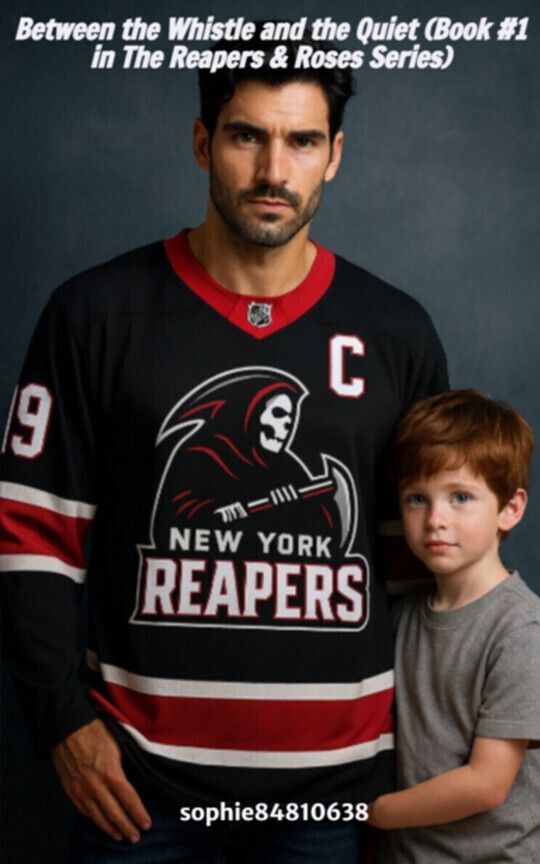








Strong first chapter to set the scene. I think his sister knew him very well. It feels she just gifted him a soul journey