
Chapter I - The Girl Who Lives in Dreams
She stands in front of her English teacher.
He speaks rapidly, his words tumbling over one another like stones rolling downhill. She can hear the sound of his voice, but the meaning does not reach her. Everything inside her has gone still. Her mind is paralyzed by confusion and dread.
Her eyes remain fixed on the floor.
She wants to disappear.
She wants to run away from the teacher, from the students, from the classroom, from herself.
Then she hears the words that make her blood turn to ice.
“I love you. I love you so very much. My heart adores you, and my eyes look for you everywhere.”
The teacher is reading from a piece of paper.
In one terrible instant, she recognizes the handwriting.
It is hers.
It is a torn page from her diary.
These are the words she has written to her Raj.
Laughter erupts across the classroom.
She does not dare lift her head.
One boy is laughing louder than everyone else.
Her face burns. Sweat trickles down her neck. Her ears ring and ring and ring—
She wakes with a violent start.
The ringing is coming from the little alarm clock on her bedside table.
Her hand shoots out to silence it.
She sits upright in bed, breathing hard.
Her black curls cling to her damp face. Her nightdress is soaked with perspiration. Her heart beats as if she has been running for miles.
For a few moments, she remains motionless.
Then she remembers.
The dream.
The same dream that has haunted her for years.
Even now, she cannot understand how her diary found its way into her teacher’s hands.
Did the boy who laughed the loudest steal it from her schoolbag?
Did one of her friends take it?
Did someone betray her?
She does not know.
And perhaps she never will.
Jiya turns and opens the drawer of her bedside table.
Inside lies the only treasure she truly values.
Her diary.
A large black leather-bound book, a gift from her father.
Her name—Jiya—is embossed in shining gold letters.
She lifts it carefully, almost reverently, and presses it to her chest.
This diary has heard everything she has never dared to say aloud.
Her hopes.
Her fears.
Her fantasies.
Her love.
Especially her love for Raj.
Not a real boy, not exactly.
A dream.
A promise.
A secret companion who belongs entirely to her imagination.
Yet the diary has also become the source of her greatest humiliation.
The memory is as sharp as if it happened yesterday.
Later that day, her English teacher confiscates the diary and sends her to the principal with it.
The principal glances at it with visible disgust and sends her to the vice-principal’s office.
For two days, she stands outside that office like a criminal awaiting judgment.
Students pass by and stare.
Teachers whisper.
She feels as if the whole school knows.
At the end of the second day, the vice-principal summons her inside.
The woman looks at her over the rim of her glasses.
“If you ever bring this loathsome diary to school again,” she says, “your parents will be called, and I will be only too happy to issue your termination letter.”
With that, she throws the diary onto the floor.
Jiya snatches it up in an instant.
She clutches it to her chest as if rescuing a wounded kitten.
Then she flees the office.
Never again does she bring the diary to school.
The mystery remains unsolved.
But the humiliation has never left her.
That day, in front of her classmates, she feels as if her soul has been stripped bare.
Her private world becomes a public spectacle.
Her most intimate thoughts are turned into a joke.
And she is utterly powerless to stop it.
Sitting on her bed now, years later, Jiya feels tears gather in her eyes.
She wipes them away, but more follow.
The pain has never fully faded.
She remembers returning home after the incident.
Usually, she spent her evenings walking slowly in the small front yard, a book in her hands, lost in another world.
But that evening, she couldn’t bring herself to go outside.
Fear keeps her hidden in her room.
What if someone from school tells her father?
What if he discovers that the diary he gifted her is filled with romantic declarations?
What if he is disappointed?
What if he forbids her from going to school?
What if he takes away her diary forever?
So she remains indoors, silent and trembling.
The next morning is even worse.
Returning to school feels like walking into a battlefield.
Every glance seems accusatory.
Every whisper sound like mockery.
Some of her friends avoid her.
Their older siblings have warned them not to associate with “that girl.”
Overnight, she becomes an outcast.
At sixteen, loneliness is not a mild inconvenience.
It is a catastrophe.
There is no one she trusts enough to confide in.
No one to tell her that she will survive this.
No one can explain that mistakes do not define a life.
No one to assure her that shame eventually loosens its grip.
So, she keeps everything inside.
Night after night, after the household falls asleep, she cries quietly into her soft pink pillow.
The darkness becomes her only witness.
And yet, even in sorrow, imagination comes to her rescue.
Jiya is a dreamer.
At sixteen, she believes in love with the fierce certainty of youth.
Classic novels, Bollywood films, and romantic songs have convinced her that somewhere in the vast universe, a soul has been created just for her.
She has given him a name.
Raj.
Raj is tall, dark, handsome, and clean-shaven.
He is of precisely the right age.
He possesses the right personality.
He even belongs to the correct zodiac sign.
No substitute will do.
Raj is kind.
Protective.
Patient.
He listens to her.
He understands her.
He never laughs at her mistakes.
He sees the trembling heart beneath her awkward exterior and loves her because of it.
In her imagination, he wipes away her tears and tells her that she is precious.
That she is not foolish.
That she is worthy of love.
Raj exists nowhere except in her dreams.
But to Jiya, he is as real as hope itself.
Even in school, Jiya’s mind wanders to places far removed from the classroom.
There are students who delight in numbers and formulas.
They solve equations effortlessly and memorize scientific terms as if they were nursery rhymes.
Jiya is not one of them.
Her heart belongs to another world.
She would rather read about plateaus and Plato than pentagons, polygons, and the Pythagorean theorem.
Ancient civilizations fascinate her.
Maps awaken her imagination.
The rise and fall of kingdoms stir something deep within her.
She can spend hours reading about archaeological excavations, imagining herself kneeling in the dust and brushing away centuries to uncover a forgotten artifact.
History, Geography, and Literature feel alive to her.
Mathematics appears cold and unforgiving.
Science seems crowded with incomprehensible words.
Her teachers are often exasperated.
They expect equal proficiency in every subject.
But Jiya knows, even as a child, that the heart has its own loyalties.
Her heart chooses stories over formulas.
Dreams over calculations.
Imagination over certainty.
By the time she approaches her sixteenth birthday, she is painfully aware that she is not where she is supposed to be.
In July, she will turn sixteen.
Most students born in the same year are preparing to enter junior college.
They discuss entrance examinations, careers, and futures that seem dazzling and within reach.
Jiya is still trying to catch up.
She is three years behind.
Three years!
The number presses upon her like a weight.
Each lost year carries its own memory.
Its own humiliation.
Its own scar.
The first setback comes when she is in the third grade.
Rumours spread that examinations may be cancelled because the Prime Minister has been assassinated.
The country is grieving.
Teachers whisper in corridors.
Children speculate wildly.
When Jiya hears that all students might be promoted automatically, she rejoices.
Why study if promotion is guaranteed?
She closes her textbooks and pursues more interesting occupations.
But the rumours prove false.
The examinations take place after all.
Unprepared, she fails.
For the first time in her life, she is detained.
The second setback occurs in the sixth grade.
This time, she works hard and passes.
But her father’s job requires the family to move to another city.
At her new school, she must sit for an entrance examination.
She does not perform well.
Despite having already passed, she is made to repeat the grade.
Her efforts seem to vanish overnight.
The third setback comes in the eighth grade.
The academic standard at her new school is demanding.
Physics, Chemistry, and Biology feel like foreign languages.
She studies, struggles, and hopes.
But hope is not enough.
She fails again.
Three failures.
Three wounds.
Three reminders that she is not keeping pace with the world.
Jiya looks out the window.
From a nearby house, a familiar song drifts through the morning air.
“Dil To Pagal Hai, Dil Deewana Hai…”
Her lips curve into an involuntary smile.
She adores Madhuri Dixit.
Her grace.
Her beauty.
Her luminous smile.
Her ability to transform sorrow into dance.
Jiya watches her films repeatedly, memorizes every song, and dreams of a love story as magical as those on the screen.
Among all her favourite movies, DIL TO PAGAL HAI holds a special place in her heart.
One line from the film has become her emotional refuge.
“Someone, somewhere, is made for you.”
Those words are more than a tagline.
They are a promise.
A whispered assurance that she is not destined to remain alone forever.
Reality, however, is rarely as kind as cinema.
School is a place of fear rather than learning.
Classmates ridicule her for the smallest mistakes.
Some teachers treat her with impatience.
One day, her Chemistry teacher remarks before the entire class, “Even if I hand you the answer sheet, you still won’t be able to copy it correctly.”
The room explodes with laughter.
Jiya lowers her eyes.
Her cheeks burn.
She says nothing.
She is shy, awkward, and painfully self-conscious.
Acceptance feels like a distant country.
Except in the world, she has built for herself.
She finds comfort in sports.
Cricket and tennis are not merely games; they are dramas of endurance and redemption.
She follows matches obsessively, memorizing statistics and tournament results.
Each victory feels personal.
Each defeat echoes her own disappointments.
Books are her truest companions.
THE COUNT OF MONTE CRISTO transports her to dark dungeons and miraculous revenge.
JANE EYRE teaches her that quiet women possess extraordinary strength.
DADDY-LONG-LEGS speaks directly to her heart.
Like Jerusha Abbott, Jiya writes letters to an unseen beloved.
Only her letters are addressed to Raj.
Through books, she travels to castles, deserts, and ancient ruins.
Through stories, she becomes someone braver than herself.
Another dream grows quietly within her.
She wants to become an archaeologist.
The desire feels almost sacred.
She imagines herself standing at excavation sites beneath a blazing sun.
With careful hands, she uncovers pottery, inscriptions, and fragments of lives long forgotten.
To others, they may appear to be broken objects.
To her, they are treasures.
Proof that what has been buried still possesses immense value.
Perhaps this is why archaeology calls to her so powerfully.
She, too, feels buried.
Buried beneath failure.
Buried beneath ridicule.
Buried beneath misunderstanding.
And she longs for someone—or something—to brush away the dust and reveal the worth hidden underneath.
Jiya’s life unfolds between two great dreams.
By day, she dreams of becoming an archaeologist.
By night, she dreams of Raj.
One dream offers purpose.
The other offers love.
One promises discovery.
The other promises belonging.
Together, they sustain her.
The world sees a shy girl who has failed three times, a girl who lags behind, a girl who blushes too easily and lives too much in her imagination.
But beneath the surface, something extraordinary is taking shape.
Dreams are not always an escape.
Sometimes they are a preparation.
Sometimes they preserve the soul until reality is ready to catch up.
And though Jiya does not know it yet, the qualities that seem to set her apart—her longing, her sensitivity, her vivid imagination, and her stubborn hope—are not weaknesses.
They are the first signs of a destiny far greater than she can possibly imagine.
For now, she closes her diary and places it gently back into the drawer.
Outside, the song continues to drift through the air.
“Dil To Pagal Hai, Dil Deewana Hai…”
Inside, a sixteen-year-old girl carries her tears, her books, her failures, and her impossible dreams.
With a sigh, she throws aside her blanket, scrambles out of bed, and begins another day.





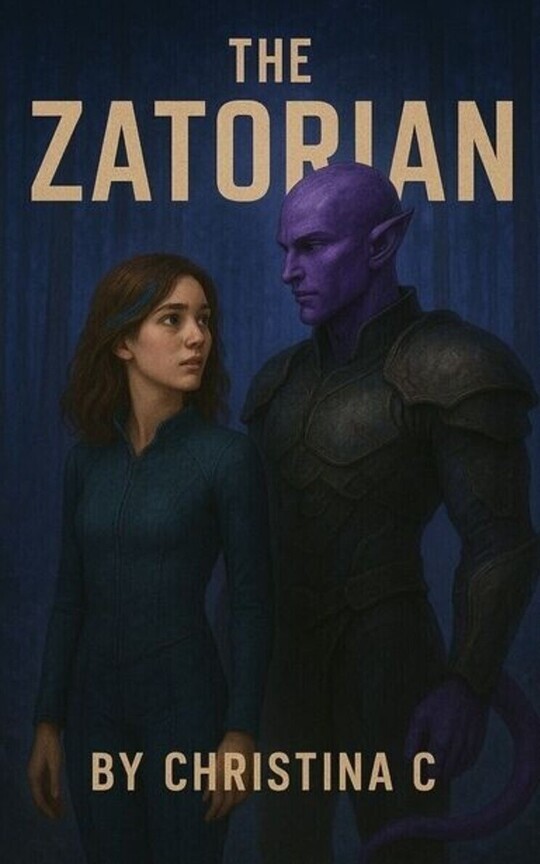













Wonderful describing the Jiya character unshed tears gathered in my eyes recalling myself when I was in high school, and all the best for the further writing works 🙂
thanks so much, really appreciate your words.