Crime and Punishment
Share with your friends
Customize readability

Crime and Punishment

All Rights Reserved Β©

Summary

Discover this ultimate classic for the first time or fall in love with an old favourite all over again.

Status
Complete
Chapters
42
Rating
5.0 (1 review)
Age Rating
13+

Translator's preface

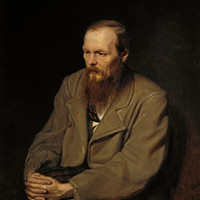
A few words about Dostoevsky himself may help the English reader to understand his work.

Dostoevsky was the son of a doctor. His parents were very hard- working and deeply religious people, but so poor that they lived with their five children in only two rooms. The father and mother spent their evenings in reading aloud to their children, generally from books of a serious character.

Though always sickly and delicate Dostoevsky came out third in the final examination of the Petersburg school of Engineering. There he had already begun his first work, Poor Folk.

This story was published by the poet Nekrassov in his review and was received with acclamations. The shy, unknown youth found himself instantly something of a celebrity. A brilliant and successful career seemed to open before him, but those hopes were soon dashed. In 1849 he was arrested.

Though neither by temperament nor conviction a revolutionist, Dostoevsky was one of a little group of young men who met together to read Fourier and Proudhon. He was accused of "taking part in conversations against the censorship, of reading a letter from Byelinsky to Gogol, and of knowing of the intention to set up a printing press." Under Nicholas I. (that "stern and just man," as Maurice Baring calls him) this was enough, and he was condemned to death. After eight months' imprisonment he was with twenty-one others taken out to the Semyonovsky Square to be shot. Writing to his brother Mihail, Dostoevsky says: "They snapped words over our heads, and they made us put on the white shirts worn by persons condemned to death. Thereupon we were bound in threes to stakes, to suffer execution. Being the third in the row, I concluded I had only a few minutes of life before me. I thought of you and your dear ones and I contrived to kiss Plestcheiev and Dourov, who were next to me, and to bid them farewell. Suddenly the troops beat a tattoo, we were unbound, brought back upon the scaffold, and informed that his Majesty had spared us our lives." The sentence was commuted to hard labour.

One of the prisoners, Grigoryev, went mad as soon as he was untied, and never regained his sanity.

The intense suffering of this experience left a lasting stamp on Dostoevsky's mind. Though his religious temper led him in the end to accept every suffering with resignation and to regard it as a blessing in his own case, he constantly recurs to the subject in his writings. He describes the awful agony of the condemned man and insists on the cruelty of inflicting such torture. Then followed four years of penal servitude, spent in the company of common criminals in Siberia, where he began the Dead House, and some years of service in a disciplinary battalion.

He had shown signs of some obscure nervous disease before his arrest and this now developed into violent attacks of epilepsy, from which he suffered for the rest of his life. The fits occurred three or four times a year and were more frequent in periods of great strain. In 1859 he was allowed to return to Russia. He started a journalβ€” "Vremya," which was forbidden by the Censorship through a misunderstanding. In 1864 he lost his first wife and his brother Mihail. He was in terrible poverty, yet he took upon himself the payment of his brother's debts. He started another journalβ€”"The Epoch," which within a few months was also prohibited. He was weighed down by debt, his brother's family was dependent on him, he was forced to write at heart-breaking speed, and is said never to have corrected his work. The later years of his life were much softened by the tenderness and devotion of his second wife.

In June 1880 he made his famous speech at the unveiling of the monument to Pushkin in Moscow and he was received with extraordinary demonstrations of love and honour.

A few months later Dostoevsky died. He was followed to the grave by a vast multitude of mourners, who "gave the hapless man the funeral of a king." He is still probably the most widely read writer in Russia.

In the words of a Russian critic, who seeks to explain the feeling inspired by Dostoevsky: "He was one of ourselves, a man of our blood and our bone, but one who has suffered and has seen so much more deeply than we have his insight impresses us as wisdom β€¦ that wisdom of the heart which we seek that we may learn from it how to live. All his other gifts came to him from nature, this he won for himself and through it he became great."


Let Fyodor Mikhailovich Dostoyevsky know what you thought about this chapter!

Deleted User
Deleted User

I already read this novel , I loved it , it is so great I recommend you to read this novel, it is talk about who make crime and what the punishment for him ( sorry for my English language I speak little English)

6 years
Evelyn_546
Evelyn_546

Hi Fyodor Mikhailovich Dostoyevsky,

I just finished reading your story Crime and Punishment and I loved it so much. Your writing is profound and tense, and I kept picturing how striking it would be as a visual narrative.

I really loved the opening scene in Part One, Chapter 1, where Raskolnikov staggers through a stifling St. Petersburg street his feverish thoughts and half-lidded gaze, the oppressive urban gloom would make an atmospheric comic prologue with muted tones, shadow-heavy panels, and oblique angles to reflect his inner turmoil. And later, the moment in Part Two, when he confronts Marmeladov’s dying confession in that cluttered tavern his remorse, the flickering lamplight, and the half-empty glass would translate so powerfully in split panels: close-ups capturing regret and wide shots revealing the city's harsh indifference.

The psychological depthn Raskolnikov’s internal monologue, his delirium and guilt would shine in a comic through visual metaphors like fragmented backgrounds, symbolic crosses, and shifting textures. The contrast between cramped interiors and oppressive cityscapes offers so much visual variety.

I’m a commissioned artist, and I’d love to draw your story into a comic/manga. No pressure thoughn I truly think Crime and Punishment would look intense and moving in visual form.

You can check out some of my recent work on my DeviantArt (Username – Ev3Verse). If you’re interested, please message me on Discord (Username – Eve_Verse) so we can bring this story to life visually. I’ll be waiting to hear from you!

Regards,
Evee

a year
1

Further Recommendations

Bad Bad Girls

Raychel Artiec: I really did like how the author phrased certain things and how they worded it. I did get kinda confused when words were misspelled but I figured it out, afterall it wasn't too many times. I am using I too many times bUt- I really did enjoy it and the concept of it.

Read Now
Sons and Lovers

Mia: Hi! I’m Mia, a professional comic artist dedicated to creating stunning visuals that enhance your story. Let’s work together and make your ideas come to life!Discord: mia2436922Instagram: falanzero5

Read Now
An Experience In Four Movements

albertrusso: Lidmila is one of the most erudite persons I've come across, speaking half a dozen languages and having lived in so many places. She applies this erudition - here, historical - in her literature so that she let's you plunge into the era she describes, with no 'phoneyness', as appears in so many othe...

Read Now
Pages Books

Cecily: I thoroughly enjoyed this story! I think it was wonderful that you developed your characters and made them well-rounded. I kept thinking you were going to wrap things up, but the story just continued! You kept the story progressively moving forward while still maintaining the interest of your reader...

Read Now
The Merchant of Venice

TM Ratul: "Merchent of Venice" is one of the greatest creation of sir "William Shakespeare" I have ever read. It's story is on a different level. Also the characters are very luxurious. The writer has tried to show and explain the true bond of friendship & the power of truth and love.

Read Now
Shelter of The  Golden Rosewood

Pille: This has been a very inspiring story. I thank you for sharing it and I wish you all the best. I have always been interested in history and this has helped me gain precious insight into the hearts of an indian family.

Read Now
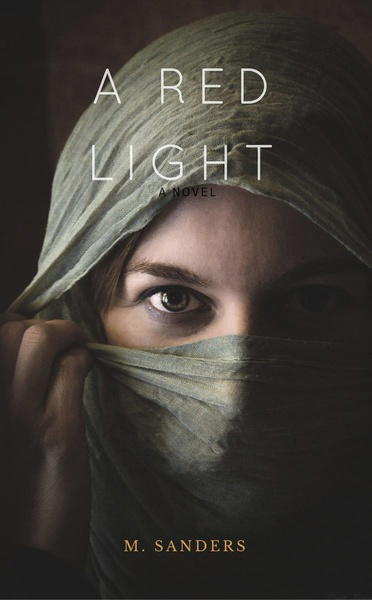
A Red Light

JanThompson: This book gives a beautiful description of a country which one rarely gets to see. The contrast between rich and poor is very evident too.The storyline actually sheds a compelling light on why women in certain countries sell themselves just to help their families or even to survive themselves. I hop...

Read Now
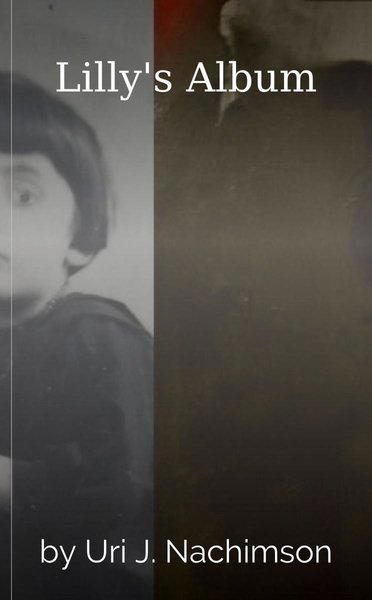
Lilly's Album

camcam: So far as I have read it's amazing and I can't wait to read more! I always get sucked in when I come back and read and the grammar is just absolute perfect! I think who ever finds this should be lucky!

Read Now
AGAINST THE ODDS: First Encounter

jezenga: THE BOOK IS GOOD IN THAT IT REVEALS WHAT OCCURRED DURING THE WAR OF LIBERATION IN ZIMBABWE.

Read Now