
BLOSSOMS AND BLASPHEMY
The Neretva Valley, in the liquid gold of a late April afternoon, was a testament to her own power. Vesna felt it thrumming beneath the soles of her bare feet, a verdant pulse rising through the warm, dark earth. From her perch in the gnarled embrace of a centuries-old fig tree overlooking the labyrinth of emerald canals, she surveyed her domain. Orchards of mandarin and pomegranate were clouds of fragrant white blossom. Vineyards, row upon meticulous row, unfurled their first tender leaves. The very air was a broth of pollen, promise, and the sweet decay of last season’s growth giving way to the new. It was perfect. It was, frankly, a little boring.
She sighed, a sound that caused a cluster of buttercups at the base of her tree to shiver into full, gaudy bloom. For an eternity, the adoration of mortals had been a pleasant, predictable constant. The awed whispers of farmers, the hopeful prayers of young lovers left at her hidden springs, the desire that poured from men like heat from a stone—it was all as familiar and nourishing as sunlight. But today, a restlessness prickled under her skin. The season’s script felt too well-rehearsed.
Then, the putter of a diesel engine cut through the birdsong. A flat-bottomed, wooden lađa, the traditional boat of the valley, slid into view from around a bend of whispering reeds. At its helm stood a man.
Vesna’s gaze, which had drifted over him as idly as a butterfly, snapped back and settled. He was lean and tautly built, his skin the colour of oak from a life on the water. Dark hair, slightly too long, curled against the collar of his faded green t-shirt. He navigated the narrow channel with an effortless, irritable competence, one hand on the tiller, the other gesturing as he spoke to the handful of tourists lounging on the benches.
“…and so they say the Neretvanski djed—the Old Man of the Neretva—would pull boats under if you didn’t leave him a piece of bread or a drop of wine,” he was saying, his voice a dry, local baritone that carried clearly over the water. “Of course, now we know it was just the shifting silt and the odd submerged log. But it makes for a better story to sell to tourists, da?”
A German man chuckled. A woman frowned, as if her romantic illusion had been punctured.
Vesna’s eyebrows rose. A non-believer. Not just a passive one, but an active, charmingly cynical dismantler of belief. How… novel.
He continued, pointing to a crumbling stone shrine half-hidden by ivy on the bank. “See that? For Vila, the water nymph. Leave her a ribbon, pray for a husband. My grandmother did. She got my grandfather, a man who snored like a chainsaw and hated dancing. So, you know. Manage your expectations.”
The tourists laughed, and the man—Damir, one of the Germans called him—allowed himself a small, crooked smile that didn’t quite reach his eyes. They were the colour of the Adriatic on a cloudy day, a grey that could turn steely or soft. Right now, they were steely with amused contempt.
A spark, hot and unexpected, ignited in Vesna’s core. It wasn’t the warm, worshipful desire she was used to. It was the sharp thrill of a challenge. Every man in the valley, from the sun-wizened old vintner to the swaggering young fisherman, looked at her with a kind of hungry reverence. Their desires were simple, loud prayers in her direction. But this Damir? He looked at the world, at her world of magic and myth, and saw only marketing and silt. He was blasphemy in board shorts.
Without a conscious thought, she shifted. The fig leaves rustled, though there was no wind.
Damir’s head turned slightly, his gaze scanning the bank. For a second, it passed over her tree. Did he pause? Did something in the dappled shadow catch his eye—a deeper green, a shape that wasn’t quite branch-like? He squinted, then shook his head minutely and turned back to his engine.
The spark in Vesna flared. Oh, no. He didn’t get to dismiss her.
She focused on the water just ahead of his boat, on the sleepy, just-opened water lilies floating placidly on the surface. She breathed out a soft, intent-laden breath. Not a command, but a suggestion. A flirtation.
The lilies trembled. Their stems, long and sinewy beneath the murky water, began to coil and stretch with sudden, vigorous life. They multiplied, weaving into a thick, emerald-and-white mat just below the surface, directly in the lađa’s path.
The boat hit the lush obstruction with a soggy thud. The engine coughed, a horrific grinding sound, and died. Silence rushed in, broken only by the quizzical krek of a frog.
“O, pa jebote!” Damir cursed, lunging for the engine. He yanked the starter cord. Nothing but a weak sputter. He peered over the side. “What in the hell…? Lilies. A whole damn carpet of them. That’s impossible, they weren’t here yesterday…”
He rolled up his sleeve, plunged his arm into the cool water up to his shoulder, and began tearing at the slimy, stubborn stems. His muscles corded with the effort. Vesna watched, mesmerized by the sheer physicality of it, the frustrated heat rising from his skin.
“Can I help?”
The voice, when she spoke it from the bank just feet away, was honey over crushed herbs. Warm, sweet, with a faint, wild edge.
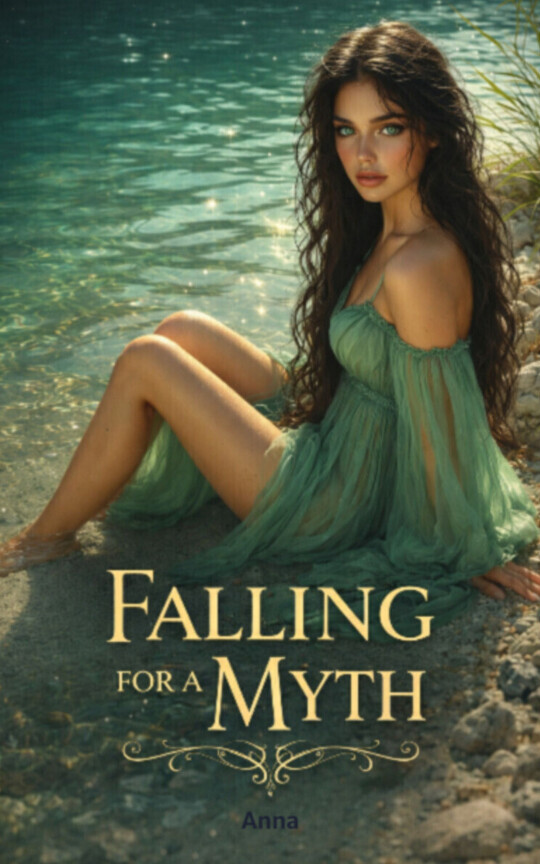
Damir jerked upright, whipping his head around. Water dripped from his elbow. His eyes widened, just for a fraction of a second, taking her in: the cascade of dark hair over bare shoulders, the simple linen dress the colour of new leaves that clung to curves that spoke of abundance, not gyms. Those eyes, the green of deep, sunlit forest pools.
Then his surprise hardened into a different kind of wariness. He saw a stunning woman, yes. But in this context, on this remote canal bank, she registered first as a problem, or a tourist who’d wandered off the path.
“Help?” he echoed, his tone already tinged with sarcasm. “You know about outboard motors?”
“I know about… tangles,” she said, smiling. She took a step closer, and the grass beneath her feet seemed to sigh, blooming with tiny star-shaped flowers where she trod.
He didn’t notice. He was too busy glaring at the engine. “This isn’t a tangle. It’s a mechanical failure caused by a botanical anomaly. Probably fertilizer runoff.” He said it as if diagnosing a patient with a vile disease.
Vesna tilted her head. “Perhaps it’s a sign. The Old Man of the Neretva dislikes your tone.”
That got his full attention. His grey eyes locked onto hers, sharp and assessing. “My tone is fine. The Old Man is a story for children. And you,” he added, taking in her lack of a bag, water bottle, or any semblance of hiking gear, “are either very lost or very committed to getting the perfect Instagram shot. The light’s better down by the main river.”
The audacity of it took her breath away. He was reducing her to a stereotype, a silly, shallow tourist. Erotic awakening stirred, not as a gentle unfurling, but as a delicious, competitive itch. She wanted to unravel him, this man of concrete facts and boat loans.
“I’m not lost,” she purred, walking to the water’s edge. She knelt, ignoring the damp earth, and trailed her fingers through the water where the lilies were thickest. “And I don’t use Instagram. I prefer more direct… interfaces.”
As her fingers brushed the water, the dense mat of lilies directly around her hand simply… dissolved. The stems recoiled, the blossoms ducked under, creating a clear patch.
Damir stared. He blinked. “Okay,” he muttered, more to himself than to her. “Weird current.”
“Give it a try now,” she said, nodding to his engine.
Scowling, he pulled the cord again. The engine roared to life with sudden, vulgar health. The tourists, who had been watching the exchange with bemused interest, clapped softly.
Damir didn’t thank her. He just eyed her with renewed suspicion. “Lucky guess.”
“Was it?” She stood, wiping her hand on her dress. A single white petal was stuck to her wrist. “Maybe the river just likes me better.”
“The river is water and mud. It doesn’t like or dislike.” He turned back to the tiller, his posture dismissing her. “You should head back to the road. It’s not safe to wander out here alone.”
“I’m never alone,” Vesna said, her voice dropping to a whisper that carried only to him. “The reeds have ears. The willows have eyes. The very soil remembers.”
A flicker of something—not belief, but an ancient, atavistic unease—passed behind his eyes. He covered it with a snort. “Right. And my exhaust pipe sings opera. Have a nice day, gospođo.”
He pushed the tiller, guiding the boat away from her bank. Vesna didn’t move. She just watched him go, the putter of his engine fading into the hum of the valley.
A slow, radiant smile spread across her face. It was a smile that had launched a thousand blossoms, that had coaxed bears from their dens and lovers into each other’s arms. But it had never been sparked by a mortal telling her about fertilizer runoff.
Damir, she thought, tasting the name. A solid, Slavic name. It meant “to give peace.” How utterly wrong.
Her restlessness was gone, replaced by a vibrant, focused curiosity. Every man desired her. But for the first time in centuries, her own desire—capricious, green, and suddenly, fiercely awake—had been snagged by something. By someone who looked at a goddess and saw a nuisance with a possible social media addiction.
She turned from the canal, the grass springing taller and thicker in her wake. The game, she decided, was on. The season’s script had just been torn up. She would find him again, this sharp-tongued guide who believed in nothing. And she would make him believe. In her. In the magic he so casually dismissed. In the terrifying, exhilarating storm of an erotic spring that was now, irrevocably, heading his way.
Somewhere down the canal, Damir shivered despite the warm sun, and attributed it to a sudden chill off the water. He glanced back, but the bank was empty, save for an impossibly lush and flowering fig tree.