
Prologue: The City of Barclay
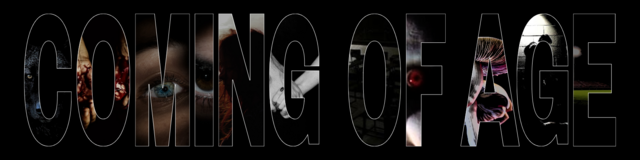


Thick fir trees surround the moist landscape. Ferns the size of children grow out of the mulchy and muddy grounds. The cold waters from the Pacific Ocean splash against the rocky beaches. The clouds are cotton candy colored as they float in the light blue sky. For most of the year, snow coats the mountains in the winter and melts away during the summer, revealing a green haven of common and exotic vegetation. Prey and predators, both animals and humans, inhabit the neighborhoods and dense, wet woods.
Barclay, a town in the Pacific northwest of Washington State, is an unassuming place for trouble and violence. For those wise or unfortunate enough, Barclay has an underworld of dark secrets and a history of terrible tragedies.
The suburban city is full of blue collar workers and their children. A fifth of the population support their children with government assistance. The richest in town own successful businesses, franchises, or have vacation homes near the ocean or by Lake Whatcom. As time keeps going, the gap between the rich and poor grows greater; the opportunities for the middle class grow more competitive.
The children of the town suffer from the boredom that comes from ironically living in a beautiful place with not much to do other than enjoy the scenery. It’s not like there are no fun activities to do, but skiing, snowboarding, biking, camping, and jet skiing all require money. If one is not interested in the recreational benefits of the town or does not have the means to do so, then drugs, drinking, partying, and crime are the go-to pastimes.
Before the area became Barclay, the land was populated by four Indian tribes. The Natives of the Lummi, Nooksack, Samish, and Semiahmoo Indians controlled the region. After the settlers took it, the land became a fishing and shipping hub through the 1850s to the 1920s. Most men worked in the shipping yards and timber mills or farmed. Despite the work being laborious and potentially lethal, the wages were enough to support the workers. Some were able to go into business for themselves, the most successful of them building legacy empires for their future generations.
The area had the allure of being far more beautiful than that of the Midwest. Gossip spread across the midlands of a new town near the sea with several booming industries. Many traveled there, from poor families with limited opportunities to ambitious young men. To them, Barclay was the hope of providing for their families or themselves.
The settlers never saw such landscapes surrounded by endless fir trees, strange vegetation or the Pacific Ocean. Their understanding of nature mostly extended to foothills and drylands which became freezing cold during the winter and unbearably hot through summer. In Barclay, newcomers enjoyed the taste of fresh salmon and the sea life that fetched a good income on the market. The journey through the rough terrain and snowy mountains to get to Barclay was difficult, took time and frequently cost lives, but the reward of making it there could be worth it.
As the industries and population grew, so did Barclay’s range. For a short time, the city was divided into four towns: Barclay, Whatcom, Fairhaven, and Sehome. By 1905, all four towns were incorporated into the City of Barclay.
For nearly a century, Barclay was a thriving city with enough work to go around for everyone. The bay became a decently sized shipping hub with around the clock work. Men who came from nothing built their successful businesses. Housewives were able to provide for their children and live on cheap land that grew plenty of crops. The descendants of the first settlers followed in their fathers’ footsteps and became skilled workers. For a period, Barclay was the sanctuary many prayed for.
As more people came, desperation slowly followed. By the 1950s, work grew competitive. Families that lived in the town since the 1800s faced financial difficulty and hardship. The industries that were once thriving had plateaued. Traditional community roles such as doctors, lawyers, teachers, and police officers became the gigs for sustainability. Poor financial backgrounds prevented many from furthering their education. The jobs that many came to the town for years ago were looked down upon and wages stagnated. Skilled workers fortunate enough for blue collar work found themselves with shrinking paychecks and opportunities.
Little investment went to infrastructure even though the cost of living increased. Older homes became dilapidated, the stores of skilled workers shuttered with the rise of big businesses, and some turned to alcohol and drugs to cope.
Barclay became a place no longer for opportunistic entrepreneurs and people looking to start anew. It was an expensive destination to settle once wealth had been attained. The upper class became composed of people who earned their living in other states and Canada. Many homes close to the ocean and off the lakes became vacation or retirement destinations for the privileged and retirees. Blue collar workers and the lower classes were pushed to more rural areas and multi-family units further away from the docks and mills their ancestors once worked in. Corporations bought up most of the labor industries, squeezing out the competition of mom and pop businesses. Factories were abandoned, left to deteriorate.
Prior to the first settlers’ arrival, the Indian tribes sustained themselves with the same resources the settlers exploited. Through shady dealings, the Natives were pushed to small, unfavorable areas. Those who did not comply were either, at best, imprisoned or, at worst, hanged. Small battles and skirmishes between the Natives and the settlers resulted with casualties on both sides. As more settlers came to the land, the Indians’ defeat was assured. Suppressed from the lands they once called home, many tribes suffered depression and alcoholism. Like some residents whose dreams were crushed, crime and substance abuse became a part of the Natives’ culture.
Campfire stories and spooky tales told of an evil spirit brought on by the Indians for their mistreatment. The spirit, often described with a black, smoke-like body and a mischievous, evil smile, was called a Skinwalker. The spirit would plague the settlers and their future generations, sometimes taking on the appearance of someone a settler knew. Slipping into a person’s life, it would take pleasure in destroying them from the inside out. When a man drank himself to death or his depressed wife hung herself, the Indians suspected the Skinwalker was to blame. Common folk believed the unfortunate events came from rising financial difficulties. The open minded were more skeptical.
Despite being an alluring, colorful place, darkness was no stranger to Barclay. The winters brought on dark, unforgiving nature. Harsh conditions brought those unprepared to illness and sometimes death. In the dark surrounding forests, workers often wondered what lay in the unseen. The rustling through trees and bushes could be as unalarming as a deer or a potentially lethal bobcat. Perhaps, in an already mythical landscape, a Skinwalker wasn’t out of the realm of possibilities.
In the 1970s, when the War on Drugs was declared, Barclay became a notorious border town ripe with drug related crimes and abuse. In 1977, Western Washington University was established to help clean up the town’s reputation. Unfortunately, the university also became known for drug abuse. Heroin, in particular, became the common drug of choice. Its popularity was followed by highly published drug overdoses from young users who sometimes lost their lives. Drug scandals became so common that it reached national news.
It did not take long for Barclay to have the eyes of federal law enforcement locked on it, including the newly formed DEA. Biker gangs formed and infiltrated law enforcement causing further damage to the reputation of the town. Entire graduating classes of police officers were discharged, arrested, or murdered because of corruption. A mayor had a short lived term after he was exposed for taking bribes.
Sex trafficking played second to drug trafficking, but it had a grander impact. Families would come home to realize that their daughters and wives had gone missing. Some took up lovers in crime syndicates or were forced into sex work. Those from lower classes were most likely to fall prey to the influences of exploitative men. However, those higher up the food chain were not immune to the seduction of sex, drugs, and crime. The lifestyles of the rebellious and criminal were alluring and exciting. The right place at the right time was all it took to pull someone’s child into the underworld. Sometimes that place was a street alley, a drug den, or a park in the middle of the night. Regardless of what it was, the right place at the right time was available for those willing or unwilling to experience it.
Life did begin to settle even as the city went through its long depression. As law enforcement improved and the federal government stepped in, the biker gangs and drug traffickers quieted down. Instead of making their dealings public, crime syndicates became more sophisticated, hiding their dirty money away in legitimate businesses. Lower level dealers retreated to low-income housing, pushed to the edges of society where they mostly kept to their own. Much affordable housing became dwellings for those higher up the socioeconomic ladder who gentrified the areas. Liberal policies sometimes blended the poor with the rich, but these interactions were mostly petty theft and mental episodes from the unhoused.
It was silently acknowledged that serious horrors were present, but rarely seen. If one went looking for trouble, it was expected they would find it. But the truth was one did not have to look far. A Skinwalker lurking in the shadows, ready to destroy a life, was a possibility.













Wow, this is astounding looking forward to more amazing books from you
I specialize in bringing your book’s vision to life. I offer services in book cover design, illustrations, and promotion to help your work stand out and reach the right audience. Let’s create something amazing together. Here's my instagram (welliame_gowaneejr)