Foreword
In the beginning, there was a voice that said: “You here. You over there.”
None of us chose the families we were born into. We were simply placed — no warning, no say. Even if the place you’re born into feels wrong or unfair, you can’t object. That’s what they call “destiny.”
It often feels like we’re just puppets, moved by some invisible force — something powerful, silent, and far beyond our control.
Here’s the truth: not everyone is born with a silver spoon in their mouth.
My name is Amara. I’m 24 years old, and I come from a poor family. The word “poor” may sound harsh, but there’s no point hiding from it when everything around you screams it out loud.
It was a rainy day — the day death entered our home like a thief. Without mercy, it took my mother, leaving behind a shattered family drowning in tears, silence, and emptiness. I was twelve. My heart has never healed since.
There’s nothing worse than watching someone you love fade away, powerless to stop it — not because you don’t care, but because you can’t afford to help. If I had that weapon called “money,” maybe I could’ve saved her. Maybe I could’ve taken her to one of those fancy hospitals in Dubai. Maybe… at least bought her medicine.
But I had nothing. I could only watch the people I loved disappear, and carry the weight of grief day after day. Every birthday, every little thing they used to enjoy now echoes with their absence. Who are you, Death, to cause so much pain?
Since that day, I’ve hated poverty with everything I have. I truly believe we’re not meant to remain trapped in it forever. The prison door is open — it’s up to us to step out.
Still, my story isn’t only made of sadness. I have a wonderful father — strong, kind, full of faith in me. Even with so little, he raised me with love. And despite it all… I love my family. Even poor.
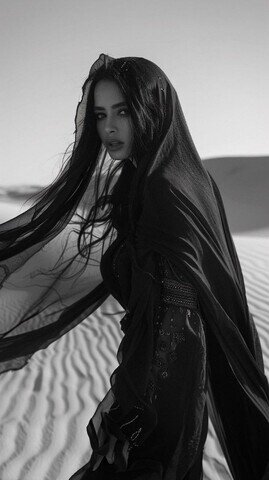
We live in a small village, hidden deep in the desert, an hour from the capital. Around here, they call me “The girl from the desert.”